Cuba Frees Prisoners in Humanitarian Gesture During Holy Week
Cuba pardoned 2,010 prisoners for Holy Week, but left families of 1,214 registered political prisoners searching for names on no official list.
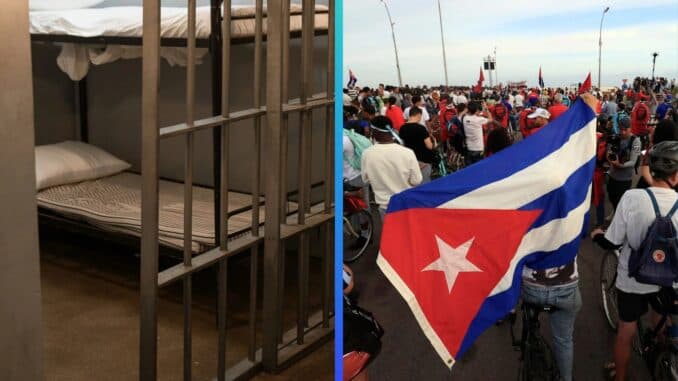
Cuba's government announced Thursday it was pardoning 2,010 prisoners in what it called a "humanitarian gesture" coinciding with Holy Week, a sweeping release that came as the Trump administration maintained a suffocating oil blockade on the island and quiet talks between Havana and Washington continued without acknowledgment from either side.
State-run newspaper Granma reported that the Cuban government authorized the release, applying it to inmates who had demonstrated good conduct, served significant portions of their sentences, or faced chronic health issues. Those eligible included women, young people, and seniors over 60, as well as foreign nationals and Cuban citizens residing abroad. What the government did not provide was a list of names, release dates, or any accounting of whether those convicted of protesting were among those freed.
Authorities provided no details on whether any of those pardoned were protesters convicted and sentenced for terrorism, contempt, or public disorder. Cuba's government does not recognize political prisoners, but the activist group Prisoners Defended had registered 1,214 people imprisoned for political reasons in Cuba as of February. For the families of those detainees, the announcement landed as a puzzle to be solved rather than a relief.
The Cuban presidency described the release as the fifth time since 2011 it had pardoned prisoners, amounting to more than 11,000 people. The official statement framed the decision as "taking place within the context of the religious observances of Holy Week, a customary practice within our criminal justice system and a reflection of the humanitarian legacy of the Revolution." The government said those released would not include people who committed murder, sexual assault, drug-related crimes, theft, illegal slaughter of livestock, or crimes against authority. That last category, crimes against authority, is precisely the charge that human rights organizations say Cuban courts routinely apply to suppress dissent.
The announcement came weeks after Cuba said it would free 51 prisoners as a sign of goodwill toward the Vatican. The Holy See has often tried to act as a mediator between Washington and Havana. The announcement came as Cuban and U.S. officials had held talks even as the Trump administration pushed for change in Havana. Trump imposed a de facto oil blockade on the island in January, though he allowed a Russian oil tanker to deliver crude to Cuba this week in what the White House described as a "humanitarian" gesture.
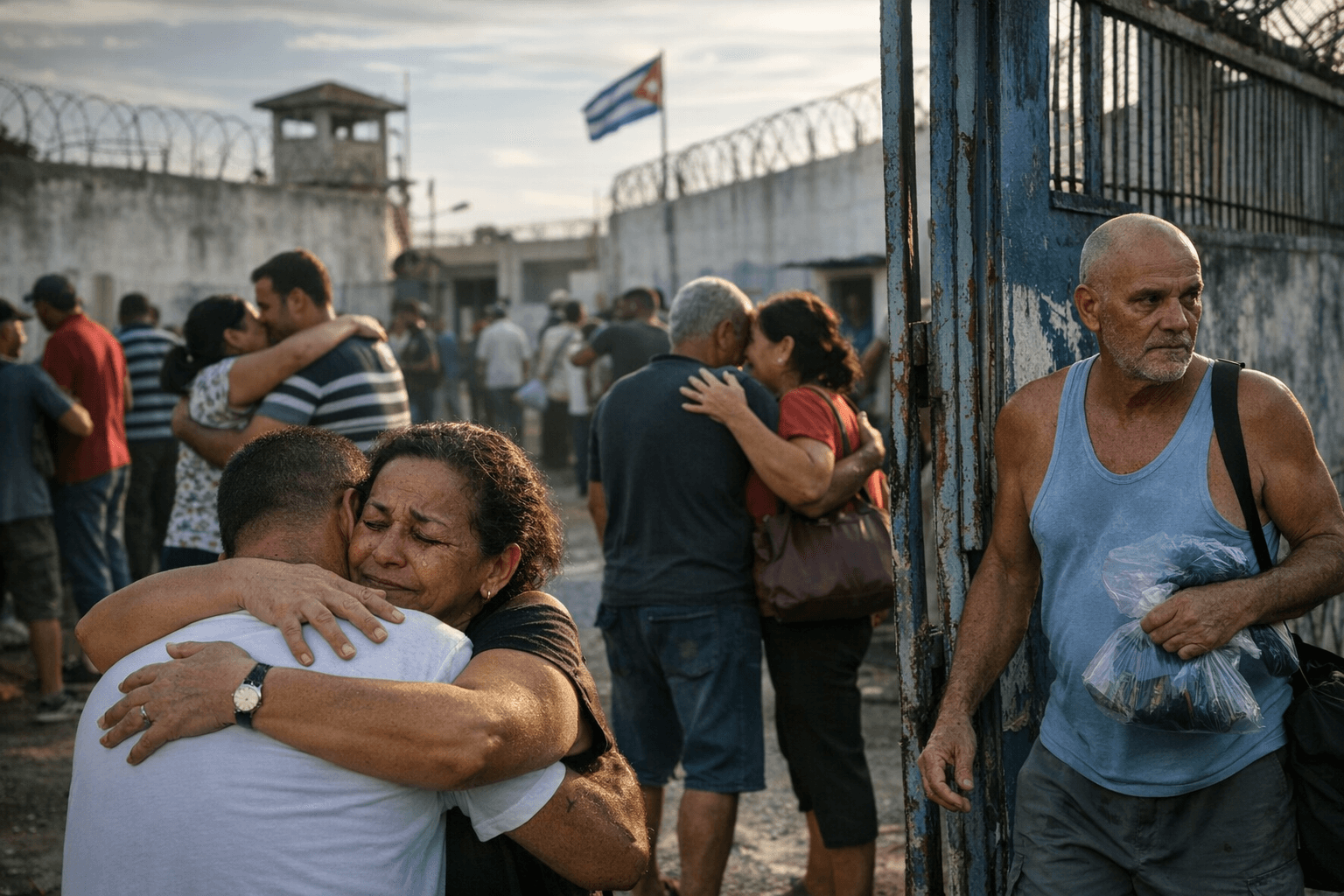
The symmetry of language was hard to miss: two governments, one authoritarian and one applying maximum economic pressure, both reaching for the word "humanitarian" in the same week.
Human rights organizations cautioned that prior releases had not represented full pardons. The organization Justice 11J described the mode as a "particularly restrictive" form of parole, akin to a "prison-home regime," with sentences remaining in effect and benefits subject to revocation. At least 21 Cubans sanctioned for the July 11 protests had been released under restrictive conditions and state surveillance, without official transparency or guarantees of full freedom, ahead of this latest wave.
Cuba has long deployed prisoner releases as diplomatic currency, timing announcements to coincide with papal visits, Vatican negotiations, and moments of U.S. pressure. The 2,010-person pardon is the largest in a series that has accelerated since 2025, but without a public list, advocates tracking individual cases were left doing what they have done for months: waiting for families to call.
Know something we missed? Have a correction or additional information?
Submit a Tip

