Cuba Revives Fidel-era Mobilization Amid US Pressure, Venezuelan Instability; Analysts Skeptical
Cuba has resurrected Fidel Castro’s 1980s doctrine, mobilizing the entire population with militia training, ambush drills and civil defense exercises as tensions rise.

Cuba has quietly revived Fidel Castro’s 1980s doctrine of mass mobilization, turning to militia training, ambush simulations and civil defense drills as a means to prepare the population for a potential invasion amid heightened US pressure and instability in Venezuela. The move revives a posture that once shaped national defense planning under Castro in the 1980s.
The government declared the renewed mobilization on February 16, 2026, framing it as a readiness measure that calls on the entire population to participate in civil defense and territorial militia activities. February 16, 2026 is the day authorities signaled a return to doctrine that emphasizes widespread civilian involvement rather than reliance solely on conventional armed forces.
Recent exercises under the revived doctrine have included militia training sessions, ambush drills and coordinated civil defense exercises. Militia training and ambush simulations have been staged alongside civil defense drills intended to test local coordination and population-level responses, reflecting the specific tactics associated with the original 1980s approach.
The push comes as Havana contends with renewed US pressure and the instability to the south in Venezuela. Officials present the mobilization as a deterrent against external threats tied to that US pressure and to regional volatility caused by Venezuela’s instability, linking the timing of the drills to these two concrete geopolitical pressures.
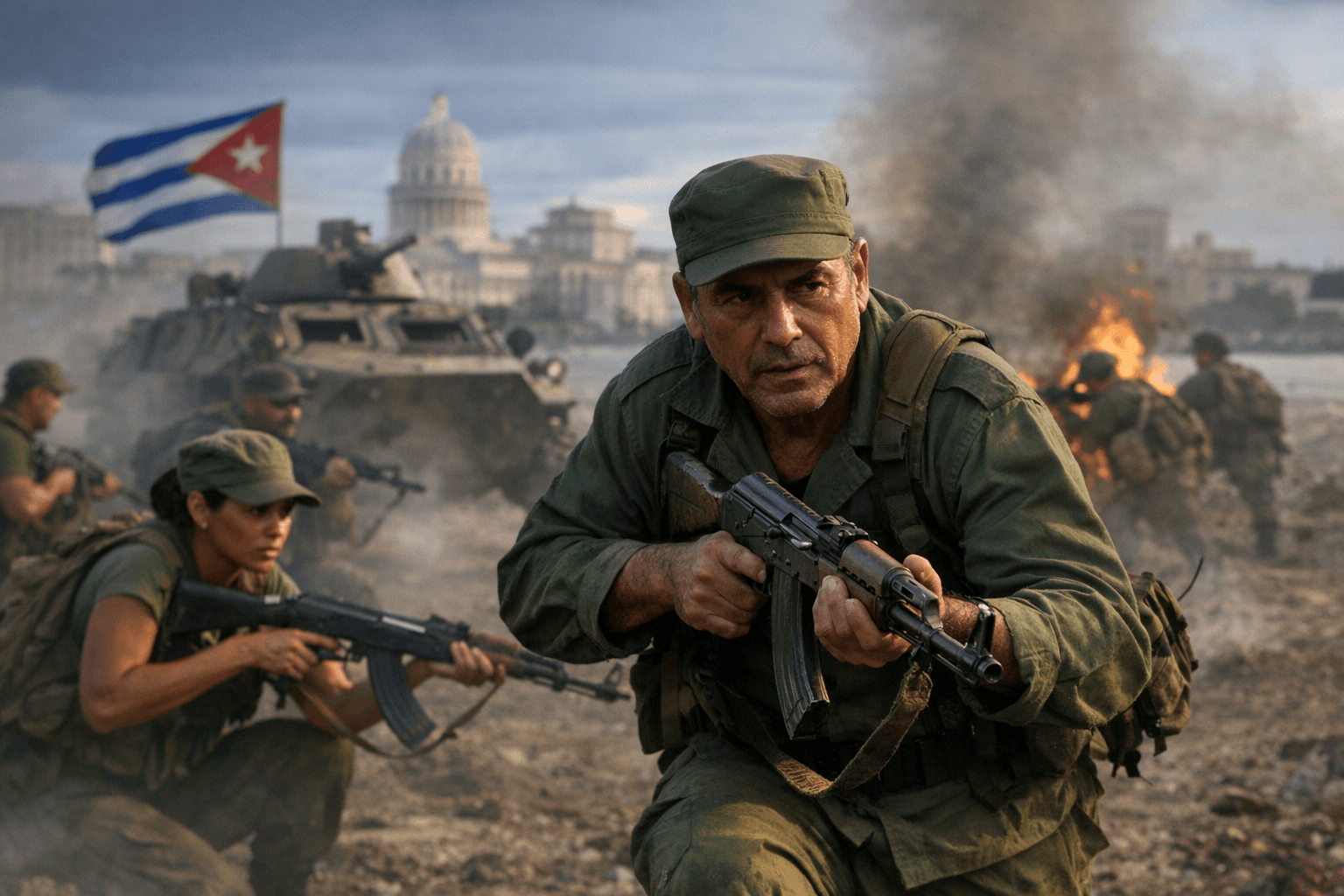
Analysts are cautious about the revival, and analysts question its effectiveness in today’s context. Those analysts point out that the Fidel-era model relied on mass mobilization and guerrilla tactics developed in the 1980s; today’s announcement raises immediate questions about how those tactics map onto modern military capabilities and the specific contours of US pressure and Venezuelan instability in 2026.
The return to a population-wide defense stance and the use of militia training, ambush exercises and civil defense drills mark a significant policy shift back toward the 1980s template used by Fidel Castro. For neighbors watching shifts in Havana’s posture, the central facts are the revival of that doctrine, the specific drills underway, and the prominent role that US pressure and Venezuela’s instability are playing in the timing and scale of the mobilization.
Know something we missed? Have a correction or additional information?
Submit a Tip