Cuba's long shadow: How a tiny island shaped U.S. foreign policy
Cuba’s proximity made it a Cold War fault line, and the island still drives sanctions, Florida politics, and White House tradeoffs.
A small island with outsized leverage
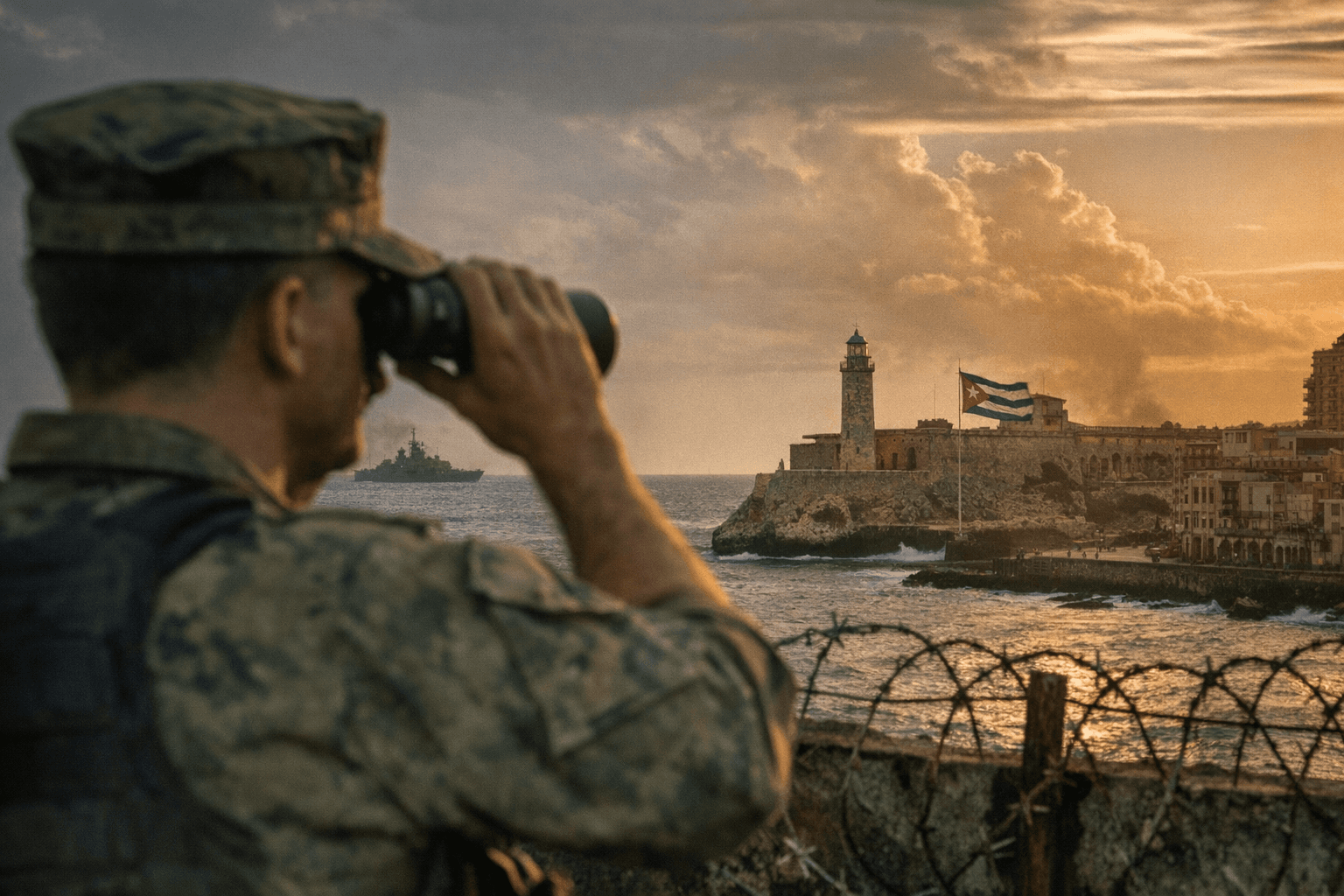
Cuba sits about 90 miles south of Key West, Florida, close enough to feel like a border and far enough to become a permanent test of American power. U.S. officials have long treated that geography as strategic because of the Panama Canal, Caribbean sea lanes, and Cuba’s historic role in supplying sugar to the United States. That combination of proximity and symbolism made the island far more than a Caribbean neighbor; it made Cuba a recurring domestic and foreign-policy flashpoint.
The modern crisis did not begin with the Cold War so much as it was amplified by it. After Spain’s defeat by U.S. and Cuban forces in the War of 1898, Spain relinquished sovereignty over Cuba, but the island’s fate remained entangled with Washington’s interests. By the time the 1959 Cuban Revolution brought Fidel Castro to power after Fulgencio Batista was ousted, the groundwork for confrontation was already in place.
From revolution to rupture
Castro’s victory transformed a long-simmering relationship into an open break. His government quickly expropriated U.S. property and moved closer to the Soviet Union, a turn that Washington saw as both ideological defiance and strategic danger. The United States formally ended diplomatic relations with Cuba in January 1961, and the embargo that began expanding in 1960 soon became the backbone of a broader policy of isolation and pressure.
The rupture was not just bureaucratic. According to records preserved by the Foreign Relations of the United States series, Castro reacted violently and defiantly to the collapse of diplomatic ties, and the relationship hardened into mutual hostility. From that point on, Cuba was no longer only a bilateral dispute about property or recognition; it had become a symbol of whether the United States could contain revolution in its own hemisphere.
The Bay of Pigs and the making of a doctrine
The Bay of Pigs invasion, launched on April 17, 1961, was supposed to reverse the course of the revolution. Instead, it collapsed within two days, a humiliation that exposed the limits of covert action and exile politics. The Office of the Historian describes the operation as going wrong almost from the start, and its failure forced a serious reassessment of Cuba policy in Washington.
That reassessment did not mean retreat. It meant escalation in another form. Operation Mongoose was launched in November 1961 to undermine and overthrow Castro’s government, signaling that the Kennedy administration would keep trying to pressure Havana even after the invasion failed. The episode also fixed Cuba in the American political imagination as a place where embarrassment, ideology, and national security could collide at once.
The consequences extended beyond one failed invasion. The Bay of Pigs helped push Castro to align more openly with socialism, and it convinced both sides that compromise was unlikely. For U.S. policymakers, Cuba became the proof case for a more aggressive Cold War posture; for Castro, the invasion confirmed that Washington intended to remove him if it could.
The Missile Crisis turned Cuba into a global fault line
The next year made the stakes unmistakable. In 1962, U.S. intelligence reports detected Soviet arms shipments to Cuba, intensifying fears that the island was becoming a military outpost for Moscow. That chain of events led to the Cuban Missile Crisis, when the world came closest to nuclear war and Cuba moved from regional problem to global flashpoint.
The crisis cemented a lasting lesson in Washington: a small island could trigger enormous consequences if it sat astride the wrong geopolitical fault lines. It also made Cuba synonymous with risk management in American foreign policy, where the costs of underreaction and overreaction were both measured in national security terms. Even after the missiles were removed, the island remained trapped inside a larger U.S.-Soviet contest that shaped policy for decades.
Thaw, rollback, and the limits of engagement
The long freeze was not completely static. In 2015, the United States restored diplomatic relations with Cuba, opening a window for limited engagement after years of tension. That thaw showed that Washington could still use diplomacy when the political conditions allowed it, but it also revealed how fragile the opening was once domestic politics turned again toward pressure.
Later rollbacks made that fragility plain. U.S. policy has repeatedly swung between sanctions and selective engagement, between the language of change and the mechanics of containment. The pattern matters because it shows that Cuba is not just a foreign-policy issue; it is also a domestic one, shaped by electoral incentives, ideological battles, and the enduring power of the embargo.
Why Florida, Congress, and the White House still care
Florida remains central because Cuba policy still carries electoral weight there, especially among voters for whom Havana is not an abstraction but a living political memory. That has made hardline positions on sanctions, migration, and democracy rhetorically useful in a state that can decide presidential elections. A president who softens policy risks backlash; a president who tightens it can energize a key constituency.
Congress has often reinforced that politics by keeping the embargo structure difficult to unwind. The White House can adjust tone, travel rules, and enforcement, but broader changes are harder because sanctions have been embedded in legislation and in decades of bipartisan habit. As a result, Cuba policy often becomes a contest between executive flexibility and congressional lock-in, with Florida exerting pressure on both.
The Biden and Trump years showed how quickly the line can shift. Donald Trump’s more confrontational approach revived the language of coercion, while the broader debate kept circling back to the same unresolved question: is pressure the best way to encourage change, or does it simply prolong stalemate? That argument still frames White House choices today, especially when migration, regional diplomacy, and human rights all intersect at once.
The island at the center of a larger American argument
Cuba’s population is about 10,979,783, according to World Bank estimates for 2024, and the country’s size has never matched the scale of the attention it draws. Its government continues to face economic strain, migration pressure, and international scrutiny, while Washington continues to describe the island as a national-security concern. The U.S. State Department’s 2024 human-rights report cites arbitrary arrest and detention, torture, censorship, restrictions on media, and limits on workers’ freedom of association.
That is why Cuba still shapes American policy far beyond its shores. The island remains a place where historical memory, Cold War legacy, domestic politics, and human-rights debate all converge. For Washington, the real challenge is that Cuba has never been just a neighbor 90 miles away; it is a mirror of the choices the United States keeps making about power, pressure, and the cost of both.
This article was produced by Prism’s automated news system from verified source data, official records, and press releases, then run through automated quality and moderation checks before publishing. The system is built and supervised by the people who set the standards it runs under. Read our full AI policy.
Did this article answer your question?