Cuba's National Grid Collapsed Again, Leaving Millions Without Power
Cuba's power grid failed for the third time in March, plunging millions into darkness as aging infrastructure and a fuel crisis push the island to its limits.
Havana's seafront Malecon filled with people sitting in darkness Saturday night as Cuba's national electricity grid collapsed for the third time this month, cutting power to more than 10 million people across the island and triggering a scramble by authorities to prevent hospitals and water systems from going dark indefinitely.
The Cuban Electric Union confirmed the cause was an unexpected shutdown of a generating unit at the Nuevitas thermoelectric plant in Camaguey province, which set off a domino effect through a grid already stretched to its limits. "A total disconnection of the National Electrical System has occurred," the grid operator announced. "Protocols for restoration are already beginning to be implemented."
By early Sunday, authorities had managed only a partial recovery. Energy and Mining Minister Vicente de la O Levy reported on X that a gas power station near Havana and another in the beach resort of Varadero were generating power again, along with a hydroelectric plant in central Cuba and a unit at a thermoelectric plant. Local power microsystems were set up in Havana and in the provinces of Matanzas to the west and Holguin to the east to supply critical facilities first. Some 72,000 customers in the capital, including five hospitals, had electricity restored early Sunday morning. That figure represents a fraction of Havana's approximately 2 million residents.
The collapse was the second nationwide blackout in less than seven days and the seventh since 2024, a drumbeat of failures that reflects both the decrepitude of Cuba's Soviet-era infrastructure and a deepening fuel crisis. No oil has been imported to the island since January 9, according to reporting from multiple outlets, a shortage that has simultaneously crippled electricity generation and forced airlines to curtail flights to Cuba, dealing a blow to the tourism sector the government depends on for hard currency.
The fuel cutoff is linked to a broader geopolitical squeeze. AFP-derived reports state that breakdowns have intensified since Cuba lost reliable oil shipments from Venezuela, and that President Donald Trump has threatened to impose tariffs on any country that sells oil to Cuba, a pressure campaign that has compounded the island's isolation.
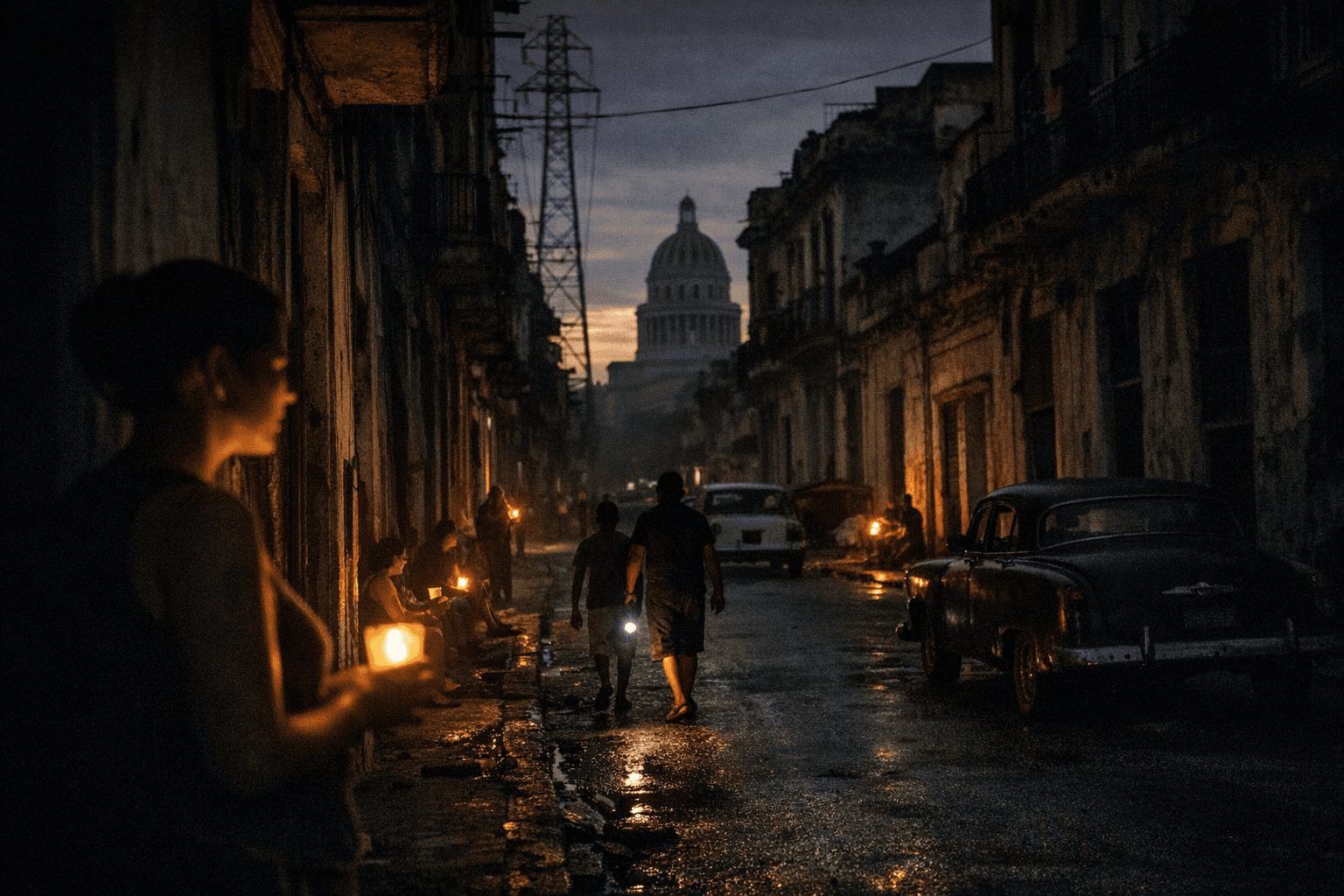
The human consequences are mounting. Cubans fear food spoiling in powerless refrigerators while facing persistent shortages of food, medicine, and basic goods. In a sign of fraying public tolerance, demonstrators vandalized a provincial office of the Cuban Communist Party last weekend, described by multiple outlets as a rare act of political violence. An international aid convoy arrived in Cuba this week carrying medical supplies, food, water, and solar panels, a signal of how acute conditions have become.
Cuba's eight thermoelectric plants form the backbone of a grid that has proved unable to absorb even a single unexpected outage without cascading failure. The Nuevitas plant's breakdown exposed that fragility again, and the minister's facility-by-facility restoration updates posted to social media underscored how manually, and how slowly, the country must rebuild power from scratch each time the system goes dark.
The speed at which Cuba can restore full service, and whether it can prevent an eighth nationwide collapse, will depend on fuel supplies its government currently cannot guarantee.
Know something we missed? Have a correction or additional information?
Submit a Tip

