Cyclone Michaung Strengthens, Landfall Near Andhra Coast Expected December 5
India's Meteorological Department warned over the weekend that Cyclone Michaung in the Bay of Bengal was intensifying and is forecast to make landfall near the south Andhra Pradesh coast between Nellore and Machilipatnam on December 5. Authorities in Andhra Pradesh and Tamil Nadu were urged to ready evacuation centers, suspend fishing and move vulnerable populations as heavy rain, coastal inundation and disruptions to transport and power become more likely.
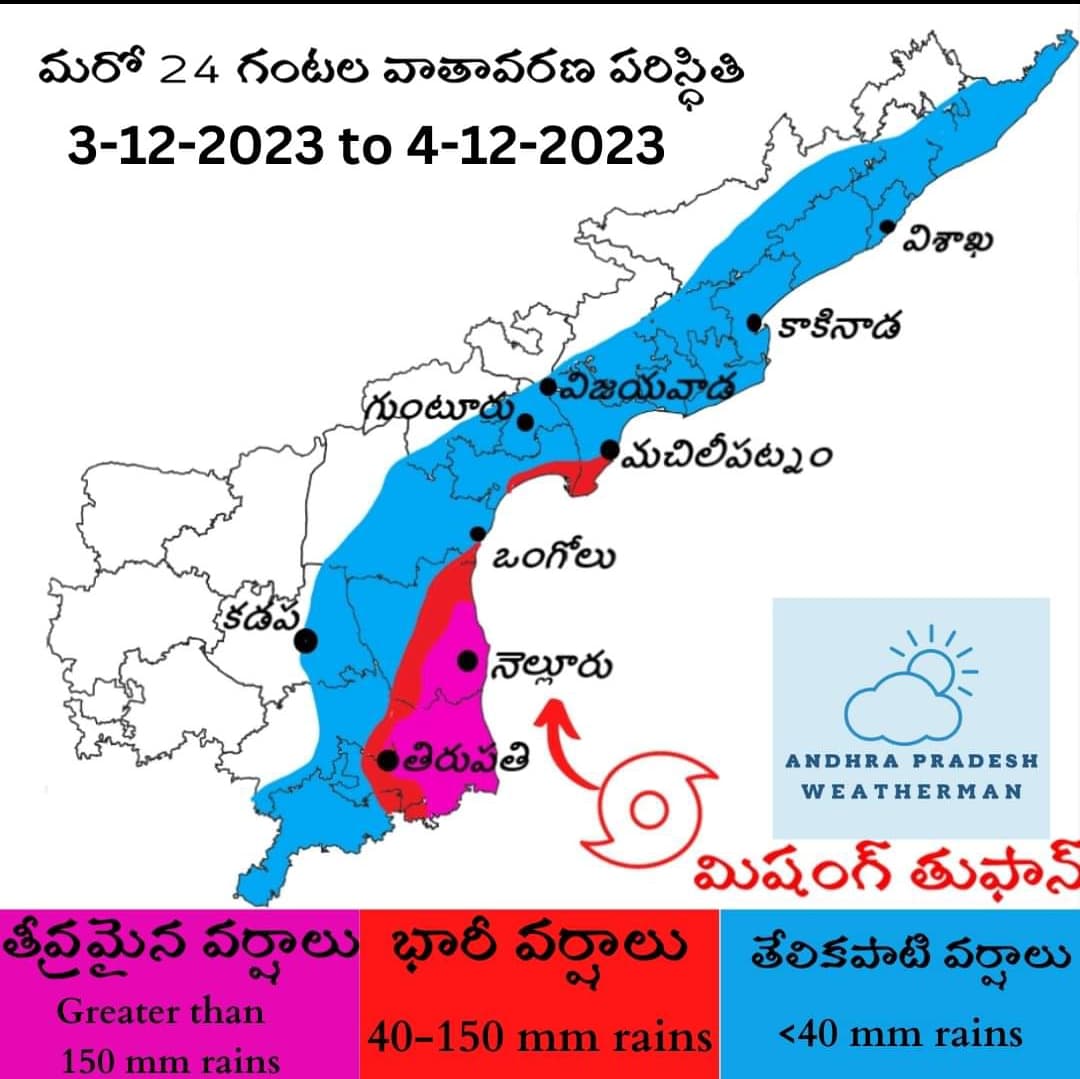
On November 30 the India Meteorological Department issued a bulletin saying Cyclone Michaung was strengthening over the Bay of Bengal and was expected to make landfall on December 5 as a cyclonic storm with maximum sustained winds of about 80 to 90 kilometers per hour and gusts reaching 100 kilometers per hour. The advisory identified the probable landfall corridor between Nellore and Machilipatnam along the south Andhra Pradesh coast and warned of heavy to very heavy rainfall in parts of Odisha and Tamil Nadu in associated spells.
Forecasters cautioned that the system could produce localized very heavy rainfall and coastal inundation, and that its track and intensity would be monitored closely with advisories updated as new model guidance arrives. State disaster response agencies were told to mount alerts, ready evacuation centers, suspend fishing activities and relocate people from low lying and flood prone areas. Officials emphasized preparations for damage to power lines and transport infrastructure, and for potential disruptions to ports and road freight that serve the region.
The warning comes at a time when coastal communities face heightened vulnerability to tropical cyclones. Even at the cyclonic storm classification, Michaung’s winds and associated rain can trigger flash flooding, damage to standing winter crops in low lying farmland and leave large numbers of small scale fishers without work for several days. Suspension of fishing until the system passes is standard procedure, but it also carries immediate economic consequences for families that rely on daily catches for income.
Ports and logistics hubs along the southeastern coast could see delays if port authorities reduce operations to secure vessels and cargo. Power outages from toppled poles and fallen trees would compound disruption to manufacturing units and cold chain operations that support fresh produce exports. Local governments typically activate emergency funds to cover evacuation, temporary shelter and restoration of critical services, but those expenditures add to budgetary pressures in the short term.

Beyond the immediate impacts, Michaung underscores longer term challenges for coastal resilience and disaster preparedness. Meteorologists note that post monsoon months are an active period for Bay of Bengal cyclones, and climate trends have been linked to greater rainfall intensity even when wind classifications remain moderate. That pattern increases the importance of early warnings, robust drainage systems, strengthened power grids and investments in natural buffers such as mangrove restoration that reduce coastal inundation.
For now the priority remains timely, accurate updates and coordinated action across districts in Andhra Pradesh, Tamil Nadu and Odisha. The IMD said it would issue further advisories as model guidance evolves, and state authorities have been told to keep evacuation centers ready, mobilize search and rescue teams and ensure communication lines remain open to support vulnerable communities until Michaung passes.
This article was produced by Prism’s automated news system from verified source data, official records, and press releases, then run through automated quality and moderation checks before publishing. The system is built and supervised by the people who set the standards it runs under. Read our full AI policy.
Did this article answer your question?