D-Day forecast drama Pressure examines Eisenhower’s weather gamble
Pressure turns a weather briefing into wartime suspense. The real drama was Eisenhower’s 24-hour gamble that helped launch D-Day.
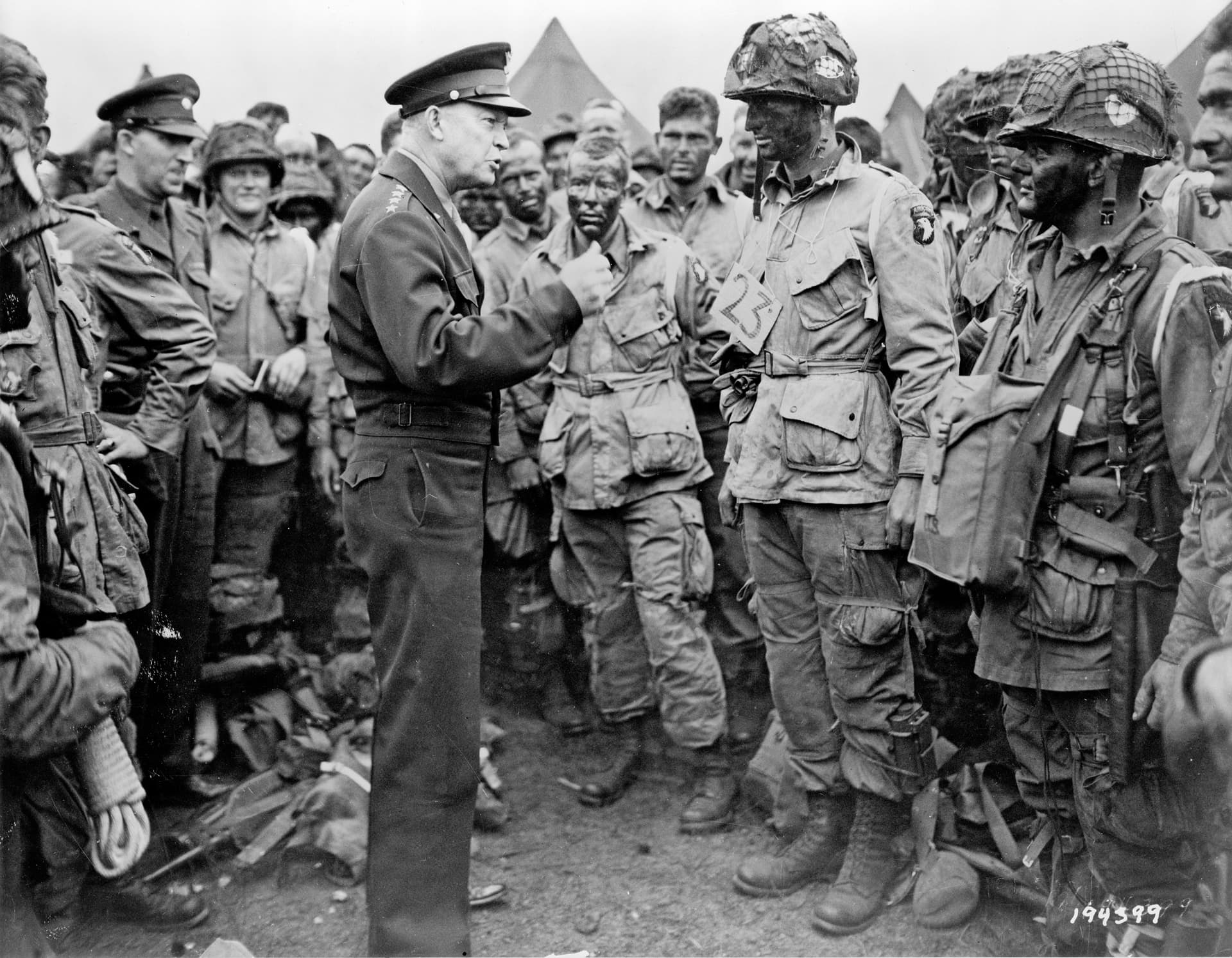
The forecast, not just the firepower, decided D-Day
The film Pressure uses a narrow weather decision as its engine, and that choice is exactly what makes the story endure. In the tense 72 hours before the Allied invasion of Normandy, Dwight D. Eisenhower had to decide whether Operation Overlord should launch or wait again, with the fate of the cross-Channel assault hanging on a forecast that was never perfectly certain.
That uncertainty was real. The invasion had first been planned for June 5, 1944, but it was postponed by 24 hours after James Martin Stagg warned of worsening conditions on June 4. D-Day then went ahead on June 6 after Stagg predicted a temporary break in the weather, and the acceptable window had been only June 5 to 7. The operation was never about rain alone. It depended on tides, moon phase, winds, sea conditions, and cloud cover, all of which had to align closely enough for airborne and naval forces to work together.
What the film gets right
Pressure grounds its drama in a true wartime dilemma, not a manufactured one. The film follows Eisenhower, played by Brendan Fraser, and Stagg, played by Andrew Scott, as the Allied command weighs the risks of delay against the risk of launching into bad weather. It also draws on a genuine disagreement among forecasters, including competing American assessments tied to meteorologist Irving P. Krick, which reflected the real split in opinion inside the Allied weather community.
The movie’s opening scene, Exercise Tiger, also comes from history. That late-April 1944 training disaster did happen, and it was devastating, with about 639 deaths caused by friendly fire and a German attack on convoys. Opening with that loss is a blunt reminder that the invasion forecast was not an abstract technical exercise. A wrong call could kill hundreds, then multiply into catastrophe on the beaches of Normandy.
What the historical record adds
Stagg was not making the call alone from a single desk. He coordinated forecasts from the British Central Forecasting Office, the Admiralty, and U.S. Army Air Forces forecasters, and they did not always agree. That network of advice mattered because the weather picture over the English Channel was volatile, and the tools available in 1944 were limited compared with modern forecasting.
The stakes of postponement were enormous. Any delay made it harder to keep the operation secret, and a longer wait could have pushed the invasion back by about two weeks until the tides were favorable again. That meant Eisenhower was not only reading the sky; he was managing secrecy, logistics, morale, and timing across an operation that had been planned around a vanishingly small meteorological opening.
Smithsonian Magazine and the National WWII Museum both treat this forecast as the central dramatic force of the story, and director Anthony Maras has said the aim was to show vulnerability and doubt inside the war room rather than create a conventional villain. That framing fits the historical record. The danger was not a single enemy figure; it was the collision of uncertainty, pressure, and irreversible consequence.
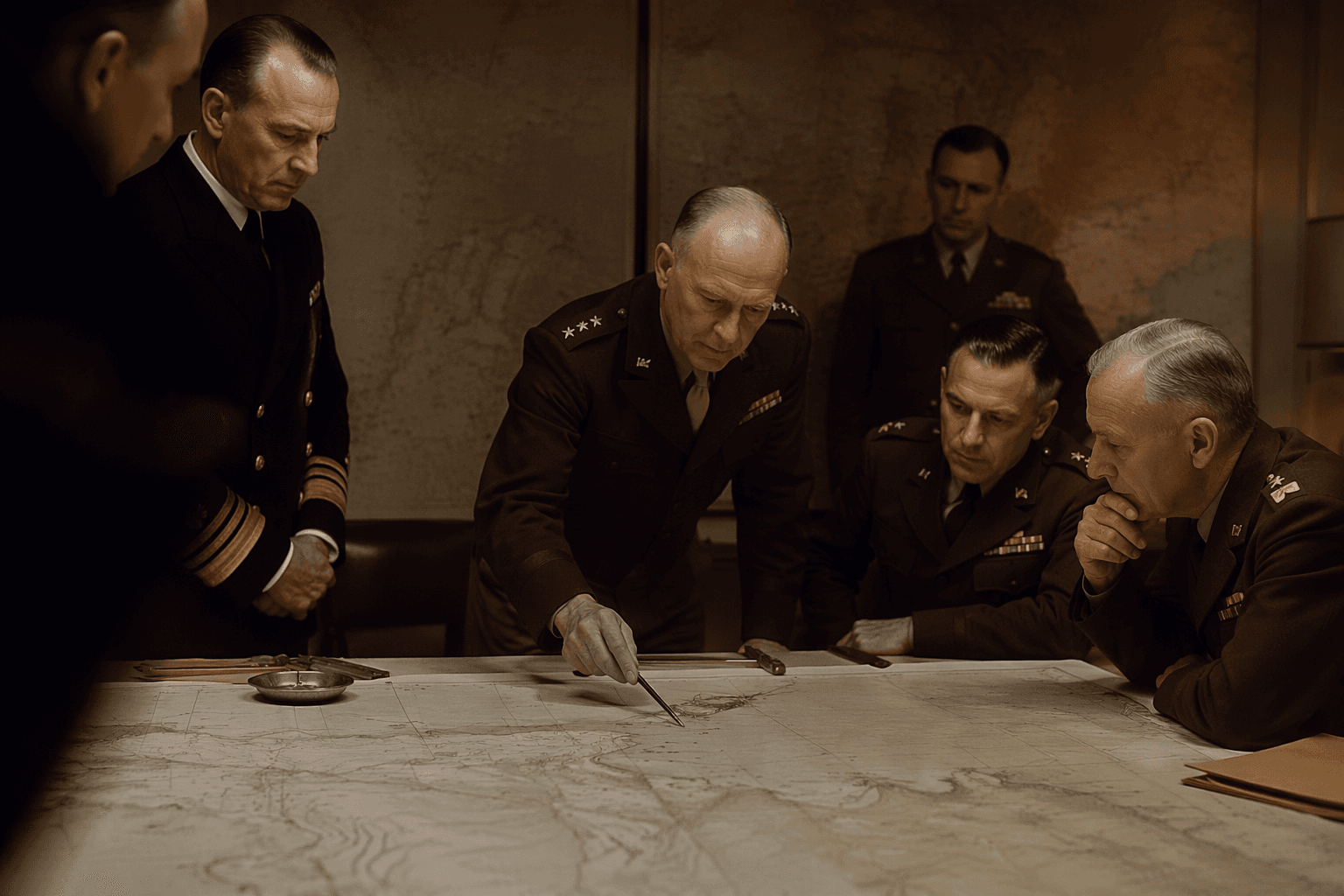
Why one weather call mattered so much
The scope of D-Day explains why the forecast carried such weight. When the weather was judged suitable, more than 5,000 ships, about 13,000 aircraft, and roughly 160,000 Allied troops were committed to the assault on a 50-mile stretch of heavily fortified French coastline. This was not a limited raid or a symbolic landing. It was the largest amphibious invasion in human history, and it demanded a synchronized launch across sea, air, and land forces.
That scale also explains why D-Day could not simply be delayed indefinitely. Eisenhower had been appointed Supreme Allied Commander on December 7, 1943, after the Tehran Conference pushed the Allies to name a single commander for the cross-Channel invasion. The result was a command structure built for decisive action, but even that structure could not overpower the weather. In wartime, command authority still depends on conditions that no general can control.
Stagg, Eisenhower, and the pressure inside the war room
The film’s strongest insight is that great military decisions are often made under severe informational limits. On June 4, Stagg’s forecast of deteriorating weather led Eisenhower to postpone the invasion by 24 hours. By the evening of June 4, and again early on June 5, Stagg saw a temporary improvement and Eisenhower ordered the invasion to proceed. The weather was still not ideal on D-Day, but it was considered good enough.
That distinction matters. “Good enough” is not how military mythology usually tells the story, yet it is how many consequential decisions are actually made. The Allied commanders were looking for a narrow window in which moonlight, tides, and surf conditions would cooperate with airborne drops and naval landings. The forecast did not promise safety. It offered the least bad path forward.
Why the story still resonates
Pressure reaches back to one of the most consequential moments of the war because it captures a truth that is easy to miss in battlefield history: decisions can hinge on expertise that is invisible until it fails or succeeds. The Met Office and Imperial War Museums have both emphasized that Stagg’s forecast is often treated as one of the most important weather predictions in history, and that judgment is not hyperbole. A single 24-hour decision helped shape the timing of the invasion that opened the Western Front in Europe.
The deeper lesson is institutional as much as meteorological. Allied victory depended on soldiers, sailors, and airmen, but also on forecasters who had to reconcile conflicting data and advise commanders in real time. In that sense, the weather call was not a sideshow to military history. It was part of the machinery of democratic Allied decision-making, where hesitation carried risks, certainty was impossible, and the final choice had to be made before the sky fully revealed itself.
This article was produced by Prism’s automated news system from verified source data, official records, and press releases, then run through automated quality and moderation checks before publishing. The system is built and supervised by the people who set the standards it runs under. Read our full AI policy.
Did this article answer your question?