Dam Removal Project Offers Hope for Endangered Atlantic Salmon in Maine
Only 47 adult Atlantic salmon reached Maine's Lockwood Dam last year, all trucked past four barriers to reach the Sandy River as a $168M removal deal reshapes the Kennebec fight.
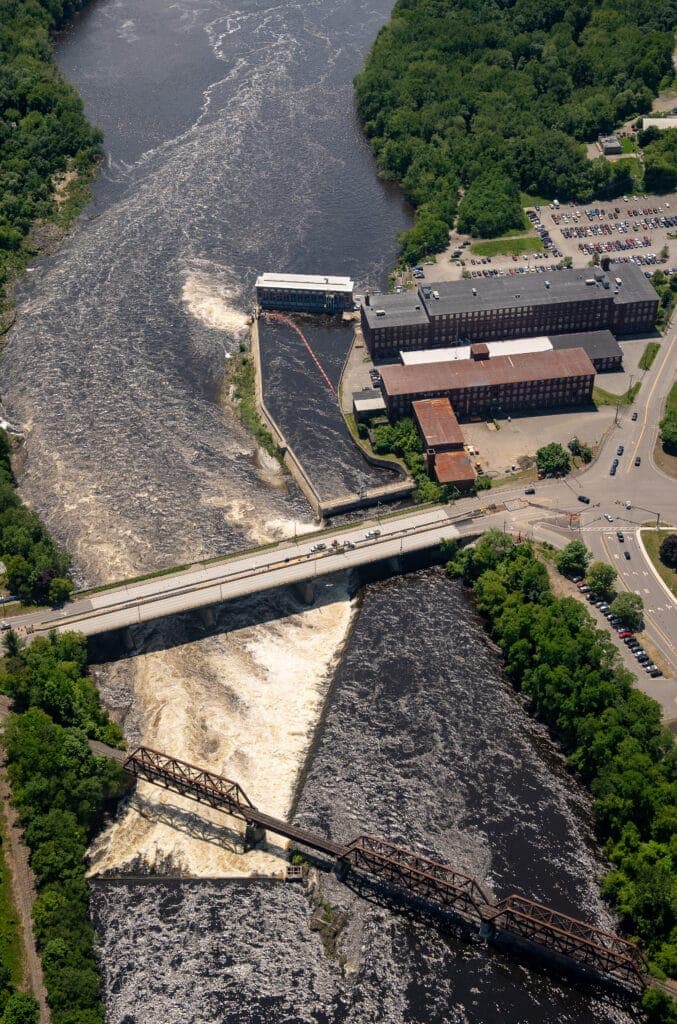
Last year, 47 adult Atlantic salmon swam up the Kennebec River to the base of Lockwood Dam. Workers caught them in nets, loaded them into aerated tanks, and drove them upstream. The trucking workaround has become an annual ritual, a measure of how thoroughly four hydroelectric dams have severed the lower Kennebec from its most critical spawning ground: the Sandy River in western Maine.
The number, documented by federal monitors in 2025, is the sharpest illustration of what dam removal advocates say is a species in freefall. Since the first lower Kennebec dam was built more than a century ago, salmon runs have declined from hundreds of thousands of fish each year to a population that barely registers. The Sandy River, a Kennebec tributary winding through Franklin and Somerset counties, holds some of the best cold-water spawning habitat in the Northeast and carries federal designation as Critical Habitat for Atlantic salmon under the Endangered Species Act. The four dams stand directly between it and the Gulf of Maine.
The Nature Conservancy moved to close that distance in September 2025, finalizing a $168 million agreement with Brookfield Renewable Partners to purchase the four lower Kennebec dams: Lockwood, Hydro-Kennebec, Shawmut, and Weston. A new nonprofit, the Kennebec River Restoration Trust, will oversee the transition toward eventual decommissioning and removal. "Ultimately, the bigger vision is a free-flowing lower Kennebec that restores the ecology and strengthens the economy," said Alex Mas, deputy state director for The Nature Conservancy in Maine, at the time of the deal. Two additional dam removals already planned on Sandy River tributaries, targeting Lemon Stream Dam in Starks and a dam on Little Norridgewock Stream in Chesterville, could open another 825 miles of connected river and stream habitat to the Gulf of Maine.
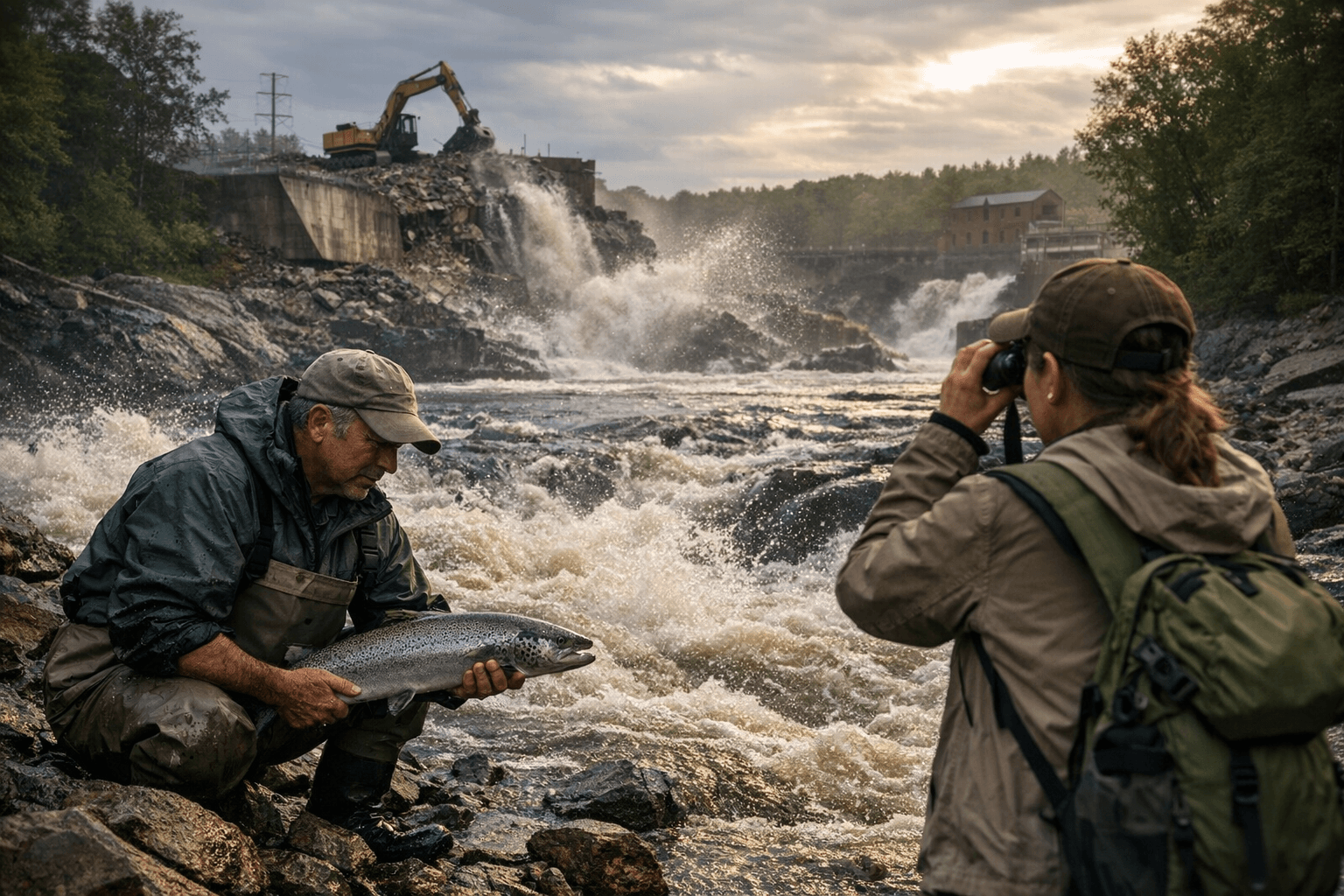
The project faces opposition from business and lawmakers, and the stakes are high on both sides. Sappi North America, which operates a paper mill in Skowhegan with more than 750 unionized workers, says it depends on the impoundment behind Shawmut Dam for its water intake and cannot survive without it. A 2022 analysis commissioned by the Mid-Maine Chamber of Commerce found the four dams collectively support more than 3,200 jobs in Kennebec and Somerset counties. Republican State Sen. Brad Farrin introduced L.D. 1210, a bill that would require the state Department of Environmental Protection to prioritize a dam's economic and energy value above environmental impacts. State DEP hydropower coordinator Laura Paye pushed back, telling committee members the bill would conflict with the federal Clean Water Act and require EPA approval to implement. The Wabanaki Nations, whose connection to the Kennebec predates every dam on the river, have joined conservation organizations in calling for full removal.
The Kennebec has a precedent to point to. When the Edwards Dam in Augusta came down in 1999, sea-run fish returned faster than many scientists had expected, and the river's lower reaches came alive with species that had been absent for decades. Salmon populations climbed, though they remain far below pre-dam numbers from the 1800s. Whether removing four more dams can turn 47 fish a year into something resembling a run is the experiment Maine is now, slowly and contentiously, preparing to run.
This article was produced by Prism’s automated news system from verified source data, official records, and press releases, then run through automated quality and moderation checks before publishing. The system is built and supervised by the people who set the standards it runs under. Read our full AI policy.
Did this article answer your question?