D.C. warns of measles exposures at March for Life and transit hubs
DC Health says multiple confirmed measles cases visited several District sites between Jan. 21 and Feb. 2; exposed people should seek guidance and watch for symptoms.

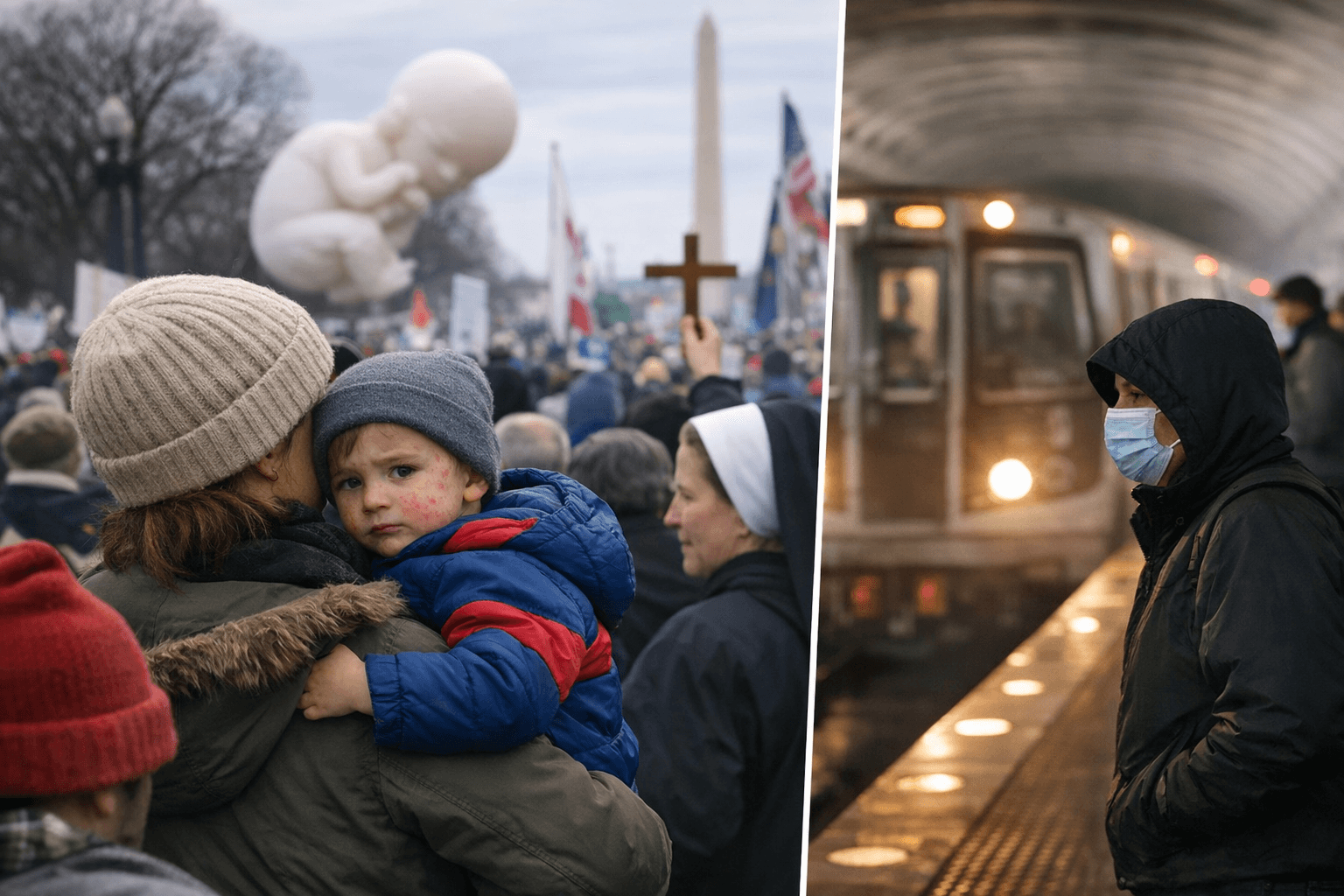
DC Health is notifying residents that people with confirmed measles visited multiple locations across Washington, D.C., while contagious, including the National March for Life rally on the National Mall, airports, transit hubs, a university campus and a hospital emergency department. The advisory covers potential exposures between Jan. 21 and Feb. 2 and urges anyone who may have been at listed sites to contact health authorities or their health care provider.
“DC Health was notified of multiple confirmed cases of measles whose carriers visited multiple locations in the District while contagious,” the agency said, adding that it “is informing people who were at these locations that they may have been exposed.” Officials have published a date, time and location list of potential exposure sites and are coordinating with hospitals and other institutions to identify contacts.
Among the named sites are the Jan. 23 National March for Life rally on the National Mall; Ronald Reagan Washington National Airport; Union Station; the Catholic University of America; the Basilica of the National Shrine of the Immaculate Conception; and the emergency department at Children’s National Hospital, which reported that a Virginia resident later diagnosed with measles visited the ED on Feb. 2. Officials have not released a confirmed numeric case total; public reporting has varied, with some accounts citing three infected people while DC Health’s public language uses the term multiple cases.
Local public health messaging reiterates who is considered protected and who should act. “Anyone who has not received a measles containing vaccine, either the the measles, mumps, and rubella (MMR) vaccine or a measles only vaccine, is at risk for contracting measles,” health guidance says. “Anyone who has had two doses of a measles containing vaccine or was born before 1957 is considered protected and does not need to take any action.” Those who have received one dose are “most likely protected, but health officials advise talking to a health care provider about receiving a second dose for full immunity.”
Exposed people should watch for symptoms for up to 21 days after exposure and isolate and call their provider if symptoms develop. Health care providers are urged to maintain a high index of suspicion for clinically compatible cases and to report suspected infections immediately. “Suspected cases can be reported by healthcare providers via telephone at 844-493-2652 or by submitting a Notifiable Disease and Condition Case Report Form online using the DC Reporting and Surveillance Center (DCRC), which can be found on our Infectious Diseases website dchealth.dc.gov/node/143092,” the advisory states.
The alert arrives amid a national surge: the Centers for Disease Control and Prevention has said “the U.S. has recorded 733 measles cases so far this year, with 92% of confirmed cases associated with outbreaks.” Public health experts warn that falling vaccine coverage increases the risk of spread. George Washington University public health materials note that DC kindergarten vaccination coverage is roughly 92 to 93 percent, below the 95 percent threshold commonly cited to prevent outbreaks, and remind the public that “Measles is one of the most contagious viruses known and can linger in indoor air for up to two hours after an infected person leaves, making crowded spaces especially vulnerable.”
The advisory underscores equity and system gaps: mass gatherings, transit corridors and inconsistent childhood vaccination rates concentrate exposure risk among people who rely on public spaces. DC Health directs exposed individuals and providers to the phone number and DCRC form for testing, reporting and guidance.
This article was produced by Prism’s automated news system from verified source data, official records, and press releases, then run through automated quality and moderation checks before publishing. The system is built and supervised by the people who set the standards it runs under. Read our full AI policy.
Did this article answer your question?