Deadly monsoon floods strand more than a million in southeastern Bangladesh
Floods and landslides killed at least 44 in southeastern Bangladesh, where more than a million people and 267,918 households were stranded.
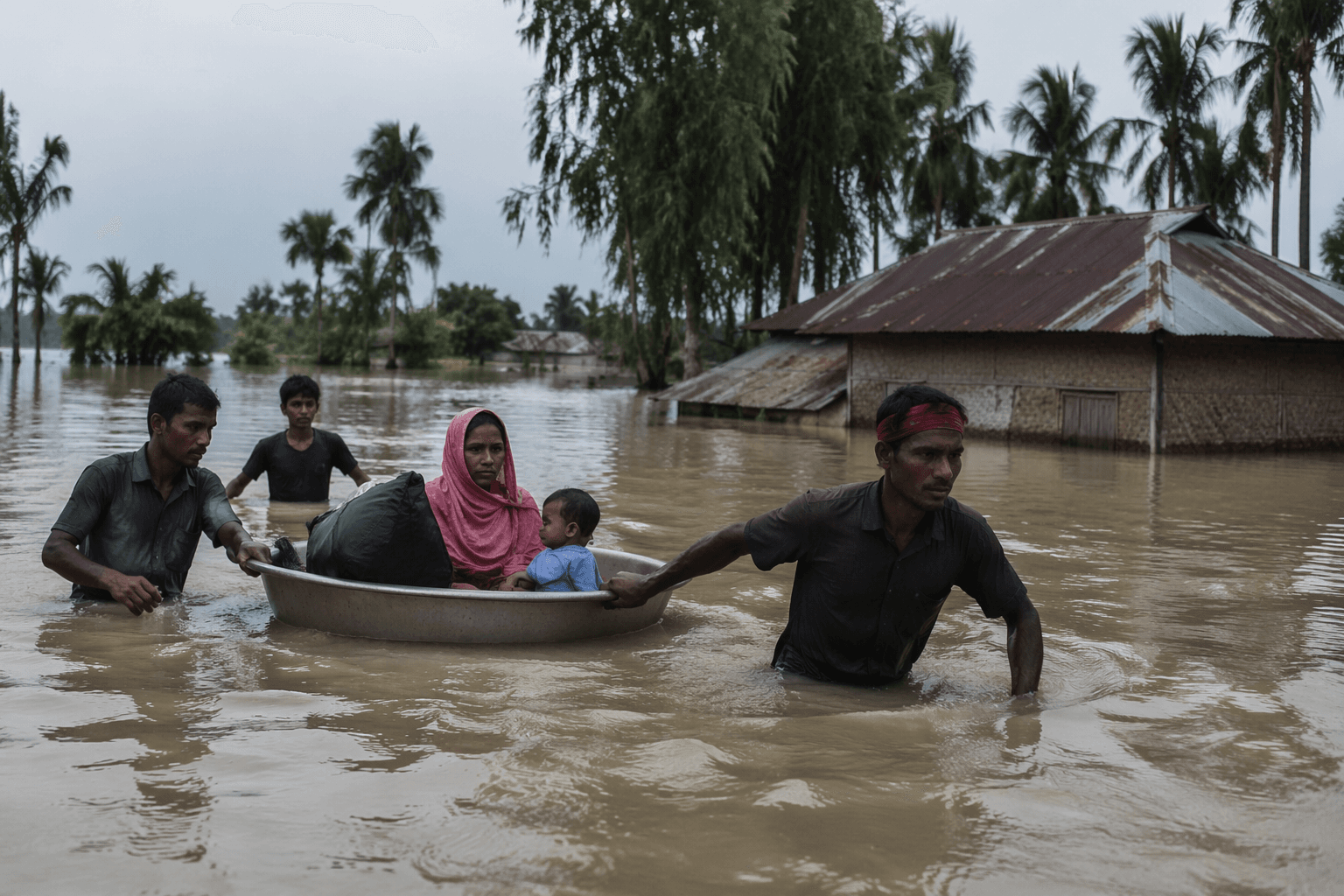
Torrential monsoon rain triggered floods and landslides that killed at least 44 people in southeastern Bangladesh and stranded more than a million residents across seven districts, cutting off roads, power and communications. The worst-hit areas were Chattogram, Cox’s Bazar, Bandarban, Rangamati, Khagrachhari, Moulvibazar and Habiganj, where floodwaters isolated neighborhoods and rescue teams struggled to reach people.
The Bangladesh Ministry of Disaster Management and Relief counted 267,918 stranded households. In many homes, families could not cook because water had entered living spaces and thick mud covered kitchens. In Chattogram, Nurul Islam said floodwater was still inside his home, the dry food stored there was gone and his family was spending nights in the dark with children because there was no electricity.
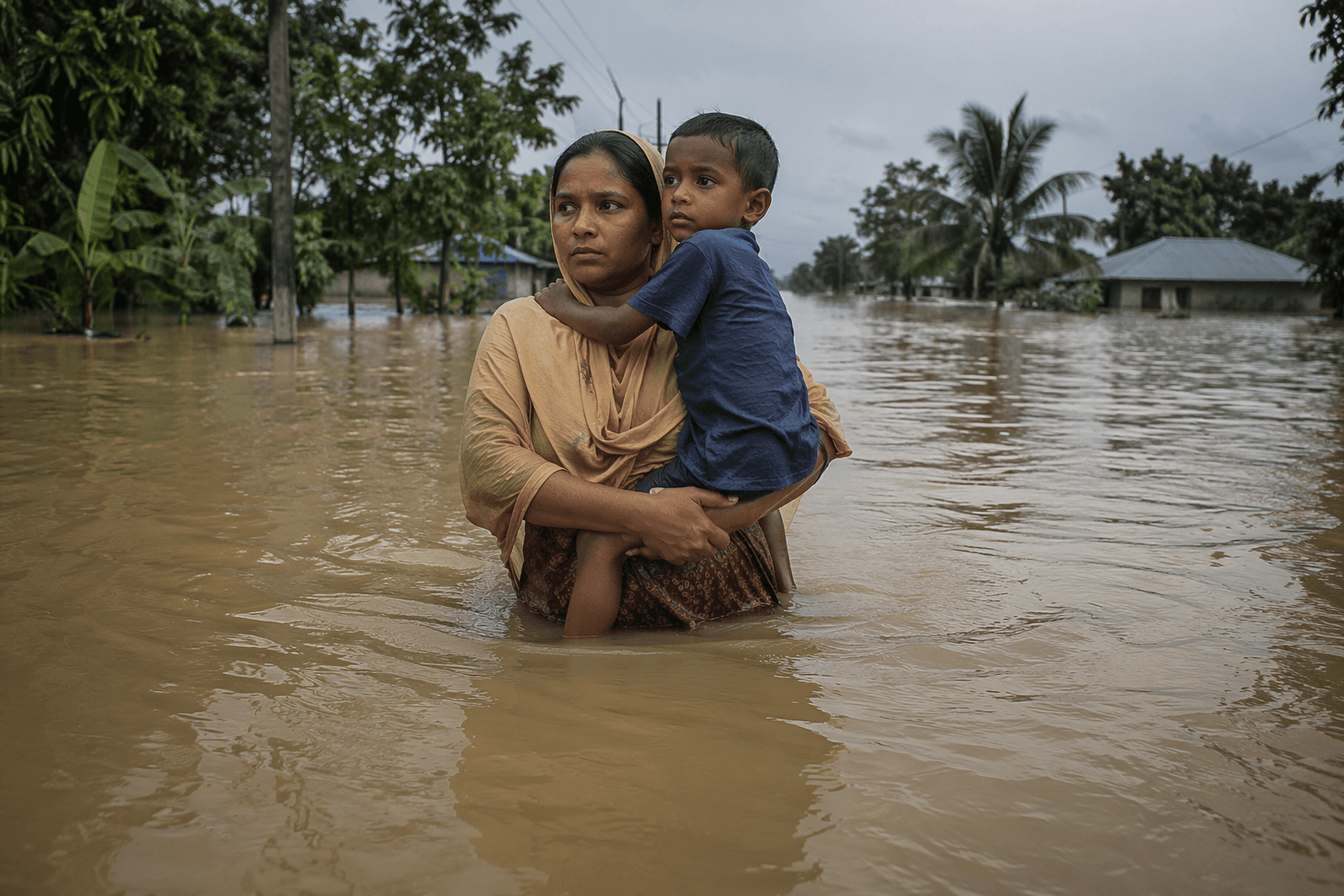
Relief supplies were being moved by boat after washed-out roads and damaged bridges slowed access to the hardest-hit communities. Army and navy personnel were ferrying food, drinking water, medicines and other goods into marooned areas, while thousands of households depended on dry food such as flattened rice, puffed rice and biscuits that did not require cooking. Disaster Management and Relief Minister Iqbal Hossain said the government was doing everything possible to support flood victims and urged people whose homes had been inundated to move to nearby shelters.
The monsoon disaster also hit Bangladesh’s Rohingya refugee camps in Cox’s Bazar, where heavy rain triggered landslides earlier in the week and killed 16 refugees, including women and children. More than 1 million Rohingya refugees live in Bangladesh, most of them in 33 crowded camps in Cox’s Bazar district, where steep, deforested hillsides make the settlements highly exposed to flooding and landslides.
UNHCR and its partners have been moving people away from the most dangerous hill areas, with about 1,000 refugees relocated before the latest landslides. The camps have been under sustained pressure since August 2017, when more than 750,000 Rohingya fled violence in Myanmar and crossed into Bangladesh. The 2025-26 Joint Response Plan for the refugee crisis, launched on March 24, 2025, seeks $934.5 million this year to assist 1.48 million people, including refugees and host communities.
This article was produced by Prism’s automated news system from verified source data, official records, and press releases, then run through automated quality and moderation checks before publishing. The system is built and supervised by the people who set the standards it runs under. Read our full AI policy.
Did this article answer your question?


