Decatur County row-crop growers receive phosphorus fertilizer management tips for 2026
Decatur County row-crop growers received phosphorus management guidance to lower fertilizer bills and protect yields by following soil tests and precision-placement tactics.
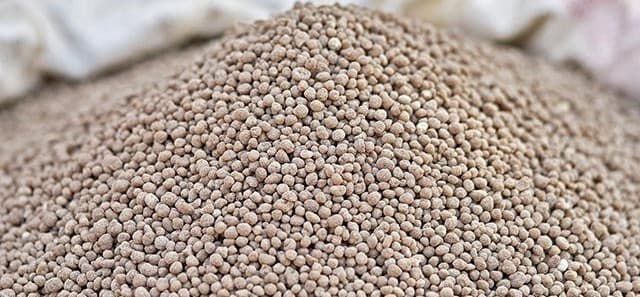
Fertilizer remains one of the largest line items for Decatur County row-crop operations, and University of Tennessee extension specialist Nutifafa Adotey is urging producers to base phosphorus (P) decisions on soil tests and to reserve applications for low- and medium-testing fields. Tennessee trials conducted between 2020 and 2025 showed very little to no economic return from applying P to high-testing soils, a finding that could trim input costs without cutting yield if applied across local acres.
The practical chemistry matters. Common P products include diammonium phosphate (DAP) at 18 percent nitrogen and 46 percent P2O5, monoammonium phosphate (MAP) at 11 percent nitrogen and 46 percent P2O5, and triple superphosphate (TSP) at 0 percent nitrogen and 46 percent P2O5. Global product tables show typical application ranges: single superphosphate 200 to 400 kg per hectare, TSP 80 to 150 kg per hectare, and DAP 100 to 200 kg per hectare. Because DAP carries nitrogen, Adotey’s summary and Tennessee field work found that DAP’s extra N does not reliably boost yield over TSP in dryland no-till corn, and nitrogen credits from DAP can vary with weather and loss pathways.
Agronomic timing is also central. Agronomist Laatsch noted that “Phosphorus is often thought of as an early-season only nutrient, but it plays a key role throughout the growing season, including mid-season reproductive stages. In crops like corn, by the time the plant reaches VT, it’s shifting from vegetative to reproduction, and phosphorus supports this transition. A shortage at this stage can impact pollination and seed development, ultimately reducing yield.” Bingham reinforced that “Mid-season is when many crops are rapidly taking up nutrients, and phosphorus availability at this stage helps sustain plant energy levels and support reproductive success. If phosphorus is limited, it can lead to poor seed set, lower grain fill and diminished quality — issues that can’t be reversed later in the season.” Bond added a stewardship frame: “Many early-season phosphorus applications are quickly tied up in the soil ... One way to approach this is by following the 4Rs of nutrient stewardship — applying the right source of phosphorus at the right rate, the right time and in the right place to improve efficiency and minimize loss.”
Soil texture and placement choices should guide on-farm tactics. For sandy soils, split applications of TSP timed to crop growth stages reduce leaching risk. For clay soils, deep placement or banding of TSP or SSP close to the root zone improves uptake and reduces fixation losses from surface broadcasting. Precision placement, fertigation near root zones, and split applications are practical ways to extend P availability into mid- and late-season growth while lowering runoff and fixation.

Budget-constrained operators can follow Iowa State Extension logic: “If P and K funds are limited, apply recommended P and K levels in areas testing very low. That’s even true on rented acres, as probabilities are high for yield increases and large ROIs.” The same advisors recommended targeting leftover funds to low-testing areas, postponing major P and K on optimum areas except for starter fertilizer because response probability at optimum is low, and retesting soils in two years. Tools that factor location, previous crop and expected precipitation can help fine tune nitrogen plans and interact with P decisions.
Regulatory and environmental headwinds strengthen the economic case for precision. Phosphorus runoff is a leading cause of freshwater eutrophication, and recent state-level restrictions underscore pressure to reduce losses. For Decatur County producers, the immediate steps are clear: test fields this spring, prioritize low- and medium-testing acres, weigh TSP where N credits are unnecessary, match timing and placement to soil texture, and plan to retest in two years. Following these practices can protect yields, shrink fertilizer bills and keep farms aligned with evolving environmental rules.
Sources:
Know something we missed? Have a correction or additional information?
Submit a Tip