Deep Springs College tests self-governance, labor and service on an isolated ranch
Deep Springs turns ranch labor and student rule into a test of character, and its alumni record suggests the experiment can shape outcomes elite campuses rarely measure.
Deep Springs College as a stress test for elite higher education
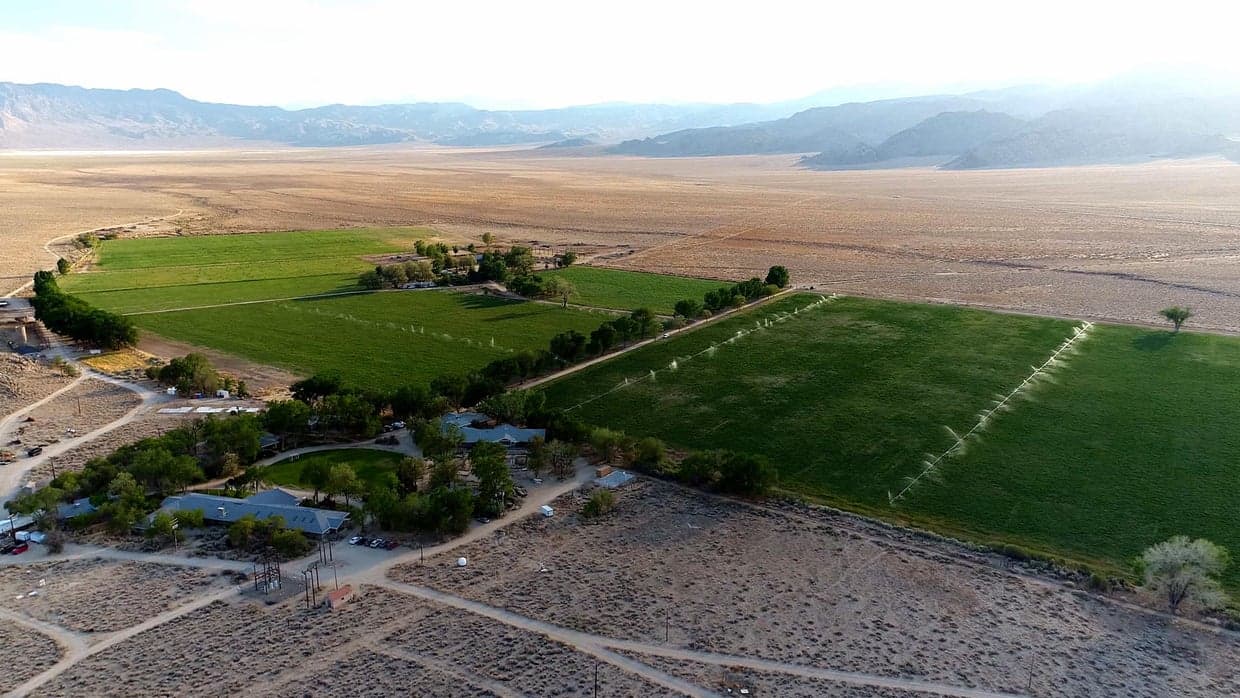
Deep Springs College asks a blunt question that most prestigious universities avoid: what if college were designed not just to reward achievement, but to teach dependence, obligation, and service? On an isolated cattle ranch in Deep Springs Valley, about thirty miles from the nearest town and roughly forty miles from Bishop, California, a tiny two-year school has built its identity around that challenge since 1917.
The college’s case against conventional higher education is simple but uncomfortable. It argues that academic excellence alone does not reliably produce accountability to other people. Deep Springs tries to correct that by making students live inside a tightly bounded community where their choices have visible consequences, where labor is mandatory, and where governance is shared rather than outsourced to administrators. That is why the school matters far beyond its size.
A college built around work, study, and rule-making
Deep Springs is organized around three pillars: academics, labor, and self-governance. Students take seminar-style classes, work at least 20 hours a week, and participate directly in running the college. The labor is not symbolic. Each student is assigned a position by the student Labor Commissioner and may work on the ranch, farm, in the kitchen, or on maintenance.
That structure gives the college a distinctive answer to a familiar critique of elite education. Many top universities can produce strong credentials, but they often leave students insulated from the daily reality that institutions are maintained by shared labor and contested decision-making. Deep Springs puts those tasks in front of students every day. The school is not asking whether students can merely perform well in class; it is asking whether they can help sustain a community.

The setting reinforces the point. The campus sits on an isolated cattle ranch in Deep Springs Valley, and the remoteness is intentional. By placing students far from the social and professional noise of larger campuses, the college creates a small society in which service and responsibility are not extracurricular ideals but operating requirements.
The numbers behind the experiment
The college is extraordinarily small. It admits about 12 to 15 students each year, with roughly 26 students on campus at a time. Each student receives a full scholarship covering tuition, room, and board. That scale is essential to the model: Deep Springs is not trying to educate at volume. It is trying to intensify a particular kind of education, one in which every student’s work and judgment are immediately visible to everyone else.
The selectivity is part of the story too. NBC News reported that the two-year college receives 180 to 250 applications a year for about a dozen spots. That ratio shows how rare the opportunity is, but it also shows the appeal of a school that promises something different from the standard prestige race. Applicants are not simply seeking another elite name. They are seeking a setting that treats community responsibility as a core academic outcome.
Measured against conventional higher education, Deep Springs is not trying to outperform large universities on breadth of offerings or research production. Its metric is narrower and more unusual: whether a tiny residential college can train students to think beyond themselves in ways that are hard to institutionalize elsewhere. The college’s scale makes that easier to supervise, but it also raises the obvious question of replication. A model that depends on 26 students, compulsory labor, and intensive self-rule may be powerful precisely because it is so small.
Self-governance as a daily discipline
Deep Springs places students in charge of their community, and that is where its philosophy becomes most concrete. The Student Body convenes once a week to deliberate and act on issues involving community life, labor, academics, and disciplinary matters. That means students are not just learning about governance in theory. They are practicing it under real constraints, with real consequences for their peers and for the college itself.
This is where the school’s challenge to elite higher education becomes most interesting. Many colleges talk about leadership, civic virtue, and collaboration. Deep Springs makes those ideas operational. A student who mishandles a labor assignment or a community dispute is not failing a hypothetical exercise. The school’s own functioning is affected. That creates a built-in lesson that is difficult to reproduce in larger, more bureaucratic settings: accountability becomes personal, immediate, and shared.
The school’s founders intended exactly that. L.L. Nunn, an electricity tycoon and philanthropist, founded Deep Springs in 1917 with the broader goal of educating students for a life of service to humanity. He also founded other institutions tied to the same educational philosophy, including the Telluride Association. Deep Springs remains the clearest expression of that idea, because it links intellectual work to material labor and collective self-rule in the same small environment.
What the ranch teaches that rankings do not capture
Deep Springs is one of the clearest live experiments in whether physically demanding, communal work can teach accountability and purpose in ways many elite residential colleges do not. The ranch includes roughly 300 head of cattle, according to CBS News in 2021, which underscores that the labor is not ceremonial. Students are participating in the maintenance of a working agricultural operation while also carrying a full academic load and helping govern the institution.
That combination is difficult to quantify with standard higher education metrics. Graduation rates, faculty prestige, and post-college earnings can tell part of the story, but they miss the school’s core claim: that service and responsibility can be taught through structure, not just sermonizing. Deep Springs suggests that the capacity to live for something larger than oneself can be cultivated when students are given real duties, real authority, and real consequences.

Its alumni record offers at least some evidence that the model can produce exceptional outcomes. Graduates have gone on to earn Rhodes Scholarships, Truman Scholarships, Pulitzer Prizes, and MacArthur fellowships. Those honors do not prove causation, but they do show that the school’s unusual environment has not prevented academic and professional success. If anything, it suggests that a demanding communal education can coexist with elite achievement.
From all-male tradition to broader access
For much of its history, Deep Springs operated as an all-male college. After a six-year legal battle, the school announced in 2017 that it would begin accepting women in July 2018. That change matters because it tested whether the institution’s core mission depended on exclusion or on the harder premise that its model could widen without losing force.
The transition also sharpened the broader question facing the school today. If Deep Springs is more than a historical oddity, then its educational logic should be able to survive change. If it remains inspiring but highly niche, that will be because the model is inseparable from the intimacy, intensity, and physical demands of ranch life. Either way, the institution’s evolution is part of the evidence.
Deep Springs will probably never be replicated at scale, and that may be the point. It exposes a gap in elite higher education by showing that a college can make labor, governance, and service central rather than peripheral. The ranch does not just educate students in the usual sense. It tests whether a small community can train people to understand that their daily actions matter to others, and that lesson may be harder to measure, but it is no less real.
Know something we missed? Have a correction or additional information?
Submit a Tip