DeepSeek Suffers Seven-Hour Outage, Disrupting Users in China and Globally
DeepSeek's R1 service logged its worst outage since launch, going dark for over 8 hours Sunday in a two-phase failure that persisted into Monday morning.
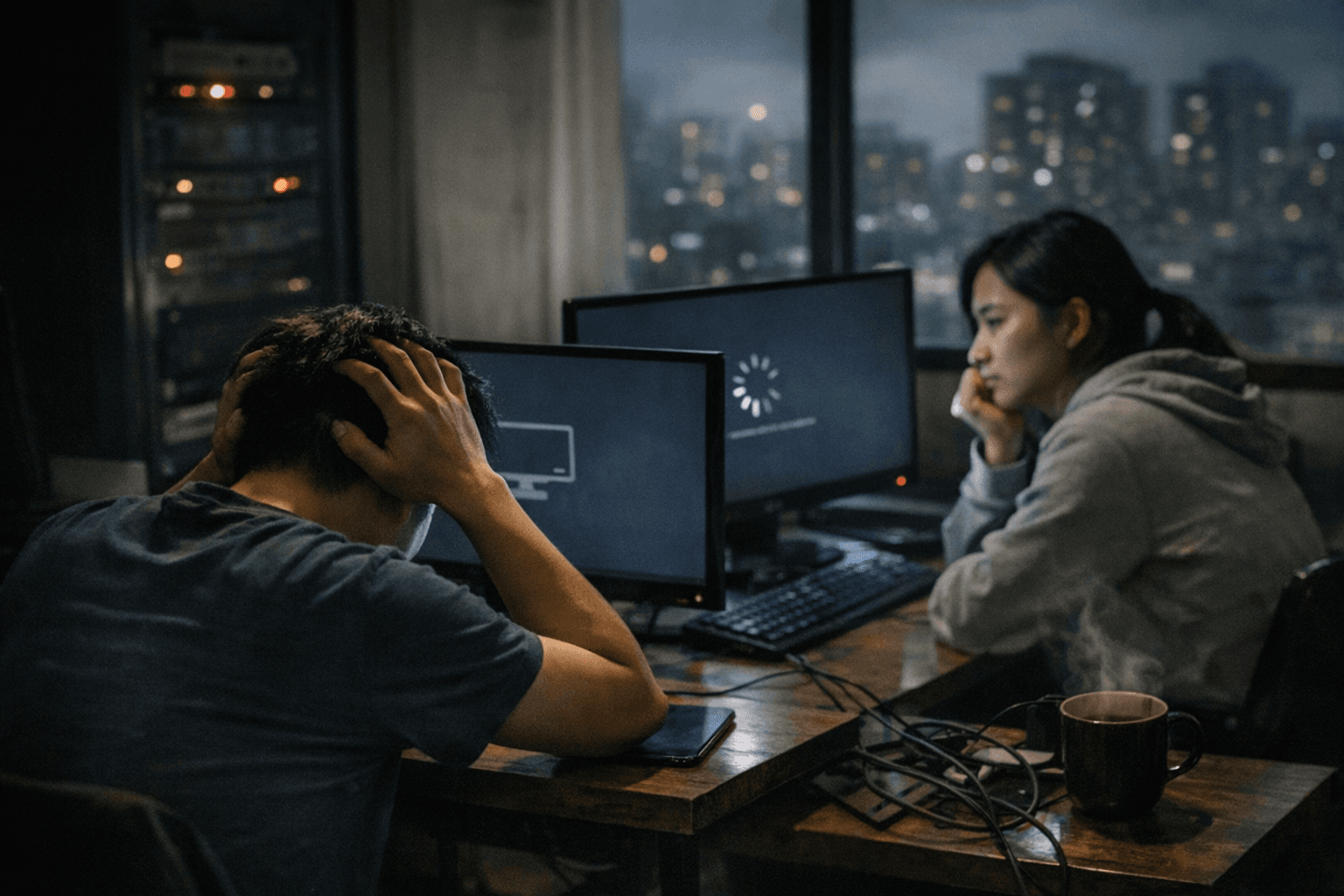
For more than 14 months after its January 2025 debut, DeepSeek maintained a near-99% uptime record, the kind of quiet reliability that turns a chatbot into infrastructure. On Sunday evening, that record broke. The Hangzhou-based startup's service went dark for more than seven hours in what independent monitoring service StatusGator logged as 8 hours and 13 minutes of downtime, the worst disruption since the company's launch.
Users across China, where DeepSeek's R1 model has become a mainstream tool embedded in student workflows, enterprise coding pipelines, and automated customer support operations, first noticed problems Sunday evening. Downdetector registered the initial surge of fault reports before the company's own status page acknowledged an incident at 9:35 p.m. local time. DeepSeek marked that first episode resolved roughly two hours later, but the trouble was not over. A second wave of performance issues emerged Monday morning, with users reporting session timeouts, incomplete responses, and prompts failing midway. That phase did not clear until 10:33 a.m.
DeepSeek deployed several updates over the night and morning in an attempt to restore stability. Its only public statement offered little elaboration: "A fix has been implemented and we are monitoring the results." The company did not disclose the root cause, leaving open whether the failure stemmed from a capacity surge, a software bug tied to an update rollout, or an infrastructure fault. Developer communities and social platforms filled the void with speculation.
The terse response drew scrutiny. Major AI providers have broadly faced criticism for delayed or thin explanations during service disruptions, and DeepSeek's handling fits a familiar pattern. What sharpens the scrutiny here is the scale of expectations attached to the company. R1's launch in January 2025 briefly rattled U.S. technology stocks and triggered a global reassessment of Chinese AI capabilities, establishing DeepSeek as not merely a regional product but a geopolitical reference point. That visibility amplifies the reputational stakes of any sustained outage.
The disruption was not a total blackout, which in some respects made it harder to manage. Some users could not log in while others faced timeouts or incomplete responses; prompts would fail midway and sessions drop unexpectedly. That degraded state complicates triage and forces developers and enterprise teams to decide in real time whether to wait, retry, or reroute workflows entirely. Companies relying on DeepSeek for customer-facing applications faced the most acute exposure during the roughly 13-hour window from the initial Sunday evening reports to the Monday morning resolution.
Timing compounds the competitive pressure. Alibaba, ByteDance, and Tencent have each released new AI models in recent months, tightening the field in China just as DeepSeek has been the subject of speculation about a forthcoming major product release. An extended outage followed by a minimal public explanation is not the strategic posture any startup would choose ahead of a high-stakes product moment.
StatusGator's monitoring history shows DeepSeek had logged shorter warning and outage events in February and earlier in March, including a 40-minute outage on March 5 and a 75-minute outage on March 10, but none approached Sunday's severity. The pattern suggests the service has been absorbing growing load as its user base expands, even before whatever tipped the system into Sunday night's multi-phase failure.
Whether Sunday's fix proves durable, and whether DeepSeek follows with a technical post-mortem, will matter not just to users but to the enterprise customers and regulators who increasingly treat AI service reliability as a baseline qualification. For a startup that rewrote global expectations about what a Chinese AI company could build, the harder question now is whether it can sustain what it has built.
This article was produced by Prism’s automated news system from verified source data, official records, and press releases, then run through automated quality and moderation checks before publishing. The system is built and supervised by the people who set the standards it runs under. Read our full AI policy.
Did this article answer your question?