Deezer says AI-generated music now makes up 44% of uploads
Deezer said AI-made tracks reached 44% of daily uploads, nearly 75,000 songs a day, yet they still accounted for just 1% to 3% of streams.
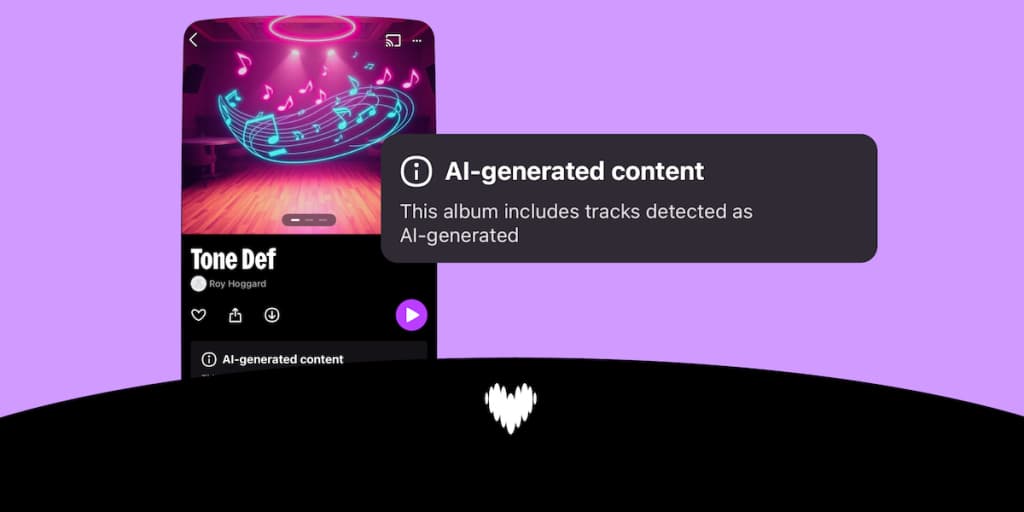
Deezer said fully AI-generated music made up 44% of all daily uploads in April 2026, or nearly 75,000 tracks a day. The Paris-based streaming service said the flood of synthetic songs was expanding far faster than listening, with AI-generated tracks still producing only 1% to 3% of total streams.
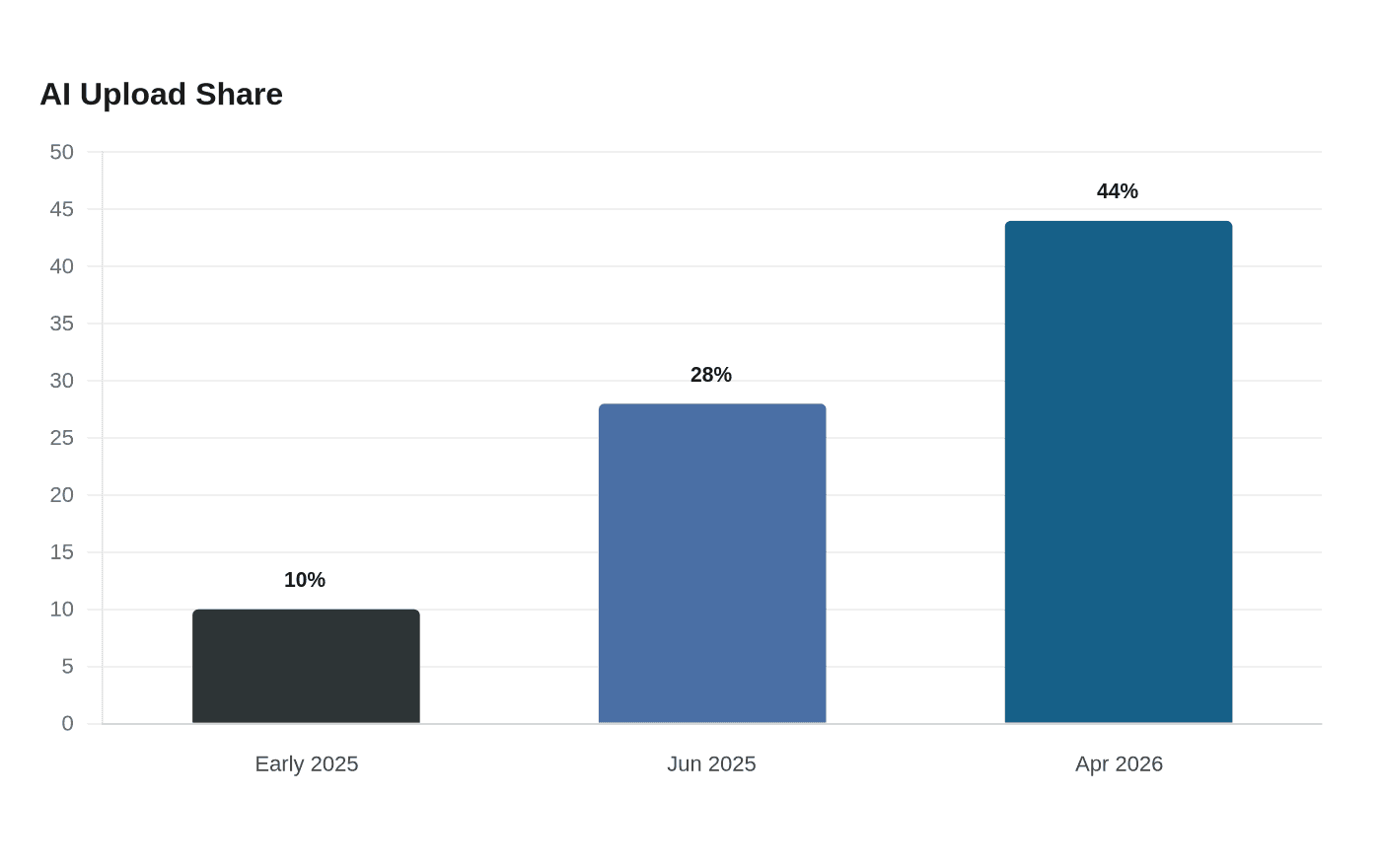
The pace of growth was steep. Deezer said AI-generated tracks accounted for about 10% of daily uploads in early 2025, then climbed to 28% by June 2025 before reaching 44% in its April 2026 tally. In June, the company said more than 90,000 AI-generated tracks were being uploaded each day, a volume that underscored how quickly automated music creation had become a platform-scale issue rather than a niche experiment.
Deezer moved to respond early. It introduced AI music labeling tools in January 2025 and said it had already flagged and labeled more than 13.4 million AI-generated tracks. That effort has become central to how the service separates algorithmic output from human-made recordings, especially as upload volume keeps rising while listener demand remains comparatively small.
The problem is not just scale, but visibility. Deezer and Ipsos found that 97% of listeners could not tell the difference between AI-generated and human-made music, a sign that discovery systems and fraud controls face a harder test as synthetic tracks multiply. Deezer appointed Alexis Lanternier as chief executive in July 2024, and the company’s latest figures show the challenge now sits at the center of streaming economics: if nearly half of all uploads are machine-made, the industry must decide how to label them, route them through recommendations, and protect compensation for artists whose work competes with industrial volumes of automated content.
This article was produced by Prism’s automated news system from verified source data, official records, and press releases, then run through automated quality and moderation checks before publishing. The system is built and supervised by the people who set the standards it runs under. Read our full AI policy.
Did this article answer your question?