Delayed defence plan threatens UK jobs, skills and national security
A year-long delay to the UK's defence investment plan rattled unions and firms, with £42.5bn in equipment overspend and jobs at risk across the supply chain.

Britain’s delayed 10-year defence investment plan has become a test of more than military strategy. The longer Whitehall waits, the more it threatens to weaken NATO credibility, leave factories and workshops in limbo, and make it harder for the armed forces to buy kit on realistic timelines.
The plan was initially due in autumn 2025, after the government said in September that it would be published that autumn as part of the Strategic Defence Review’s rollout. That review, published on 2 June 2025, set out a shift toward warfighting readiness, a NATO-first approach and a defence sector meant to act as an engine for growth. Yet MPs were later told the document would come later in 2025, and current talk in Parliament is now about publication before the next NATO summit on 7 July 2026.
That delay matters because the sums behind the plan are already stark. The Public Accounts Committee said the Ministry of Defence had expected equipment costs to exceed its budget by £42.5bn over the 10 years to 2033, underscoring why a long-term plan is needed to force harder choices on affordability and procurement. The same committee said the government’s February 2025 pledge to lift defence spending to 2.5% of GDP by 2027-28 would mean £6.4bn more spending in that year than under past levels.

In Westminster, John Healey told MPs that Sir Keir Starmer was “determined to publish” the plan before next month’s NATO summit. But Conservative shadow defence secretary James Cartlidge questioned whether the Treasury had signed it off, while Liberal Democrat MP Edward Morello said firms were “frustrated by the repeated delays” and warned some feared they would be “European or US headquartered by this time next year.” Luke Pollard said the government had signed 1,200 major defence deals since the July 2024 general election and was not waiting for the plan to secure contracts.
For industry and labour, the frustration is acute. Prospect general secretary Mike Clancy said defence workers and civil servants were “crying out for certainty,” while Unite general secretary Sharon Graham said the government’s failure to produce the plan was a threat to jobs, skills and national security. ADS has also warned that some small and medium-sized enterprises are struggling because of the uncertainty, exactly the kind of firms that need clear demand signals to retain engineers, apprentices and specialist production lines.
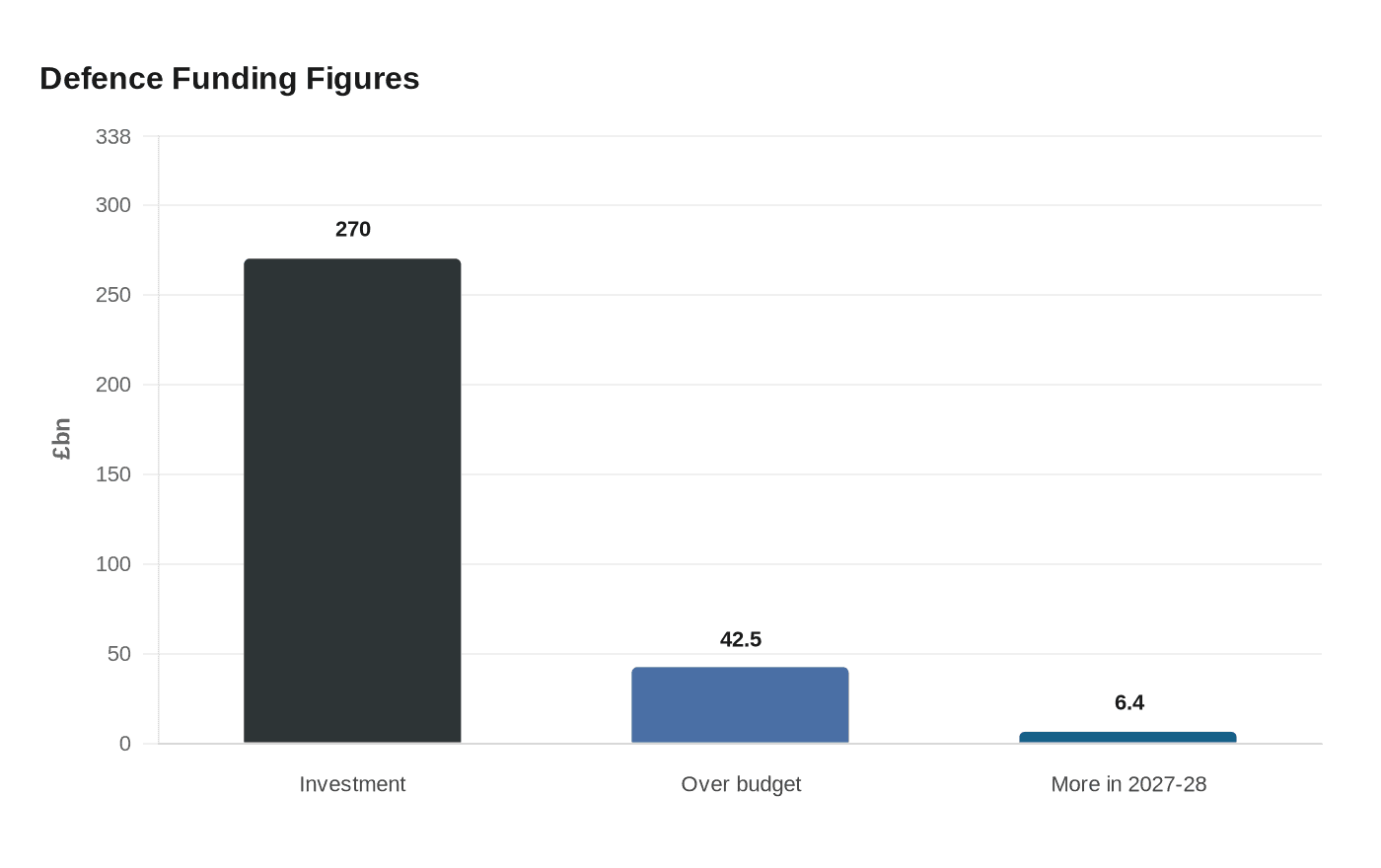
The government has linked the plan to a wider industrial strategy, saying there is £270 billion of defence investment over this parliament. It has pointed to claims that recent deals supported 1,200 UK jobs on one helicopter contract, more than 100 skilled jobs on a boats-support programme, and 3,200 jobs in South Yorkshire’s defence sector alone. Pollard also told MPs in September 2025 that 10% of the defence budget would go to advanced technologies. The longer that blueprint is delayed, the harder it becomes to translate those ambitions into contracts, skills and credible NATO planning.
This article was produced by Prism’s automated news system from verified source data, official records, and press releases, then run through automated quality and moderation checks before publishing. The system is built and supervised by the people who set the standards it runs under. Read our full AI policy.
Did this article answer your question?

