Delhi Gymkhana Club faces eviction, challenges Centre in court
Delhi Gymkhana Club has been told to quit 27.3 acres near the Prime Minister’s residence, turning a land dispute into a test of heritage, privilege and state power.
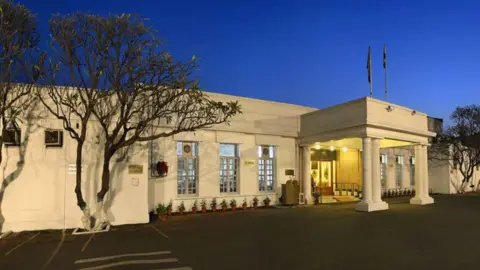
The Delhi Gymkhana Club has been ordered to hand over its 27.3-acre premises at 2, Safdarjung Road by June 5, putting one of Lutyens’ Delhi’s most exclusive addresses at the center of a high-stakes clash over land, security and urban identity. The Land & Development Office said the plot, next to the Prime Minister’s residence on Lok Kalyan Marg, is needed for “strengthening and securing defence infrastructure” and other public-security purposes.
The government said the site had been leased to the club’s predecessor, the Imperial Delhi Gymkhana Club Ltd., for the specific purpose of running a social and sporting club, and it invoked Clause 4 of the lease deed to determine the lease and order re-entry. If the club does not comply, possession will be taken in accordance with law. The Delhi High Court heard the club’s challenge on May 26, with senior advocate Abhishek Manu Singhvi mentioning the matter for urgent hearing before Justice Avneesh Jhingan’s bench. The Centre told the court it was not planning a forcible eviction on June 5 and said any possession action would follow legal procedure.

The confrontation lands at a deeply symbolic site. The club has operated from Safdarjung Road since 1913, when it was known as the Imperial Delhi Gymkhana Club, and today counts about 14,000 members, including politicians, senior bureaucrats, judges, armed forces officers and top business figures. That membership profile has long made the club a stand-in for the social order that took shape around India’s colonial capital and was later absorbed into independent Delhi’s elite geography. Now, the same land that once signaled status is being recast as a strategic asset in a crowded and sensitive part of the city.
The dispute also revives a broader fight over who gets to define legitimate public space in modern India. In February 2021, the National Company Law Appellate Tribunal suspended the club’s general committee, appointed a Central government-nominated administrator and halted new membership after finding prima facie irregularities, saying the club had been turned into a recreational club for a chosen few and using the phrase “perpetrating apartheid” in its judgment. In October 2024, the Delhi High Court upheld the termination of 125 “green card” holders’ privileges, saying the club’s Articles of Association did not provide for that category and linking the move to efforts to address systemic mismanagement.

The financial strain has intensified the standoff. Before the eviction order, the club challenged a steep revision in ground rent, saying its annual rent had jumped from Rs 409.50 to more than Rs 4.10 crore in 2023 and then to over Rs 47.59 crore in April 2026. The club has asked that operations not be disrupted until there is clarity on alternate land, arguing that relocation would require rebuilding its facilities at significant cost and that earlier investments should be taken into account. What is now in court is larger than one club’s lease: it is a contest over heritage, privilege and the state’s claim on prime land in the heart of the capital.
This article was produced by Prism’s automated news system from verified source data, official records, and press releases, then run through automated quality and moderation checks before publishing. The system is built and supervised by the people who set the standards it runs under. Read our full AI policy.
Did this article answer your question?

