Delta flight evacuates on Atlanta taxiway after smoke report
Delta passengers slid off a Boeing 757 on an Atlanta taxiway after fumes were reported in the cockpit shortly after takeoff. All 199 passengers and six crew members got out safely.
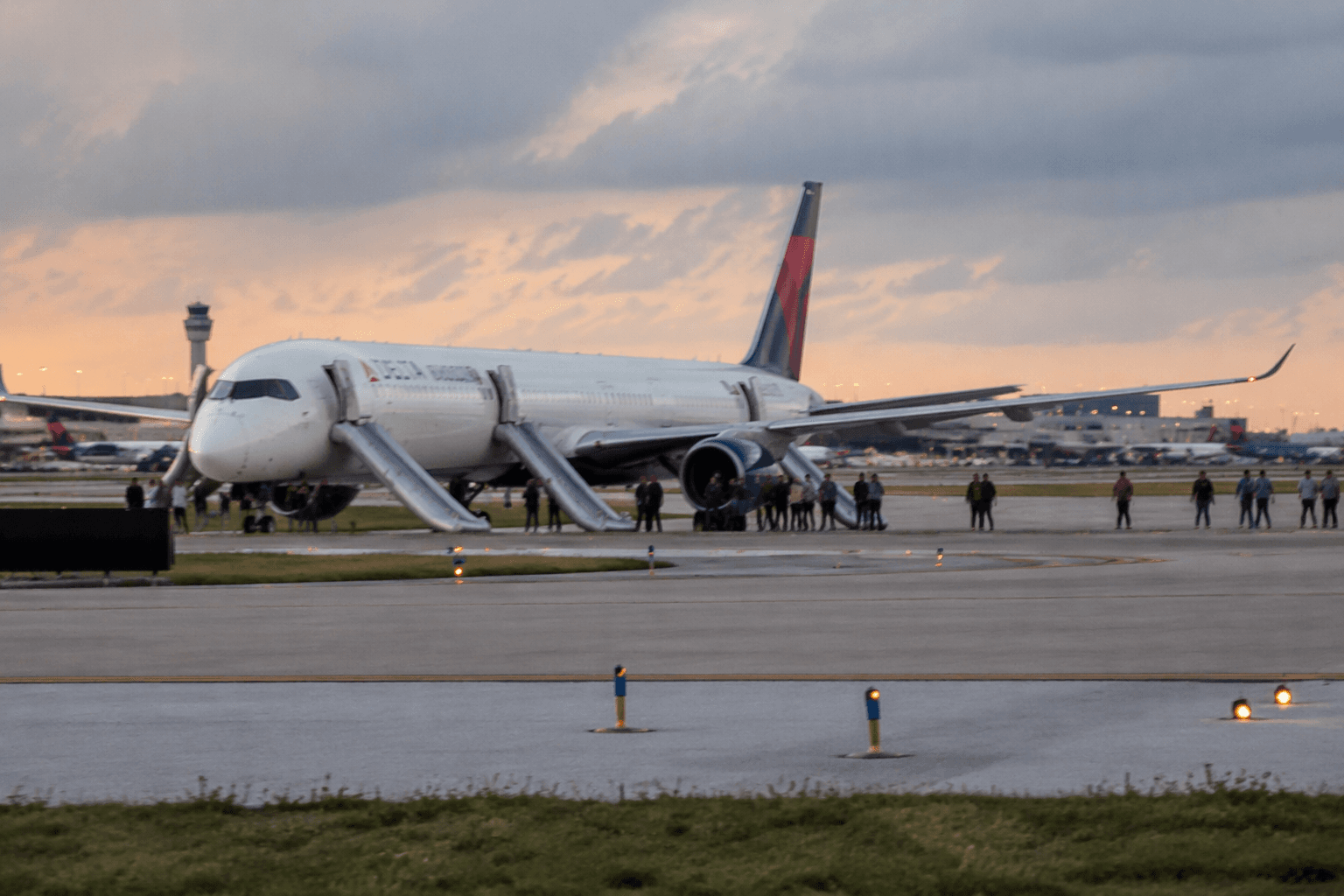
An Orlando-bound Delta Air Lines Boeing 757 returned to Hartsfield-Jackson Atlanta International Airport on Saturday morning after fumes were reported in the cockpit shortly after takeoff, and passengers left the aircraft by emergency slides on a taxiway. The plane carried 199 passengers and six crew members, and all were safely deplaned.
The sequence is the kind of rare but tightly controlled operation aviation crews train for: once the flight deck reports smoke or fumes, pilots can declare an emergency, turn back to the airport and bring the aircraft down on the nearest available surface that lets firefighters reach it quickly. In this case, the jet came back to Atlanta and stopped on a taxiway or runway area rather than at a gate, which is why passengers were sent down slides instead of walking off normally.
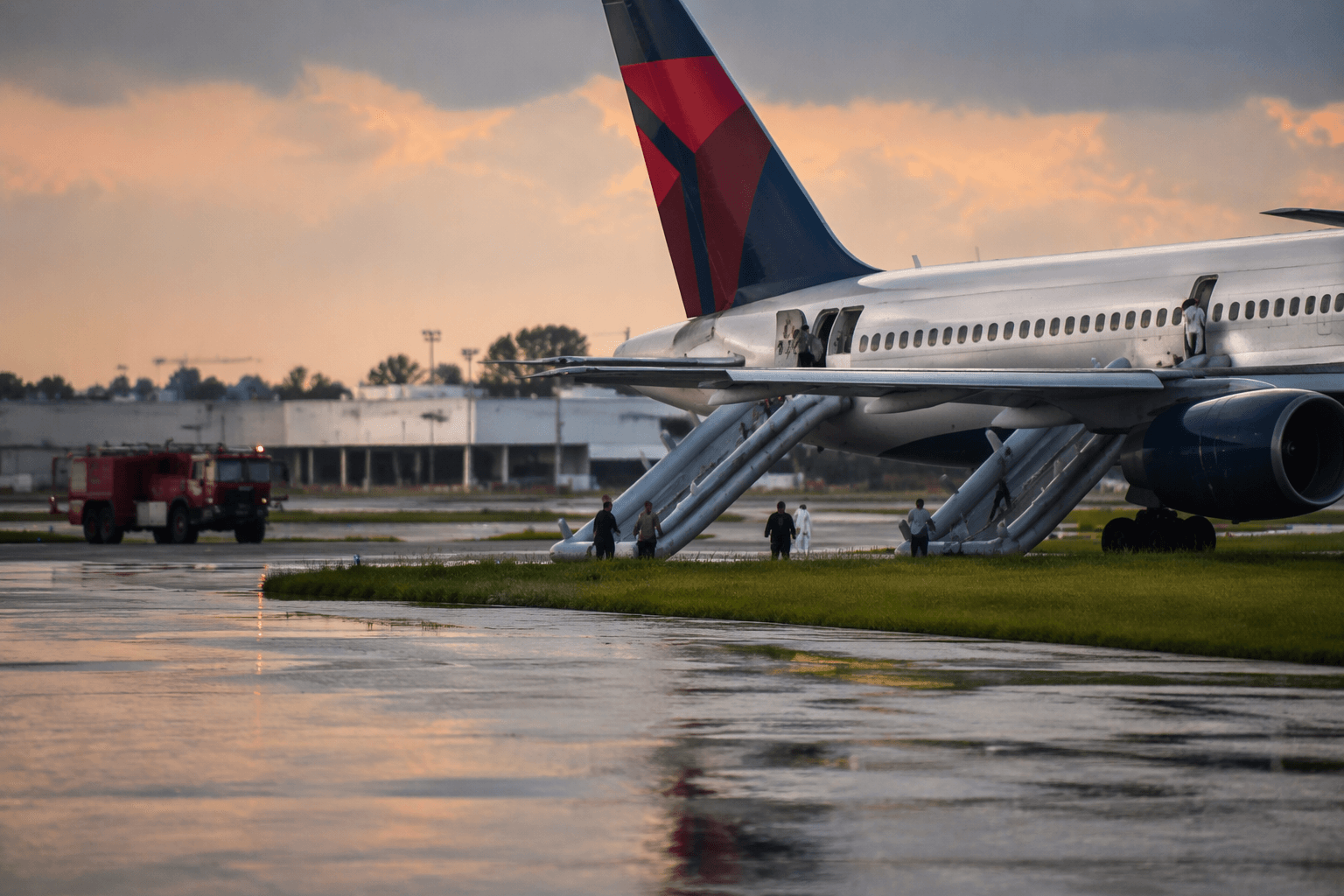
The reported trigger was smoke or fumes in the cockpit, also described as the flight deck, shortly after takeoff. That kind of alert forces crews to treat the situation as time-sensitive because smoke can quickly obscure instruments and irritate breathing, even when the source is not immediately visible. At a major hub like Hartsfield-Jackson Atlanta International Airport, the immediate priority is to get the aircraft on the ground, clear passengers, and separate the plane from terminal traffic.
Delta was rebooking travelers after the evacuation. The airline’s next steps will center on the aircraft itself: maintenance teams and investigators will need to determine what produced the fumes, whether the problem started in the cockpit, the cabin, or a system tied to the airplane’s engines or ventilation, and whether any component failure or contamination contributed to the emergency return.
The flight’s emergency slide evacuation underscores how commercial aviation is built around redundancy and rapid response. Passengers may experience the event as chaotic, but the procedure is designed to move people off the airplane quickly when a gate arrival is not possible. On a busy runway system like Atlanta’s, that can mean an abrupt stop, slide deployment and a full check of the aircraft before it returns to service.
This article was produced by Prism’s automated news system from verified source data, official records, and press releases, then run through automated quality and moderation checks before publishing. The system is built and supervised by the people who set the standards it runs under. Read our full AI policy.
Did this article answer your question?