Dementia care costs forced her mother into a tiny house next door
Rising fees pushed Lori Bufka to move her mother’s dementia care into a tiny house beside her Arizona home, rather than lose control to an institution.
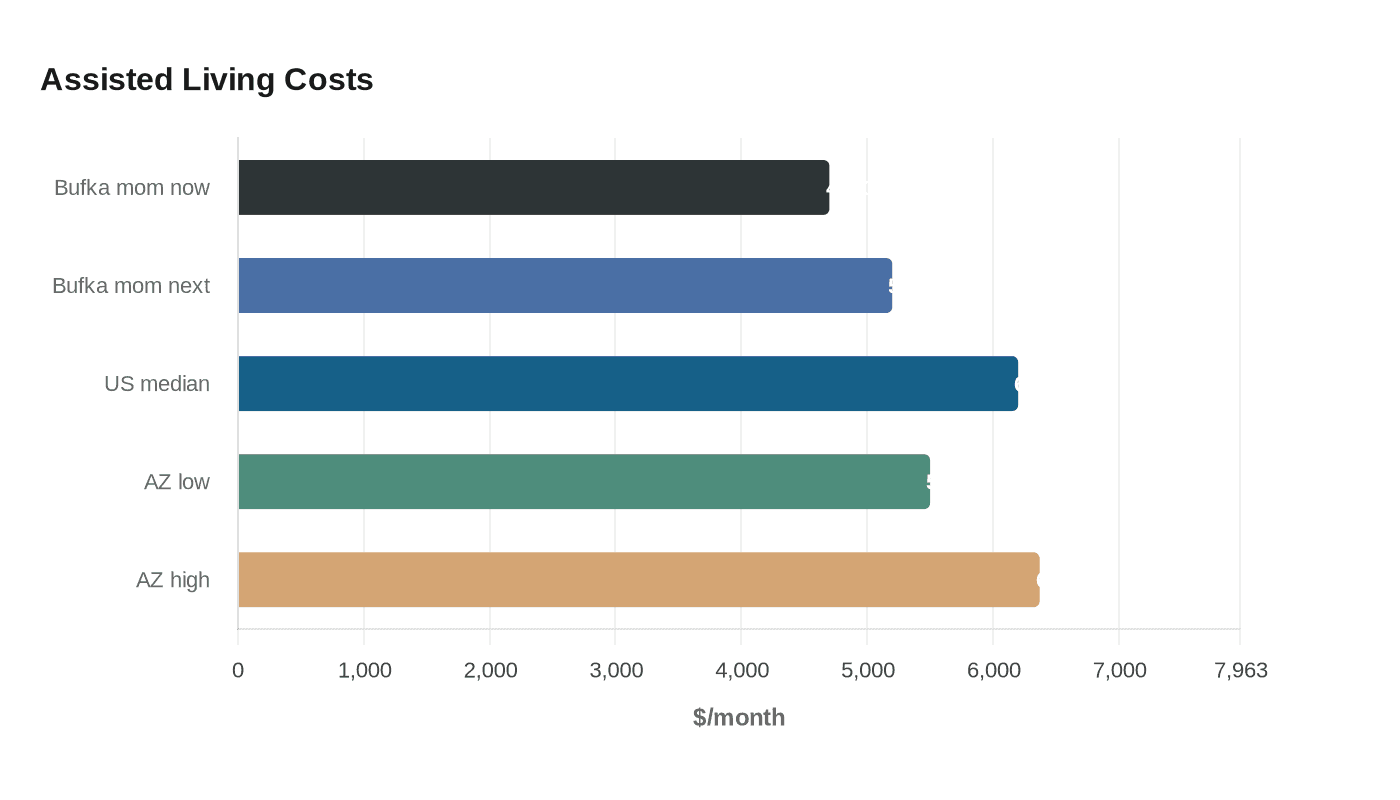
Lori Bufka was staring at a bill that kept climbing. Her mother’s assisted-living cost had reached about $4,700 a month and was set to rise again to $5,200, more than her mother could earn each month, leaving Bufka with a choice many families never expect to face until the money is almost gone.
Bufka, 64, eventually moved her mother out of assisted living in California and into a tiny house and trailer next to her home in Arizona. Her mother had lived in the facility for more than seven years, paying through a house sale, savings, veteran benefits and Social Security. By the time Bufka stepped in, the savings were nearly exhausted, and the facility was planning to raise her dementia-related care level and move her into a dementia unit with four other people. Bufka wanted something smaller and safer, with family close by.
The arrangement turned a caregiving crisis into an exercise in improvisation. Bufka had retired for van life with her partner before buying a tiny house in Arizona as a place to return to. Instead, that compact home became part of a larger care plan for an only child trying to keep her mother out of a setting she could no longer afford. As her mother’s dementia worsened, scam calls became so relentless that Bufka turned off her phone.

The move also points to a national eldercare squeeze that reaches well beyond one Arizona family. Genworth and CareScout’s 2025 survey put the national median cost of assisted living at $6,200 a month, or $74,400 a year. In Arizona, assisted living is commonly priced around $5,500 to $6,370 monthly, and memory care typically costs 20% to 30% more because of added supervision and security. For families managing dementia, the jump from assisted living to memory care can make private care impossible.
That pressure has left more relatives taking on the work themselves. Medicare generally does not cover long-term custodial assisted living, and families often find that Medicaid rules do not close the gap before savings and home equity have already been spent down. For people like Bufka, the result is not just a financial burden but a transfer of labor to family members who must coordinate medications, safety, meals and daily supervision.
The stakes are especially high in Arizona, where an Alzheimer’s Association map based on 2020 data estimated about 151,500 residents age 65 and older were living with Alzheimer’s dementia, or 11.0% of the state’s older population. The Arizona Department of Health Services says Alzheimer’s disease is the fourth leading cause of chronic disease death in the state.
Bufka’s tiny-house setup is a personal workaround, but it also reflects a broader shift toward multigenerational and proximity-based caregiving. As smaller, more customizable living spaces gain attention for aging in place, zoning barriers and accessibility limits still stand in the way for many families. For Bufka, the answer was a trailer next door. For much of the country, the care crisis is still growing faster than the options to solve it.
This article was produced by Prism’s automated news system from verified source data, official records, and press releases, then run through automated quality and moderation checks before publishing. The system is built and supervised by the people who set the standards it runs under. Read our full AI policy.
Did this article answer your question?