DHS halts new FEMA disaster deployments amid funding lapse
DHS stop-travel order paused hundreds of FEMA deployments and grounded more than 300 responders during a departmental funding lapse.
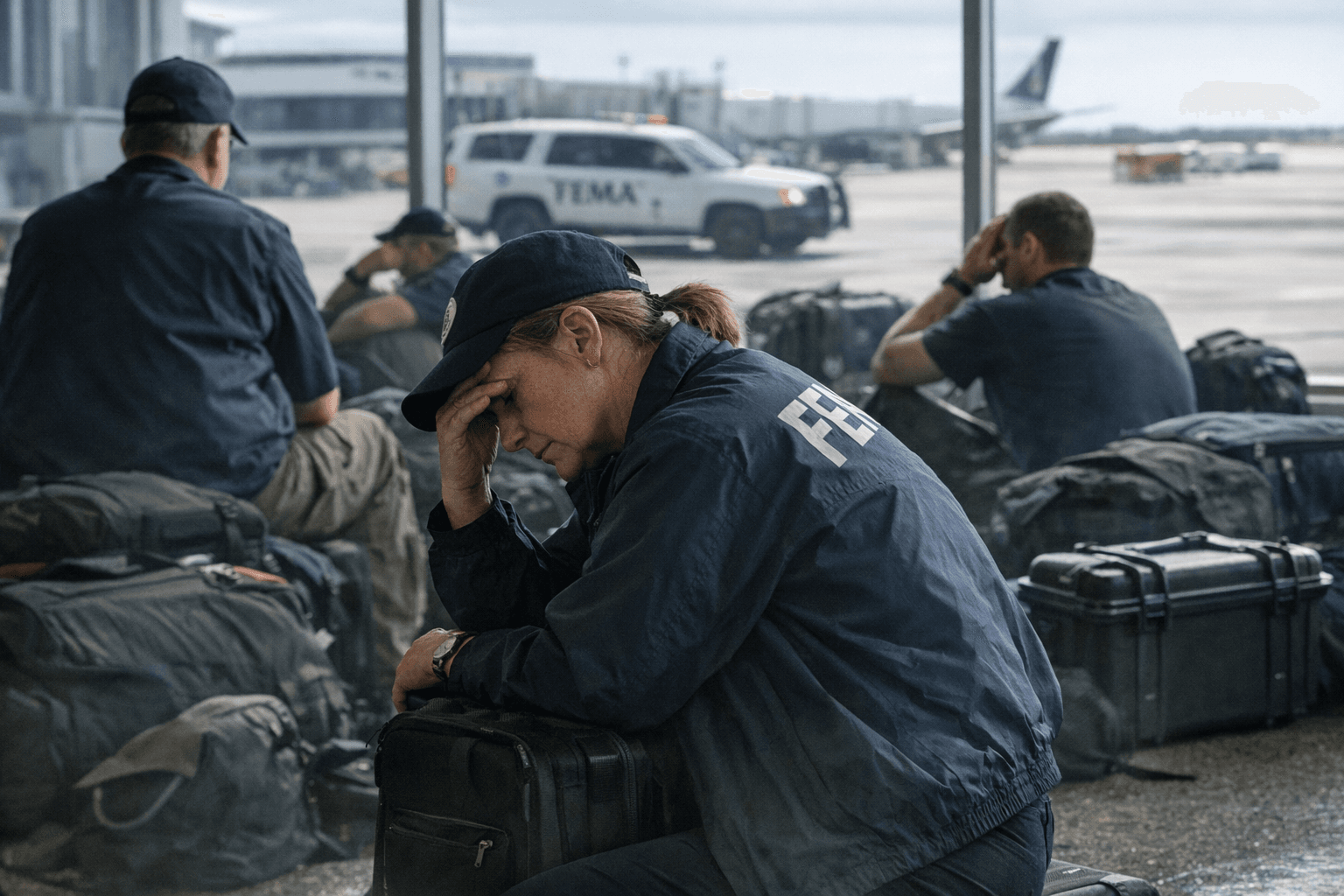
Internal Department of Homeland Security and Federal Emergency Management Agency messages ordered a freeze on DHS-funded travel that took effect Feb. 18, 2026, and explicitly included disaster deployments, grounding more than 300 responders who were preparing to deploy. The guidance instructs FEMA staff to stand down on new assignments for the duration of the appropriation lapse while maintaining personnel already assigned to active responses.
An internal FEMA email from Kurt Weirich, chief of staff, stated: “DHS has issued a stop-travel order for all DHS funded travel, effecting 2/18/26, for the duration of the lapse in appropriation. Currently this DOES include disaster travel.” The message, reviewed by agency officials, prompted the suspension of hundreds of planned deployments, including teams at training facilities who had been due to mobilize.
Agency officials said the restriction is a compliance measure tied to the lapse in DHS funding. A FEMA spokesperson said the travel limits were “not a choice but are necessary to comply with federal law” and stressed that “FEMA travel related to active disasters is not cancelled.” Those already in the field on long-term recoveries must remain in place, and new personnel cannot join or relieve them without explicit DHS approval, the internal messages show.
The directive comes as DHS operations tightened after Congress failed to enact legislation resolving immigration enforcement reforms, triggering a lapse in DHS appropriations. While many DHS functions are treated as essential and have continued to operate, the stop-travel order constrains how FEMA can move personnel and materiel to emerging incidents.
Operational consequences were immediate. More than 300 disaster responders who had been preparing for upcoming assignments were told to stand down, including personnel stationed at training centers. Officials warned that paused deployments could slow response to recent incidents such as wildfire burn scars in Oklahoma and localized hazards including a January sewage spill in the Potomac River that required cleanup resources. FEMA has continued to staff ongoing recoveries, including multi-year operations related to prior hurricanes, but those teams face limits on rotation and relief.
Internal agency messages and officials also cite a separate administrative hurdle: a prior Homeland Security policy requiring the secretary’s personal approval for spending above $100,000, which has produced a backlog of requests for disaster and preparedness funding. A senior FEMA official, speaking in internal communications, described the current constraints bluntly: “Ultimately it’s not a huge blow yet, but just another measure that makes it harder for survivors to get the help they need.” The official added, “It’s yet another way they continue to bleed us out and kill the mission.”
The pause raises legal and logistical questions about how DHS distinguishes travel financed directly by the department from deployments funded through the federal Disaster Relief Fund, which officials say typically covers many response mobilizations and is not itself subject to the appropriation lapse. It is unclear how long the restriction will last beyond the stated duration of the funding lapse and how many planned missions will be delayed.
State emergency managers and affected personnel have requested faster clarification and written guidance from DHS and FEMA on exceptions, relief timelines, and the treatment of Disaster Relief Fund-funded missions. Agency leaders say they are following statutory constraints; survivors and local officials say the consequences of restricted deployments could compound recovery delays as officials await restoration of normal funding authorities.
This article was produced by Prism’s automated news system from verified source data, official records, and press releases, then run through automated quality and moderation checks before publishing. The system is built and supervised by the people who set the standards it runs under. Read our full AI policy.
Did this article answer your question?