Digital Baby Shower Invitations Offer Convenience but Raise Privacy and Operational Concerns
Digital baby shower invites promise instant RSVPs and registry links, but the convenience comes with real privacy and operational trade-offs worth understanding.
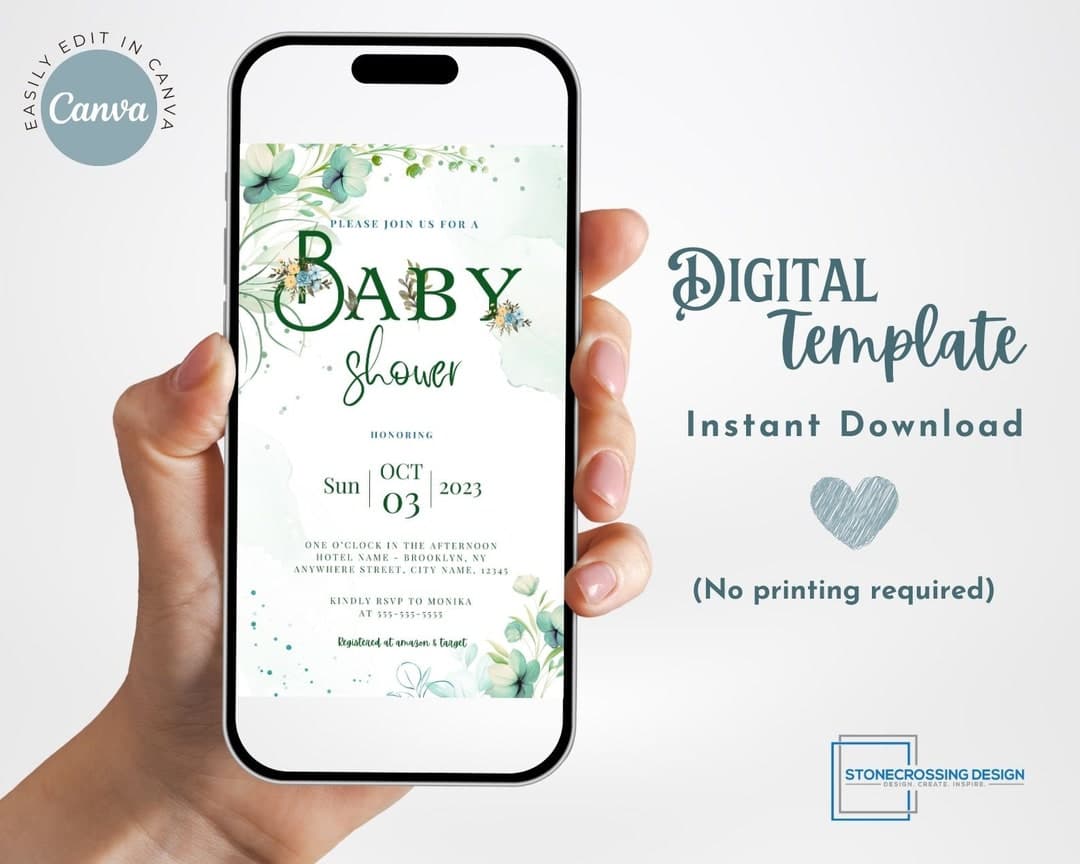
The paper invitation addressed by hand, stamped, and dropped in the mail has not disappeared entirely, but for a growing number of baby shower hosts it has become the exception rather than the rule. Digital invitations now handle the full lifecycle of the event: design, delivery, RSVP collection, guest list tracking, and registry linking, all from a single platform. That consolidation of convenience is genuinely powerful, and understanding how to use it well, while managing the less obvious costs, is what separates a smooth hosting experience from a stressful one.
Why digital became the default
The shift happened for practical reasons. Instant delivery eliminates the two-to-three week lead time that physical mail demands, which matters enormously when showers are planned on compressed timelines. Platforms built around digital invitations allow hosts to collect RSVPs in real time, see exactly who has opened the invitation, send targeted reminders only to guests who have not responded, and embed a direct link to the honoree's baby registry. That last feature alone changes the guest experience: no more searching a store website for a registry under a name that might be listed under a maiden name, a married name, or a hyphenated combination of both.
Cost reduction adds another layer of appeal. A printed invitation with coordinating envelope, postage, and optional inner envelope can cost anywhere from two to five dollars per guest, before accounting for design fees or professional calligraphy. A digital equivalent through a standard platform is frequently free at the basic tier or available for a flat subscription fee that covers an unlimited guest list. For a shower with sixty or eighty guests, the savings are meaningful.
Operational considerations hosts often overlook
Convenience does not mean frictionless. Several operational realities require active management.
Guest list accuracy is the first pressure point. Digital platforms deliver to email addresses, and email addresses go stale. A guest whose address was correct eighteen months ago may have switched providers, left a workplace account, or simply stopped checking a secondary inbox. Bounced invitations require follow-up, and without a physical card arriving in someone's mailbox, a failed delivery can go unnoticed for days. Hosts should verify addresses before sending and build in time to chase any hard bounces before the RSVP deadline.
- Confirm email addresses directly with guests for anyone you have not contacted recently.
- Send a test message to yourself first to preview formatting across devices.
- Check platform delivery reports within 48 hours of sending to catch early bounces.
- Set RSVP deadlines at least ten days before the event, not five, to allow time for follow-up.
Platform reliability is a second operational variable. Digital invitation services are run by third-party companies, which means they are subject to outages, policy changes, and in some cases discontinuation. If a platform goes down in the week before the shower, the host loses access to the RSVP list, the guest communication thread, and any custom design work saved on the platform. Maintaining an offline export of the guest list and RSVP status at regular intervals protects against this scenario.
Mobile rendering deserves attention too. A design that looks elegant on a desktop browser may display poorly on a smartphone screen if the platform has not optimized its templates for mobile. Given that the majority of personal email is now opened on mobile devices, testing the invitation on both iOS and Android before sending is not optional polish; it is a baseline requirement.
Privacy considerations for hosts
When a host uploads a guest list to a digital invitation platform, that data, typically names, email addresses, and sometimes phone numbers, is transferred to a third-party service operating under its own privacy policy. Most mainstream platforms use guest data to deliver invitations and track opens, but the specifics of data retention, third-party sharing, and marketing opt-outs vary considerably between services.

Hosts should read the platform's privacy policy before uploading any guest information, paying particular attention to three questions: how long the platform retains guest data after the event, whether guests are added to any marketing list as a result of opening or responding to the invitation, and whether the platform sells or licenses aggregated user data to advertisers. These are not hypothetical concerns. Several major event invitation platforms have faced criticism for sending promotional emails to guests who never opted in to any marketing relationship.
The honoree's information warrants extra care. Baby shower invitations frequently include a due date, the honoree's home address for gift delivery, and a registry link that, taken together, reveals that a specific person is pregnant, approximately how far along they are, and where they live. When that information is hosted on a third-party platform and accessible via a shareable link, the potential audience extends beyond the intended guest list if the link is forwarded or posted publicly.
- Avoid including the honoree's full home address in the invitation itself; provide it separately via direct message to guests who need it.
- Use platforms that allow password-protected event pages if the invitation will be shared via social media or group chat.
- Check whether the RSVP form collects any information beyond name and attendance status, and whether that data is visible to the platform operator.
Privacy considerations for platform providers
For companies operating digital invitation platforms, the data handling obligations are substantial. Guest information submitted through an RSVP form constitutes personal data under most major privacy frameworks, including the General Data Protection Regulation in the European Union and various state-level laws in the United States. Platforms that collect, store, and process this data are acting as data controllers or processors, with corresponding obligations around consent, data minimization, security, and deletion.
Transparent communication about data use is both a legal requirement in many jurisdictions and a trust signal for hosts choosing between competing services. Platforms that offer clear, plain-language explanations of their data practices, easy opt-out mechanisms for guests, and defined data retention and deletion windows are better positioned to earn host confidence than those that bury relevant disclosures in lengthy terms of service.
Choosing a platform with both factors in mind
The ideal digital invitation platform threads convenience and responsibility simultaneously. It offers reliable delivery infrastructure, mobile-optimized templates, real-time RSVP tracking, and registry integration. It also publishes a clear privacy policy, gives guests control over their data, avoids unsolicited marketing to event attendees, and provides hosts with tools to export and delete their guest data when the event is over.
No platform is perfect on every dimension, and trade-offs exist. A free-tier service may offset its cost through data monetization in ways a paid platform does not. A newer entrant may offer a more compelling design suite but have less proven infrastructure. Evaluating platforms on both axes, operational capability and data stewardship, produces a more complete picture than focusing on features alone.
The convenience of digital invitations is real and the efficiency gains are significant. The privacy and operational risks are equally real, and they are manageable with the right preparation. Hosts who treat the platform selection and setup process with the same care they bring to choosing a venue or planning a menu will find that digital invitations deliver on their considerable promise.
Sources:
Know something we missed? Have a correction or additional information?
Submit a Tip