Digitized Sanborn maps bolster Helena redevelopment and preservation work
The Library of Congress digitized Sanborn maps for Helena and Phillips County provide detailed historic building and infrastructure data useful for local planning.
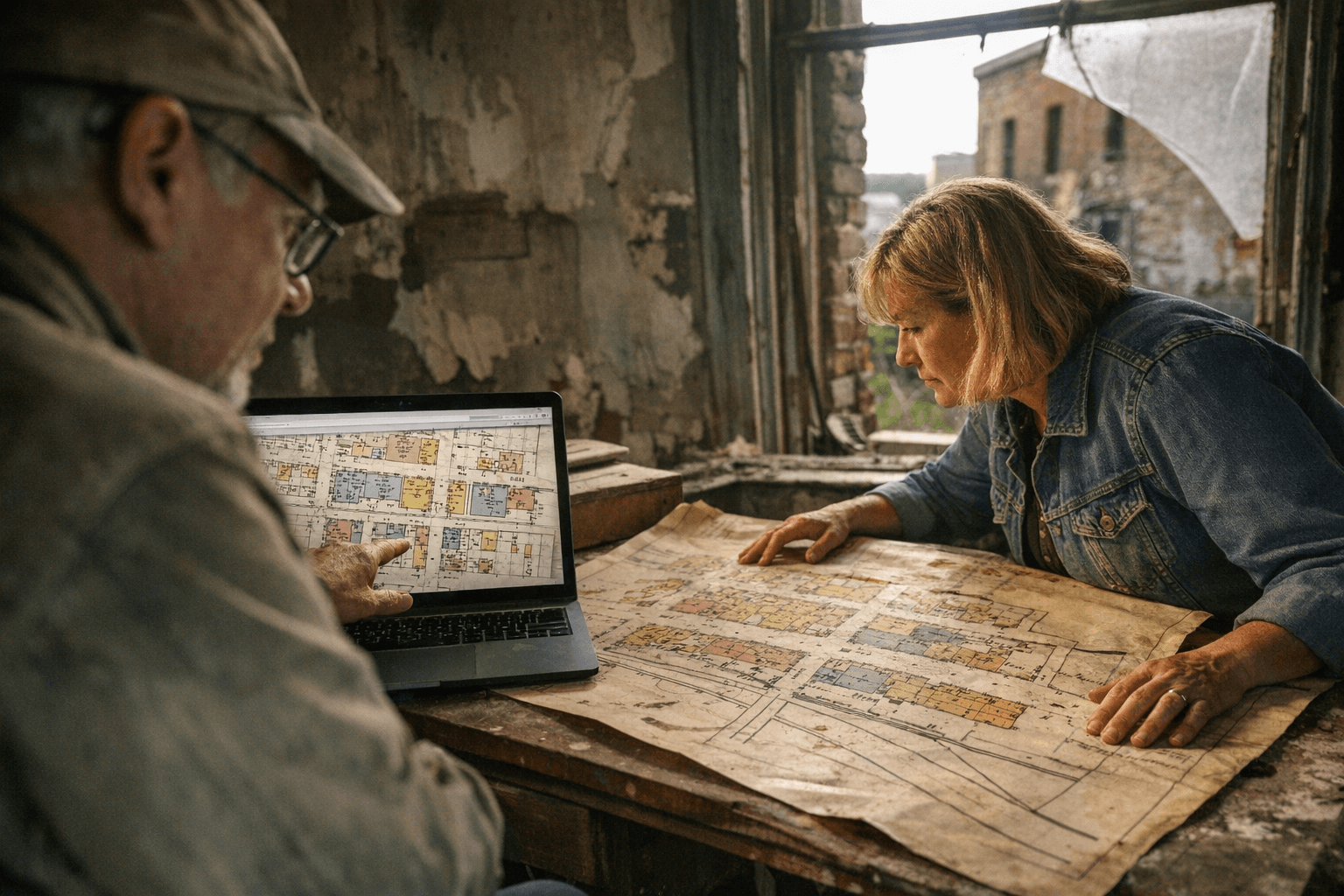
The Library of Congress now offers digitized Sanborn Fire Insurance map sheets covering Helena-West Helena and communities across Phillips County, with editions and related surveys produced between the 1920s and the 1950s. These maps record building footprints, construction materials, property uses (commercial, residential, industrial), street layouts and changes over time, making them a robust primary source for local researchers, planners and preservationists.
For city officials and developers, the practical payoff is immediate. Sanborn sheets can reveal long-buried rail spurs, former docks, industrial footprints and legacy utilities that still shape redevelopment risk and remediation costs. Knowing where a factory, spur line or fuel tank once sat can shorten environmental review timelines, reduce unexpected cleanup bills and strengthen applications for state or federal redevelopment grants by supplying primary-source evidence of past land use.
Historic-property advocates and tourism planners gain a different but no less important advantage. The maps let historians trace the evolution of downtown Helena, riverfront parcels and outlying neighborhoods block by block. That granular chronology makes nominations for the National Register or state historic listings more defensible, supports interpretive signage along the riverfront and helps heritage tourism planners build narratives that attract visitors and grant funding.
Educators and community groups can put the maps to immediate use in classrooms and exhibits. Local schools, libraries and museums can pair Sanborn sheets with present-day photographs and county assessor records to show students how streets and neighborhoods have shifted through the 20th century. That pairing also strengthens storytelling for local festivals and walking tours by grounding anecdotes in mapped evidence.
Access is straightforward. The Library of Congress entry for Helena and Phillips County lists available map sheets by date and map number; researchers may request scans or view pages directly on the LOC site. For applied projects, practitioners should pair Sanborn evidence with county property records and current GIS layers from the county assessor or municipal GIS portals to create a complete historic-to-present picture for planning, nominations or risk assessment.
Beyond historical curiosity, the maps matter economically. They lower information costs for redevelopment, improve the quality of grant applications and reduce project uncertainty linked to legacy infrastructure. They are an evergreen resource: researchers can cite individual map sheets and cross-check them with city and county records when preparing nominations, interpretive materials or environmental reviews.
Our two cents? Start with the Sanborn sheet for your block, cross-reference it with the county assessor’s GIS, and bring that evidence to grant writers and planning meetings, maps can help turn local memory into documented value for Helena and Phillips County.
Sources:
Know something we missed? Have a correction or additional information?
Submit a Tip