Disney and Philips bring animated stories to children’s MRI scans
Disney characters entered Philips MRI systems in 87 countries, aiming to cut pediatric anxiety, reduce sedation and keep scans on schedule.

Disney’s animated stories moved into one of pediatrics’ most stressful procedures as Royal Philips and The Walt Disney Company rolled out a new MRI initiative aimed at calmer scans and fewer sedations for children. The program places Disney characters and stories directly into Philips Ambient Experience for MRI at medical facilities in 87 countries, with both companies framing the effort around measurable patient comfort and smoother hospital workflows.
Philips says the challenge is not cosmetic. The company says 66% of pediatric patients report anxiety during MRI scans, where children may have to lie still for up to 40 minutes inside a large machine that can be loud and intimidating. That anxiety, Philips says, can trigger re-scans, longer procedures and, in some cases, sedation, which adds pressure on care teams and can reduce how many patients a department can handle each day.
Lisa Haines, senior vice president for corporate social responsibility at Disney, said the company sees storytelling as a way to offer comfort, normalcy and reassurance to children and families in hospitals. Atul Gupta, MD, Philips’ chief medical officer for diagnosis and treatment, said the Disney content is meant to help children stay at ease and still during scans while also easing stress for families and supporting efficient, high-quality imaging.
The new rollout builds on work the companies began years earlier. In March 2021, Philips and Disney announced a pilot in six hospitals across Europe to test custom-made animation inside Philips Ambient Experience as a way to reduce fear and anxiety during pediatric MRI. Philips said the platform already had 2,000 installations worldwide at the time and allowed patients to personalize lighting, video and sound inside the scan environment.
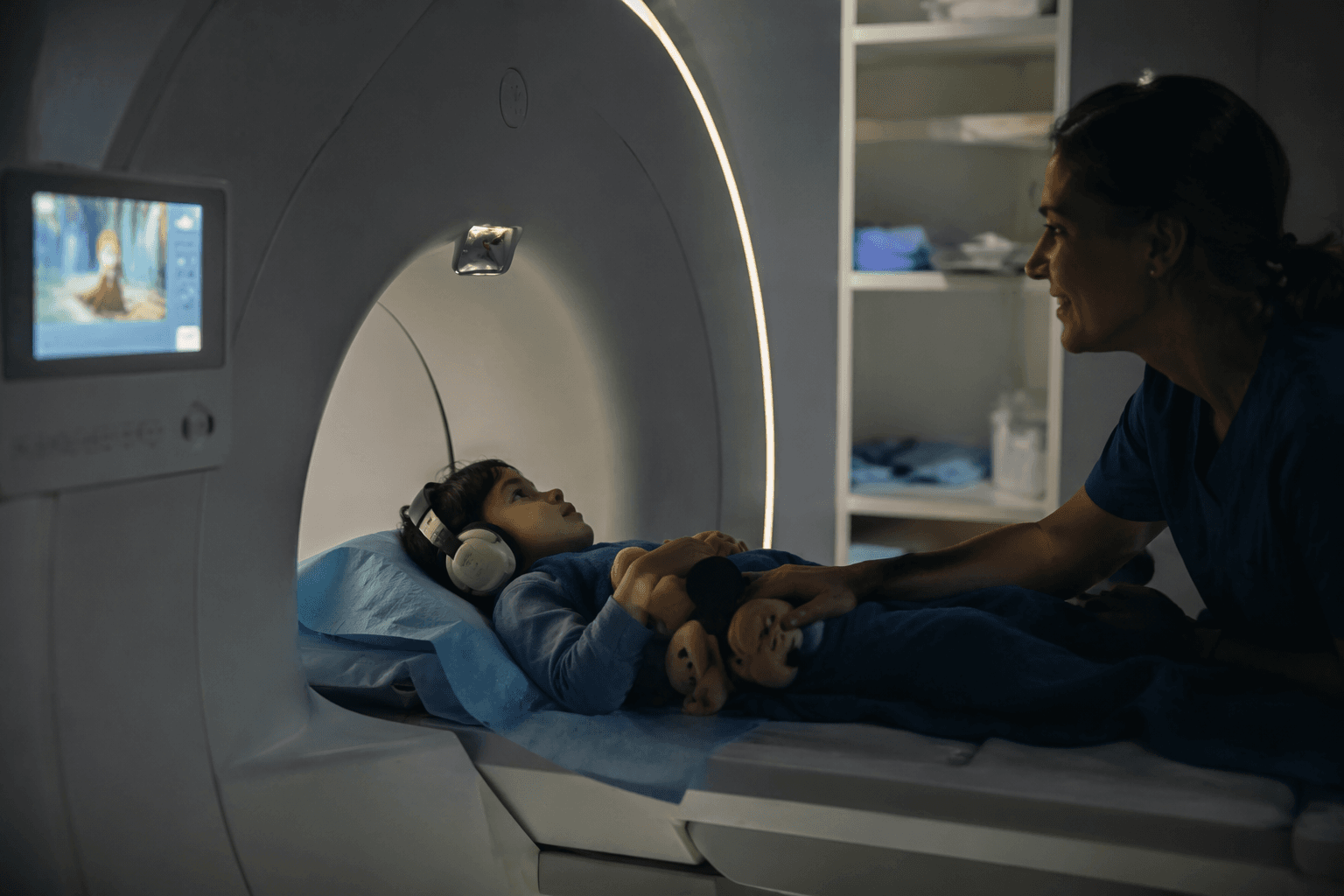
Philips later reported clinical data from that broader approach. A company clinical article published in 2025 described a trial across six European hospitals involving 175 children ages 6 to 12. The study, which included sites in Poland, Spain, Denmark, Germany, Belgium and France, found that stress levels fell more sharply before and after the scan among children ages 6 to 10 when Ambient Experience was used, and that scan issues were significantly fewer. The pediatric content in that trial included five five-minute calming clips built around familiar animated characters.
Philips has also been pushing related preparation tools designed to reduce the need for sedation through preparation and active relaxation techniques. In separate material, the company cited a case in Lübeck, Germany, where sedation reportedly dropped by 80% at a radiology center using MRI distraction technology connected to in-bore media. The Disney program is not that case, but it points to the same pressure point in modern pediatric imaging: keeping children calm enough to complete scans without escalating to sedation.
This article was produced by Prism’s automated news system from verified source data, official records, and press releases, then run through automated quality and moderation checks before publishing. The system is built and supervised by the people who set the standards it runs under. Read our full AI policy.
Did this article answer your question?