Djokovic advances to Australian Open semifinals after Musetti retires injured
Novak Djokovic moves into the last four as Lorenzo Musetti retires with a right‑thigh problem, prolonging Djokovic’s bid for a record 25th major.
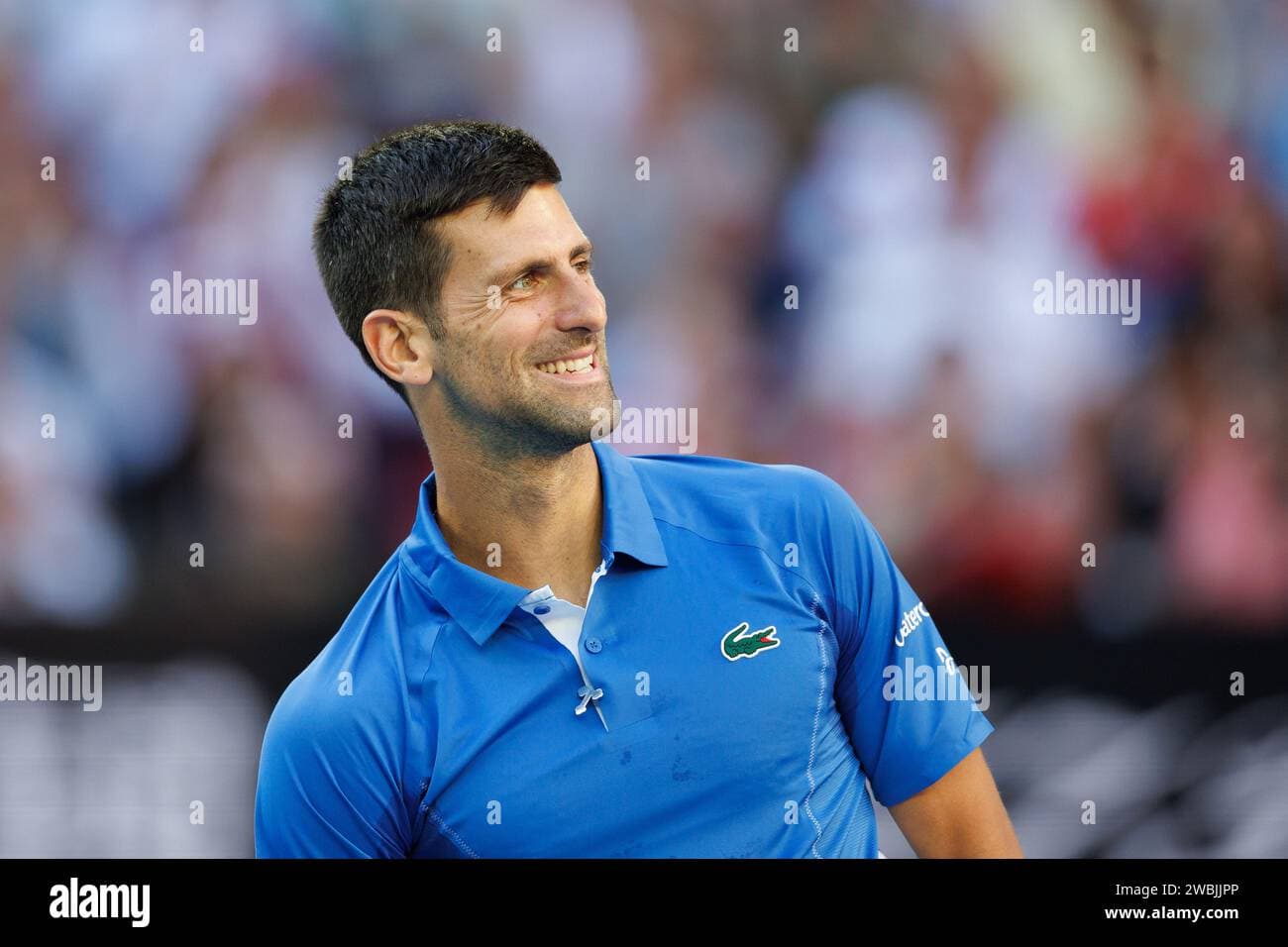
Novak Djokovic advances to the Australian Open semifinals after Lorenzo Musetti retired with an upper‑leg problem early in the third set at Rod Laver Arena. The official score at retirement reads 4-6, 3-6, 3-1, with Djokovic, the 38-year-old fourth seed, leading when Musetti, 23 and seeded fifth, was unable to continue while serving at 1-3, 15-40.
Musetti produced the better tennis for much of the contest, using a one-handed backhand, slices, looping balls and varied pace to unsettle Djokovic and take the first two sets 6-4, 6-3. The Italian’s variety and court craft repeatedly forced Djokovic into awkward positions and into an unusually high unforced error count early on. Djokovic, who received treatment for a foot blister during the match, had an uneven start and was described in match accounts as error-strewn in the opening phases; one summary recorded he had one ace and 18 unforced errors to nine winners in the first set.
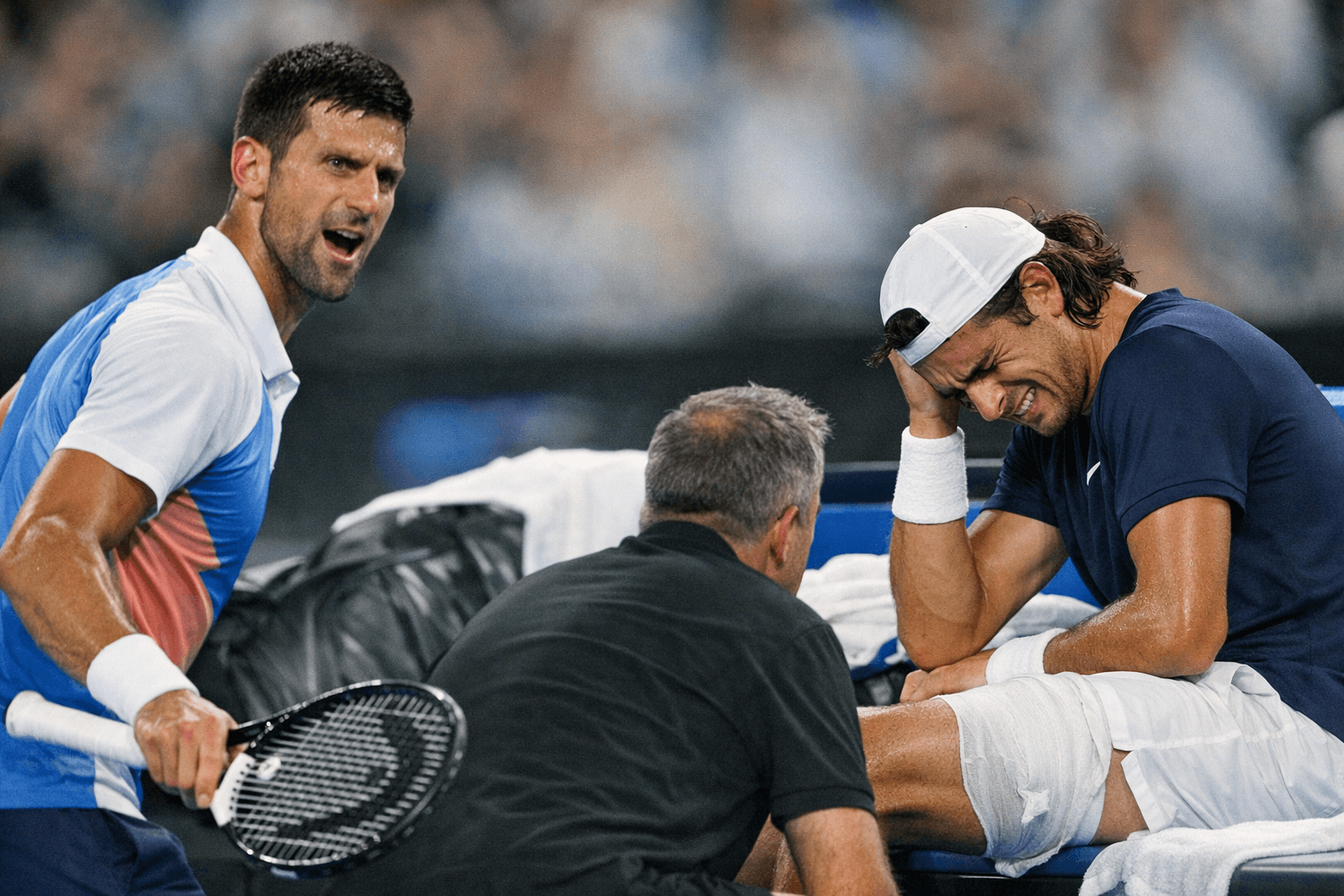
The momentum shifted in the third as Djokovic broke early and streaked to a 3-1 lead. Musetti began to struggle with what was variously described as an upper‑leg or right‑thigh problem, at times calling for the physio and taking a medical timeout. He ultimately was unable to serve or move effectively, walked to the net to shake hands and left the court visibly dejected.
Djokovic spoke with evident sympathy in the on‑court interview. “I don’t know what to say except that I feel really sorry for him. He was the far better player. I was on my way home tonight,” he said, adding with characteristic self‑deprecation about his own errors: “I had like four winners in the first two games and no unforced errors, and then the rest of the match I had another four winners and probably 40 errors. That’s what Lorenzo does to you.” He also acknowledged Musetti’s range and the swirling wind that made the match tactically complex.
The passage to the last four keeps Djokovic’s bid for a record 25th Grand Slam singles title alive and takes him into his 13th Australian Open semifinal. He is a 10-time Australian Open champion and a 24-time major winner overall, and he will next face two-time defending champion Jannik Sinner, who earlier beat Ben Shelton in straight sets. The men’s semifinals now feature the tournament’s top four seeds, with Carlos Alcaraz and Alexander Zverev contesting the other place into the final.
Beyond the immediate result, the match crystallizes several narratives shaping modern men’s tennis. Djokovic’s longevity and capacity to advance amid imperfect form underline the premium that experience and competitive instinct command in an era when physical conditioning and medical management are decisive. Musetti’s exit is a reminder of the fragile margins young contenders face: shotmaking and tactical sophistication can be undone by a single injury at the most consequential moment.
For tournament organizers and broadcasters, the Djokovic-Sinner pairing is an attractive draw that preserves headline value and commercial momentum. For the sport more broadly, the evening leaves a bittersweet aftertaste: a new wave of stylistic creativity presented itself on court even as the long shadow of injury interrupted a promising breakthrough. Photographers captured both Musetti’s dejection and Djokovic’s subdued reaction, images that underscore sport’s entwined drama of triumph, vulnerability and endurance.
This article was produced by Prism’s automated news system from verified source data, official records, and press releases, then run through automated quality and moderation checks before publishing. The system is built and supervised by the people who set the standards it runs under. Read our full AI policy.
Did this article answer your question?

.jpg&w=1920&q=75)
