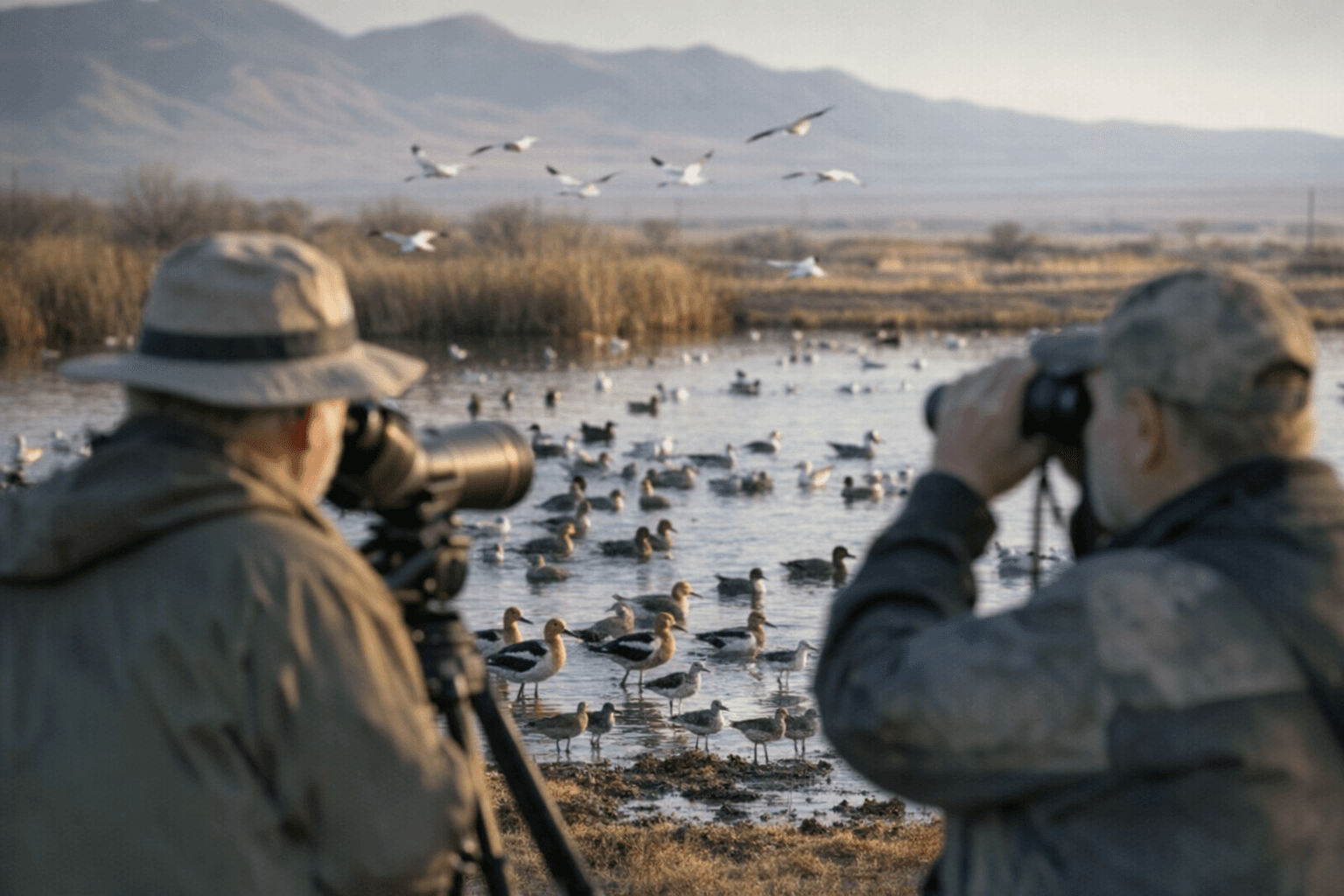
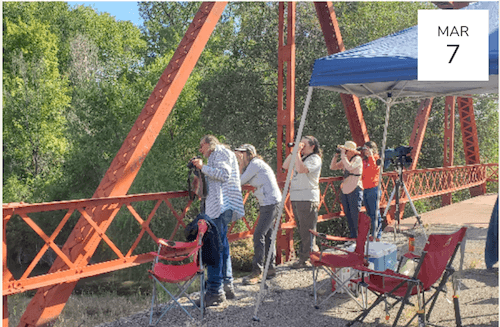
DNA and Plantings Expand Palmer’s Agave Range, Aid Bats in Hidalgo County
Up to 700 agaves have been planted across Grant County to create a corridor from the Burro Mountains to Bill Evans Lake, while eDNA sampling and regional plantings have extended agave-bat conservation across the Southwest.
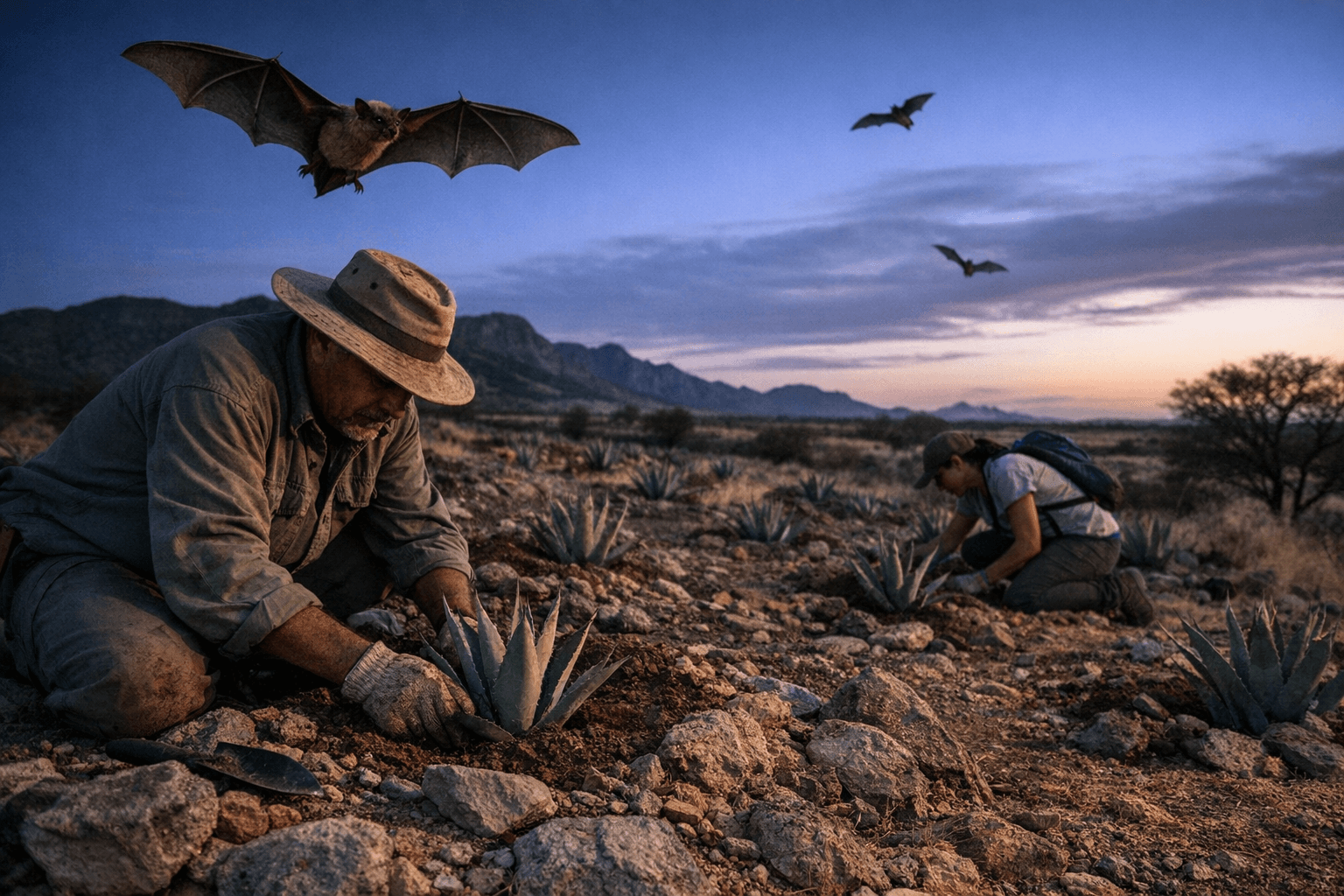
Local plantings and DNA surveillance are widening the landscape of nectar resources that sustain migrating Mexican long-nosed bats (Leptonycteris nivalis), conservationists say. Projects in Grant County have planted as many as 700 agaves of Palmer’s and Parry’s types with the explicit goal of creating a corridor from the Burro Mountains to Bill Evans Lake and through the Cliff/Gila area.
Bat Conservation International’s Agave Restoration Initiative traces its roots to 2018, when BCI planted a few hundred agaves in Arizona. “What began in 2018 with the planting of a few hundred agaves in Arizona by Bat Conservation International has grown immensely over the last seven years,” a project profile states, and the initiative now links pilot programs across Arizona, New Mexico, Coahuila, Nuevo León, and Sonora. By 2030 ARI plans to plant 500,000 native agaves, restore and protect 95,000 hectares, and support 50 rural communities.
Field methods combine community action and new survey tools. Citizen scientist Linda Moore used an eDNA collection kit to swab hummingbird feeders at Cara Staab’s home in Silver City on September 5, 2005; after lab processing, researchers can determine whether bats fed on the sugar water and which species were present. Landscapeconservation notes that the initiative is “employing conservation technology such as drones, satellite imagery, camera traps, and environmental DNA (eDNA) as well as developing citizen science and community monitoring programs.” Those techniques contributed to what BCI describes as “recording the first confirmed occurrence of the Mexican long-nosed bat in Arizona through our nectar-feeding bat eDNA survey methodology.”
Species-specific planting decisions reflect bat migration timing. Kristen Lear of BCI explained that Palmer’s agave “blooms or flowers in the fall, like late summer and fall months. And that is when these nectar bats are preparing to migrate back south.” By contrast, Parry’s agave “blooms earlier in the year, during the northward migration,” giving managers a tool to provide sugar resources throughout migration. Lear added, “With climate change, with shifting flowering seasons, we want to make sure we are providing the whole window of blooming time when bats are present.” Local partners named in project materials include New Mexico Game and Fish, the U.S. Forest Service, the Gila Native Plant Society, and the Native Plant Society of New Mexico; project practice includes working with local nurseries to propagate agaves for priority-area plantings.
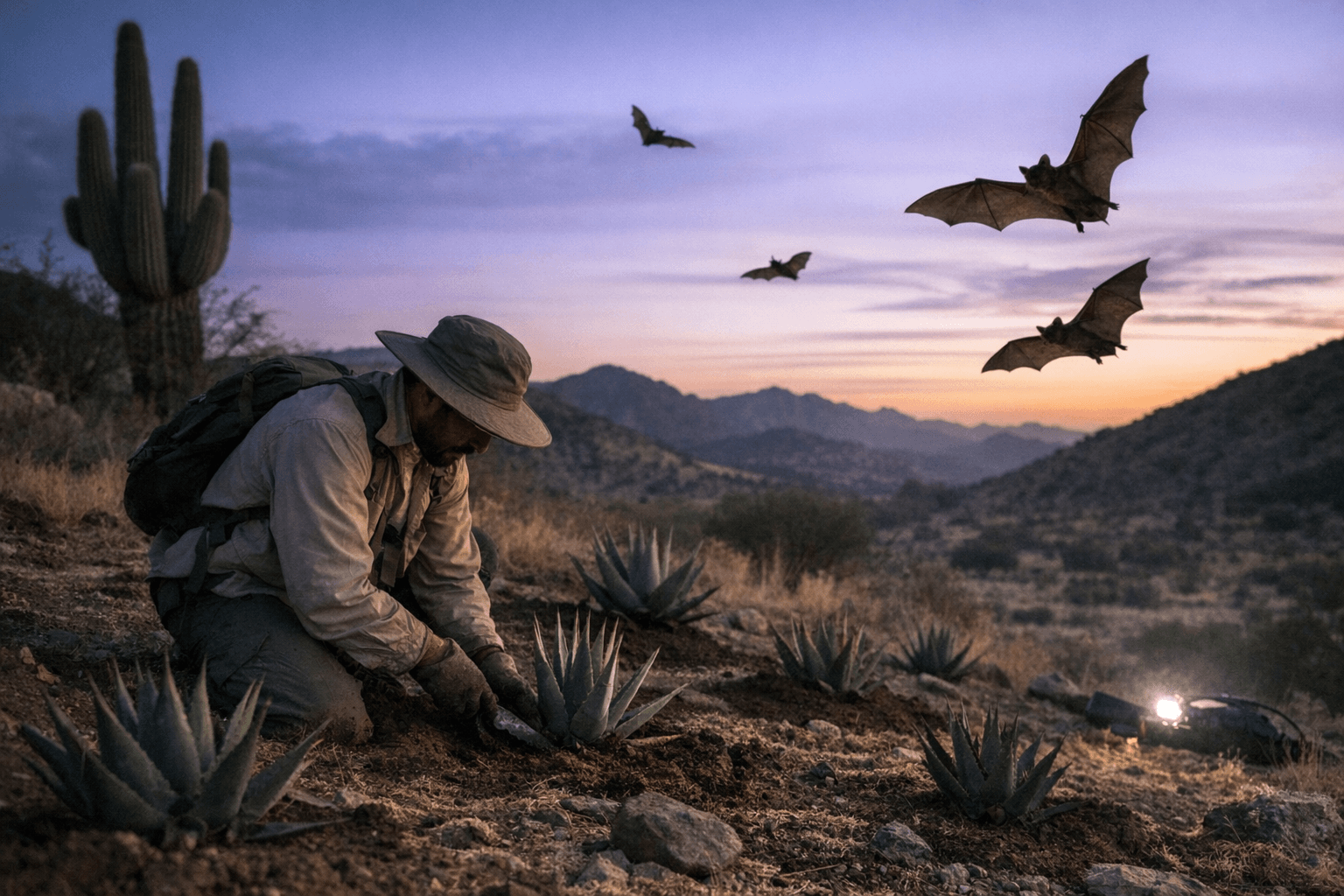
Peer-reviewed management guidance underpins field tactics. A foraging analysis recommends planting agave species with more umbels that open simultaneously, planting multiple species with staggered flowering times, clustering plants, and keeping dead standing agave stalks. The same study notes that eDNA sampling protocols should target the lowest umbels with open flowers on a stalk to maximize bat DNA detection.
The supplied project excerpts do not explicitly document plantings or detections inside Hidalgo County, even though the regional work spans neighboring Grant County and Silver City. A Landscapeconservation profile even preserves an incomplete progress line: “As of January 2025, the Agave Restoration Initiative has expanded the geographic range to [...]” If ARI achieves its targets for plantings, hectares and community support, the coordinated mix of nursery propagation, citizen eDNA sampling, and targeted planting should materially increase nectar availability for L. nivalis across the borderlands and strengthen local recovery prospects.
Sources:
Know something we missed? Have a correction or additional information?
Submit a Tip