Doeden advances to South Dakota governor runoff after four-way GOP race
Toby Doeden led South Dakota’s GOP governor primary and forced a July 28 runoff. The result tests whether Republicans want an outsider businessman or a splintered field.
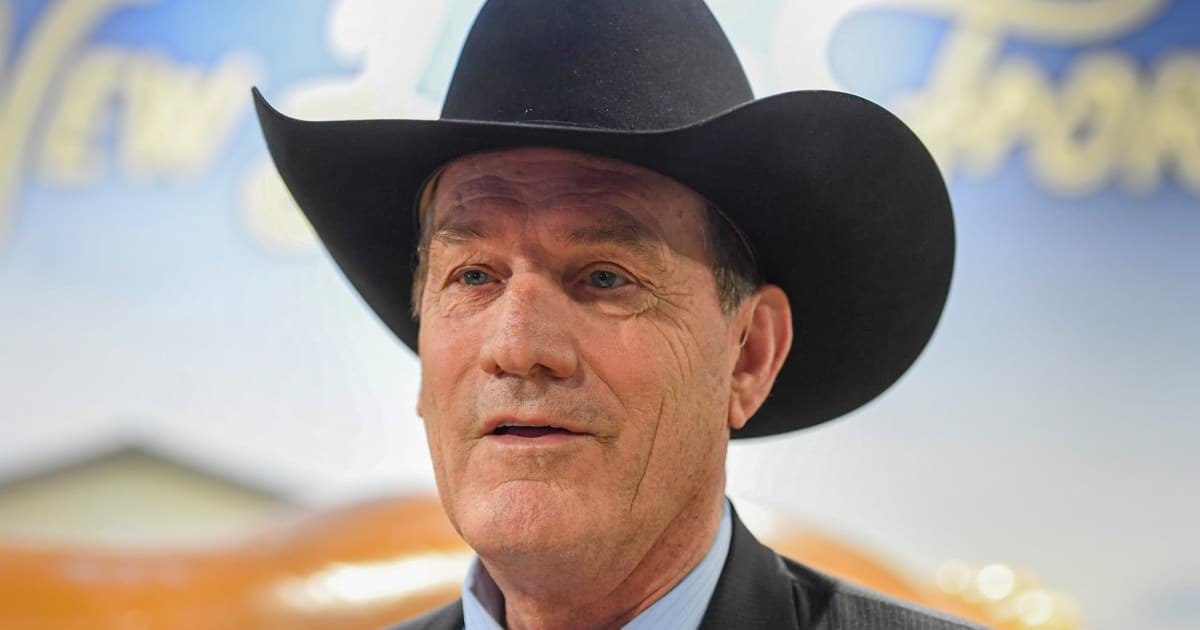
Toby Doeden pushed into a July 28 runoff in South Dakota’s Republican governor race, turning a four-way primary into a test of whether the state GOP wants an outsider businessman or simply could not coalesce around an incumbent.
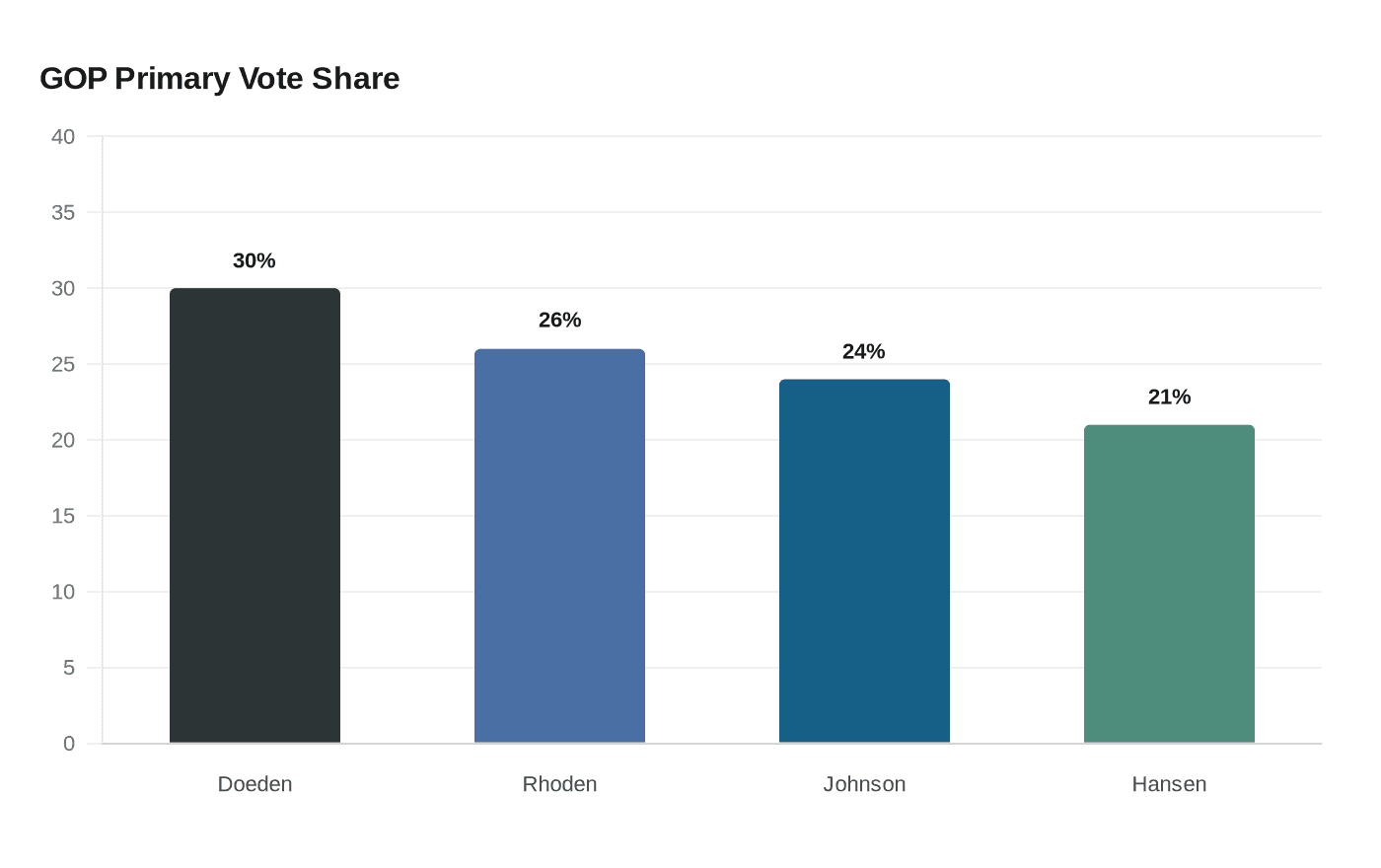
Unofficial results from the South Dakota Secretary of State showed Doeden, an Aberdeen businessman and first-time candidate, with 31,967 votes, or 30%, when 77.84% of precincts were reporting. Gov. Larry Rhoden followed with 27,705 votes, or 26%, U.S. Rep. Dusty Johnson had 25,543 votes, or 24%, and state House Speaker Jon Hansen finished with 22,277 votes, or 21%.
South Dakota requires a candidate to win at least 35% to avoid a runoff, and no one came close to that mark. Statewide turnout was 26.73%, with 132,860 ballots cast. The Republican nominee will face Democrat Dan Ahlers in the Nov. 3, 2026 general election.
The result gives added weight to a race that already carried the feel of an open contest. Rhoden became governor on Jan. 25, 2025, after Kristi Noem left office to join President Donald Trump’s administration, and he entered the primary seeking a full term against three challengers. In a deep-red state where Republicans dominate statewide politics, the runoff will now serve as a referendum on what kind of governing style the party wants after Rhoden’s brief tenure.
Doeden has campaigned as a political outsider and said the attempted assassination of Donald Trump in Butler, Pennsylvania, in July 2024 was a turning point that led him to run. He has also said he is largely self-funding his campaign. His message has centered on cost of living, crime, education, eliminating property taxes, and auditing state government, a platform that leans heavily on disruption and skepticism of state institutions.
The split primary vote also suggested a fractured electorate. Johnson drew support from a more traditional Republican lane, Rhoden benefited from the advantages of incumbency, and Hansen appealed to a separate conservative base, but none built enough momentum to clear the 35% threshold. Doeden’s advance now leaves South Dakota Republicans choosing between a business-first insurgent and a field that failed to unify behind the governor who inherited the office. In a state where GOP primaries often decide the real contest, the runoff may end up saying as much about the party’s internal direction as about the candidates themselves.
This article was produced by Prism’s automated news system from verified source data, official records, and press releases, then run through automated quality and moderation checks before publishing. The system is built and supervised by the people who set the standards it runs under. Read our full AI policy.
Know something we missed? Have a correction or additional information?
Submit a Tip