Dog Yoga: Health Benefits and Step-by-Step Poses to Try Today
Learn what doga is, why it helps you and your dog, and step-by-step poses and safety tips to try today.

1. What doga is and the two main formats
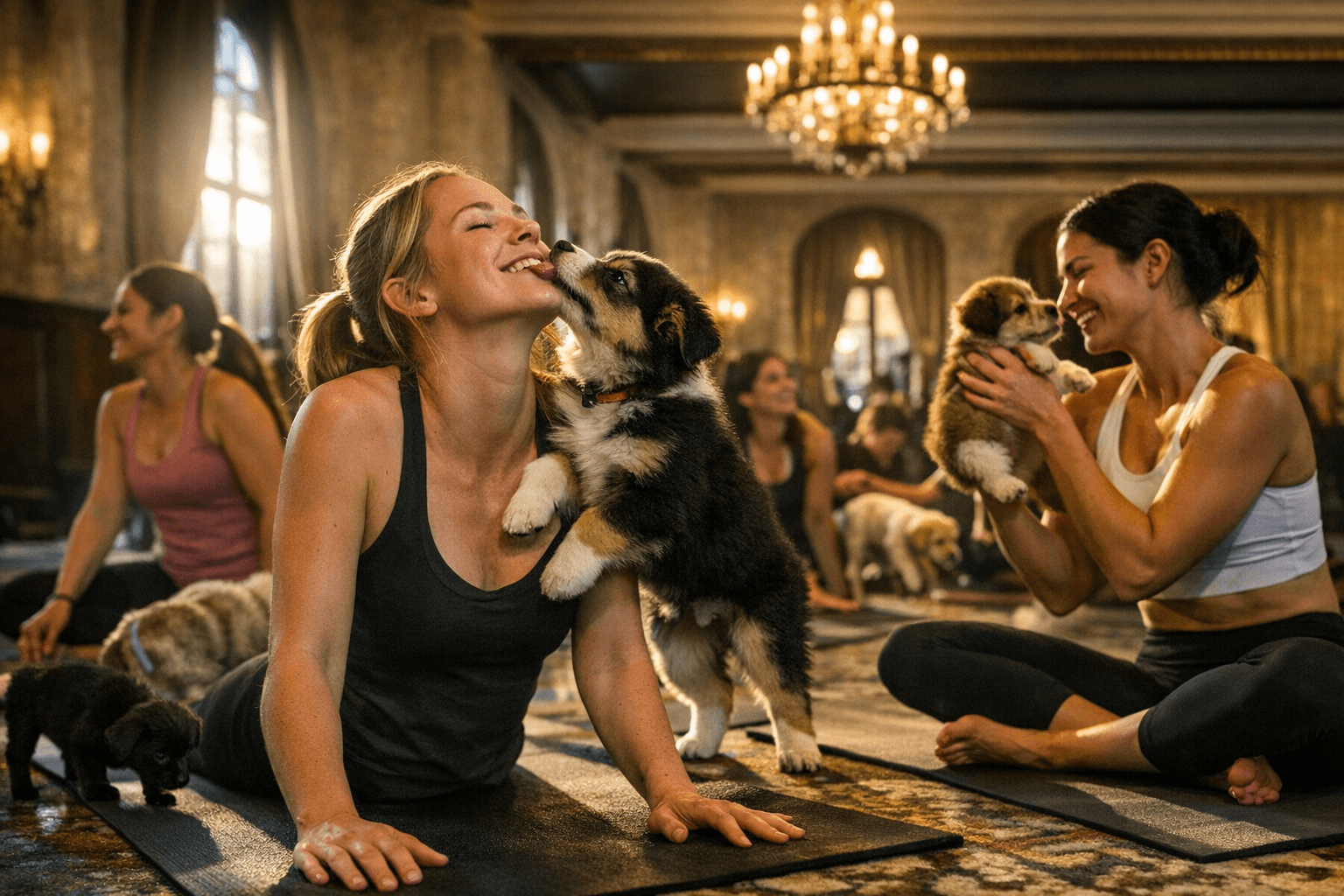
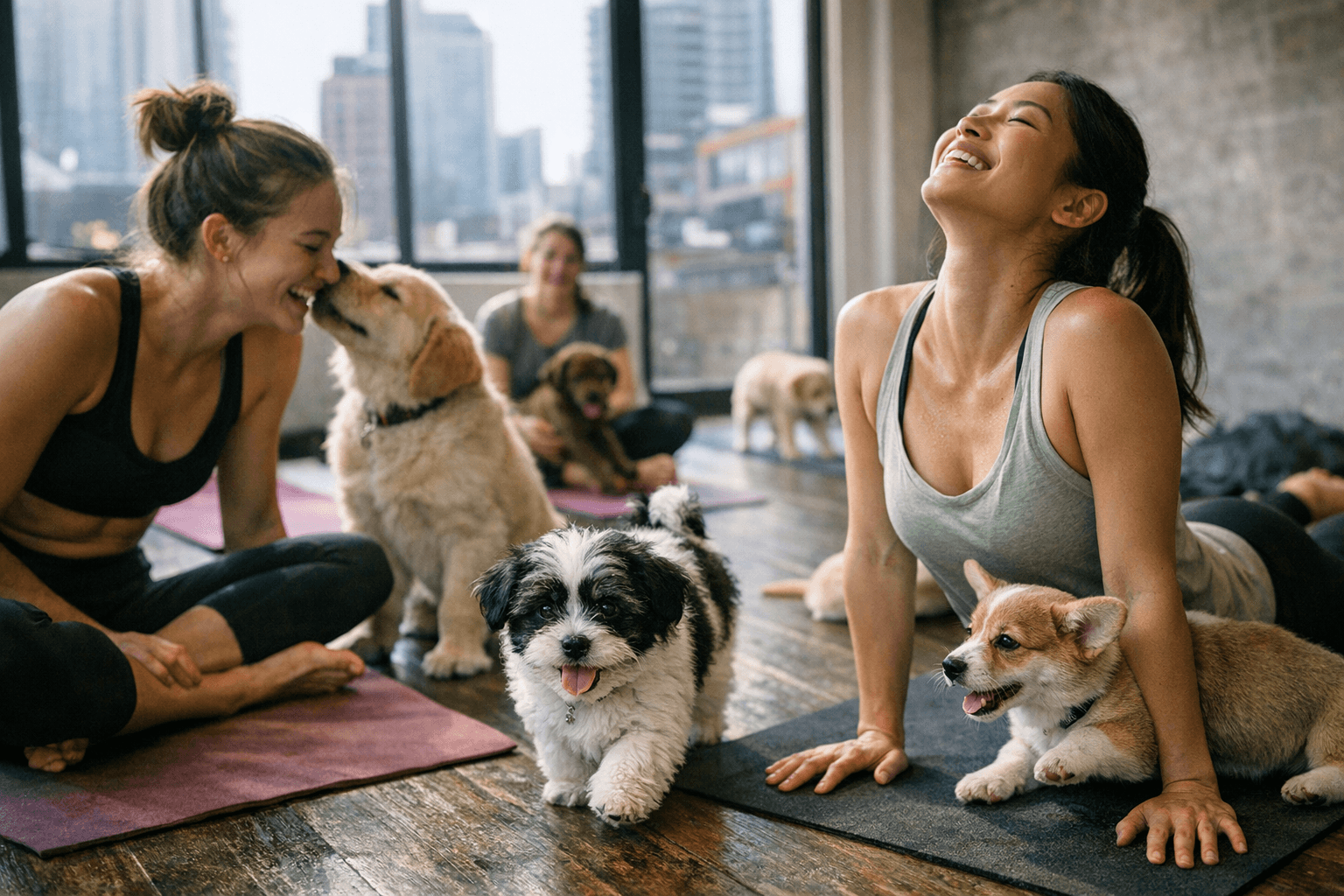
Doga is exactly what it sounds like, doing yoga with your canine companion. There are two common formats: one where you bring your dog to a human class and they stay by your side or roam and socialize, and a hands-on format where you gently guide your dog into stretches and simple poses. The first is geared more toward socialization and acclimating your dog to new people and places; the second actively involves the pup in the practice and can include guided dog stretches such as a supported chair pose.
2. How to start: session length, introduction and incentives
Start by introducing them in short increments and keep sessions 30 minutes or less. Treats can also help keep your dog’s attention and provide incentive. Begin with very short, calm sessions so your dog learns the routine, then build up comfort and duration over multiple visits rather than pushing for a long practice on day one.
3. Class types and what to expect
Type-1 classes let dogs accompany you, socialize, and soak up the calming atmosphere without needing to perform poses; they’re ideal for dogs who benefit from exposure and new stimuli. The hands-on Type-2 format involves physically guiding your dog into stretches and positions, and is more suited to dogs that enjoy touch and handling. Choose the format that matches your dog’s temperament and social skills, shy or reactive dogs usually do better with slow exposure.
4. Human health benefits
Doga delivers many of the same human benefits as traditional yoga: reduced stress, stronger focus, improved flexibility and posture, and mood improvement through mindful movement. Practicing with your dog adds a bonding element and an emotional lift that many owners find more motivating than solo practice. As one practical reminder from a doga resource: “When you can relax, your dog will pick up on your mood. If you’re giving off a relaxed mood, your dog will feel safe and secure.”
5. Dog-focused benefits
Some practitioners report physical and behavioral benefits for dogs, including improved muscle strength, joint health and circulation. As one source puts it: “Yoga improves muscle strength and flexibility. This can help prevent injuries further down the road. This is beneficial to both you and your dog. In dogs, yoga can also be a great tool for helping keep joints healthy and increasing blood circulation.” Doga also supports socialization, exposure to new people, places and other pets, and can increase tolerance for handling during grooming and vet visits.
6. Reconciling claims and what the evidence says
While many instructors and sites report benefits for dogs, there’s some caution about overstating effects: “In terms of physical benefits, there’s still some speculation as to what dog yoga brings to the table, although some experts believe that canines are already reaping the benefits of yoga during their usual movements.” Treat reported gains as promising and practical but not a substitute for veterinary care or targeted canine rehabilitation when needed.
7. Safety, suitability and training cautions
Don’t force anything. “Don’t force anything. It’s not something you can easily teach or learn in one day. Instead, just enjoy this time with your pooch and relax.” Introduce doga gradually, watch your dog’s body language, and avoid pressure on joints or forced balances. For many dogs, doga is a low-impact option: it can be helpful for weight management and for dogs with orthopedic issues, and “since it’s a low-impact exercise, it’s a safe way to exercise flat-faced dogs.”
- Keep sessions under 30 minutes and begin in short increments.
- Use treats and positive reinforcement to reward calm behaviour and participation.
- Sync breath and pace when possible, “A great tip is to try and sync your breathing with the breath of your dog. This alone will help you to relax, and can be a great start to your dog yoga day.”
- Never force a posture; stop if your dog shows stress or discomfort.
8. Quick-start checklist
9. Heart to Hound Mudra
“Heart to Hound Mudra is more of a meditative pose and promotes a transfer of energy from you to your pet. Good vibes only! As the name indicates, it can only be achieved between a human and pup..” This meditative connection is intended to calm both participants and strengthen the emotional bond. Use it as a beginning or ending ritual, sit quietly with palms near your dog in a calm energy exchange rather than applying pressure or forcing contact.
10. Puppy Paw Mudra
“A dog-involved take on Puppy Pose, Puppy Paw Mudra is a stretching pose that benefits our spine, shoulders, upper back, and arms. For our pups? It can build trust with owners, because it involves a sense of touch.” This pose is useful for gentle shoulder and upper-back mobility for humans while giving dogs positive, calm handling practice. Take time to let your dog choose proximity and respond to touch cues to build trust.
11. Chaturanga
“Think of Chaturanga like a yoga push-up. It strengthens muscles around your spine and arms, as well as your wrists and abs, because you begin in a plank. It’s often used to reset a flow and transitions into upward facing dog, then down dog.” For dog-friendly practice, use Chaturanga as part of a human flow while allowing your dog to move in and out of the sequence, it’s a way to maintain a steady, predictable rhythm that dogs can learn to anticipate.
12. Chair Pose
“Best for dogs comfortable standing on their hind legs or advanced dogis, Chair Pose benefits a pup’s blood circulation and range of motion. When done alone in humans, it strengthens our thighs and ankles and tones our shoulders, glutes, and back.” With cooperative dogs, support their torso and encourage a gentle sit-back on the hind legs if they’ll allow it; this can be a controlled way to work balance and circulation. For humans, use the same pose as a wall sit or supported squat if your dog is participating beside you.
13. Downward‑Facing Dog
“As far as dog yoga poses go, you can’t get more tried and true than Downward‑Facing Dog, as the name alludes, our pooches basically invented it! In humans, this stretching yoga pose benefits our legs, opens our shoulders, and strengthens our arms. It’s sometimes shortened to Downward Dog or Down Dog.” Many dogs naturally perform this stretch, making it one of the most accessible shared poses. Use it to warm up hamstrings and shoulders, and allow your dog to initiate or mirror the movement.
14. Upward‑Facing Dog
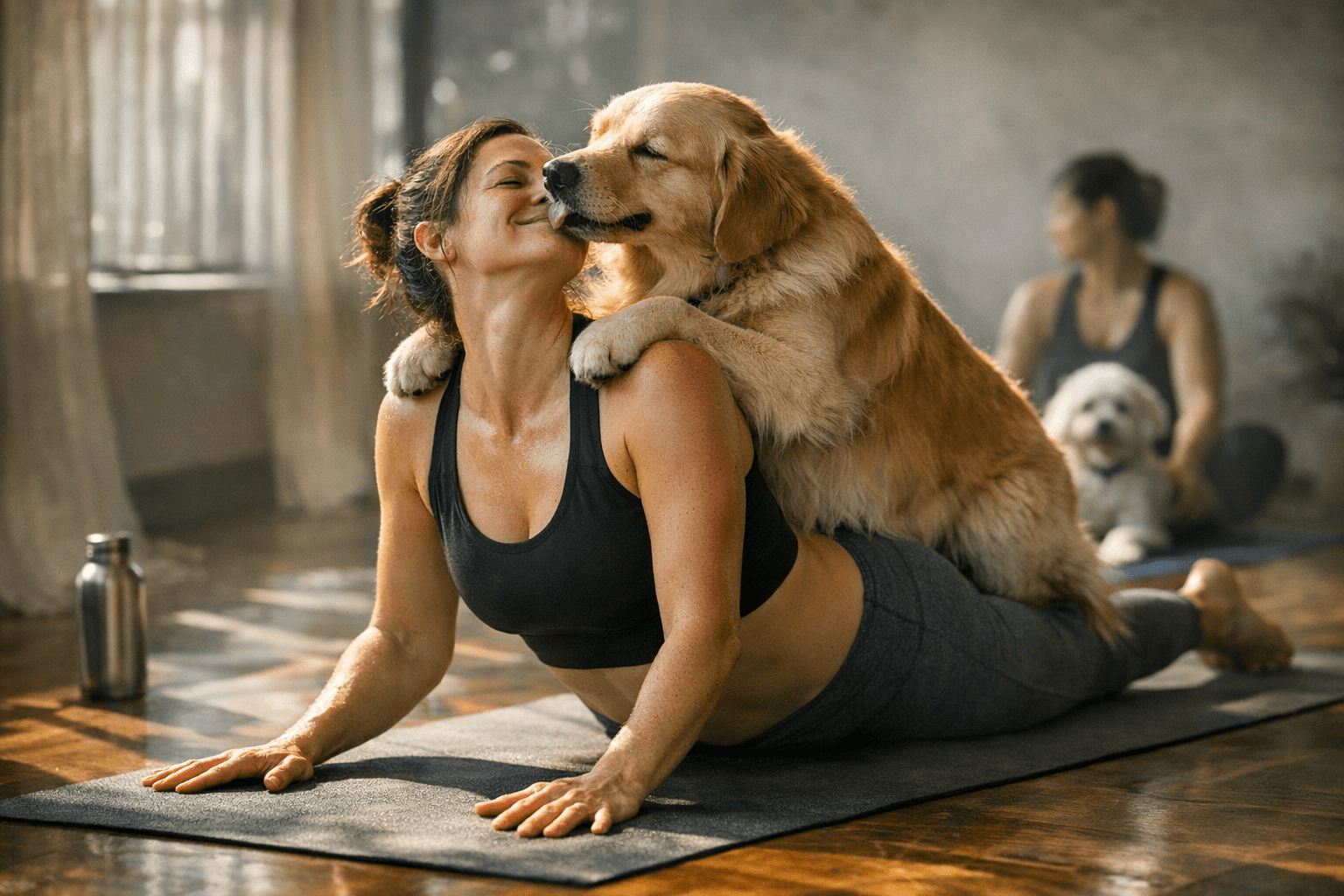
“Another dog‑inspired yoga pose, Upward‑Facing Dog opens up our chest and ab muscles. It also strengthens our shoulders, triceps, forearms, and lower back, all of which support the pose. It’s sometimes shortened to Upward Dog or Up Dog.” This is a human-centered backbend that complements Downward Dog; invite your dog to rest at your feet or beside you rather than attempting risky lifts or positions for the animal.
15. Forward Bend / Forward Fold
“Great for stretching hamstrings and calves, Forward Bend pose is often conducted in the cool-down part of a yoga routine. If you’d like, gather your pup to participate.” Use Forward Fold as part of the calm finish to class, and let sociable dogs come forward for gentle contact. Keep folds gentle if your dog has mobility issues and allow them space if they prefer to lie down.
16. Compass Pose
“Inspired by how our dogs lift their legs to groom themselves, Compass Pose opens humans’ hips, shoulders, and hamstrings and stretches our spines.” This human pose can be a playful nod to canine grooming mechanics; it helps open tight hips and shoulders and is best practiced slowly and with care. Invite your dog to naturally mimic or simply observe while you move through the stretch.
17. Happy Baby
Happy Baby is listed among recommended doga poses but source material provides only the inclusion on the pose list. Because explicit step-by-step details aren’t provided in the notes, treat this as a gentle cool-down or hip-opening option and consult a doga instructor before asking a dog to mimic any specific human variations. Use it as a calming partner pose to finish a session rather than a core practice for the dog.
18. Plank
“Plank pose is one of the simplest poses to achieve as well, and can be done with forearms on the ground or even just your hands depending on what level of challenge you want.” Plank is a stable human posture that provides core strength and a predictable frame for dogs to lie beside or rest their head on your arm if comfortable. Modify intensity according to your level and never prop or brace a dog into a plank-like position.
19. Crescent lunges
Crescent lunges are included in doga class lists as a dog-friendly movement alongside forward fold, wheelbarrow and downward dog. Use them to work gentle dynamic hip opening for humans while keeping movements slow so curious dogs can stay close without becoming startled. If you want dogs to participate physically, rely on simple, low-impact variations and careful support.
20. Wheelbarrow pose
Wheelbarrow pose appears on dog-friendly lists as an option for guided practice in classes. Because detailed mechanics are not provided in the notes, reserve this one for well-trained pairs and instructor-led sessions where safe spotting and canine comfort are ensured. It’s a pose that requires clear communication and familiarity with your dog’s strength and willingness.
21. Starter position (unnamed)
“This pose is one of the easiest ones to do, and will help your most likely active dog calm down easily. This is usually a starter position, used before moving to more advanced positions.” Use a calm, low-contact starter position to get an active dog settled, sitting on the floor with your dog in front of you or a simple shared breath-and-pause can work as a reliable opening. Make this your go-to if a session begins with a high-energy pup.
22. Final tips and practical wisdom
Keep doga simple, positive and consistent: short sessions, treats and gentle handling build comfort faster than long, forced practices. If your dog has health concerns or mobility limits, treat doga as a complementary, low‑impact option and check with your veterinarian before trying guided dog stretches. Above all, focus on calm connection, sync breath, keep expectations realistic, and enjoy the shared time; when you relax, your dog will often do the same.
Know something we missed? Have a correction or additional information?
Submit a Tip