Doga for Beginners: Safe, Step-by-Step Guide to Practicing with Your Dog
Learn how to practice doga safely at home with your dog through step-by-step breathwork, massage, gentle stretches, and reading stress signals.
%3Amax_bytes(150000)%3Astrip_icc()%2Fdog-in-front-of-yoga-pose-1137398981-2000-266dce41d0a347a8acbe4aceb5bbc2c9.jpg&w=1920&q=75)
Intro: Doga is yoga practiced with your dog present, a human‑led routine where your calm breath and gentle movements guide the session. This guide walks you through safe setup, slow introductions, core doga activities, how to read your dog, and the benefits you’ll both gain.
1. Understand what doga is and what it isn’t
Doga is primarily a human‑led practice where your calm breathwork, body language, and relaxed movements help your dog settle; it’s not advanced canine physical therapy or forced stretching. Think of doga as bonding time with low‑impact activity rather than a workout for your dog, and keep expectations realistic: your dog may watch, nap, lean on you, or participate briefly. Embrace the goal of mutual relaxation rather than perfect poses.
2. Prepare your space and equipment
Set up a quiet, non‑slippery area with room for you and your dog to sit or lie down comfortably; a yoga mat for you and a soft blanket for your dog work well. Remove hazards, leash‑hooks, or dangling toys that could distract or startle your dog, and lower bright lights and loud sounds to create a calm atmosphere. Have treats, a favorite toy, and water nearby so you can reward positive, voluntary participation.
3. Check health and suitability before you start
Before beginning doga, check with your veterinarian to ensure your dog’s age, breed, and health status are appropriate for any assisted movement or massage you plan to use. Avoid forcing movement in puppies whose growth plates are still developing, in senior dogs with arthritis, or in dogs with known mobility impairments, instead, focus on massage and grounding breathwork. If your dog has a medical condition, follow veterinary guidance and modify or skip stretching.
4. Introduce doga slowly and let your dog approach
Start every session by letting your dog decide whether to participate; place your mat nearby and call them gently rather than picking them up or pushing them into position. Allow sniffing and exploration for several minutes so your dog can check the space and feel safe, and reward relaxed approaches with calm praise or a treat. Repeated positive, voluntary approaches build the association between the space and a chill, rewarding experience.
5. Begin with seated breathwork and grounding
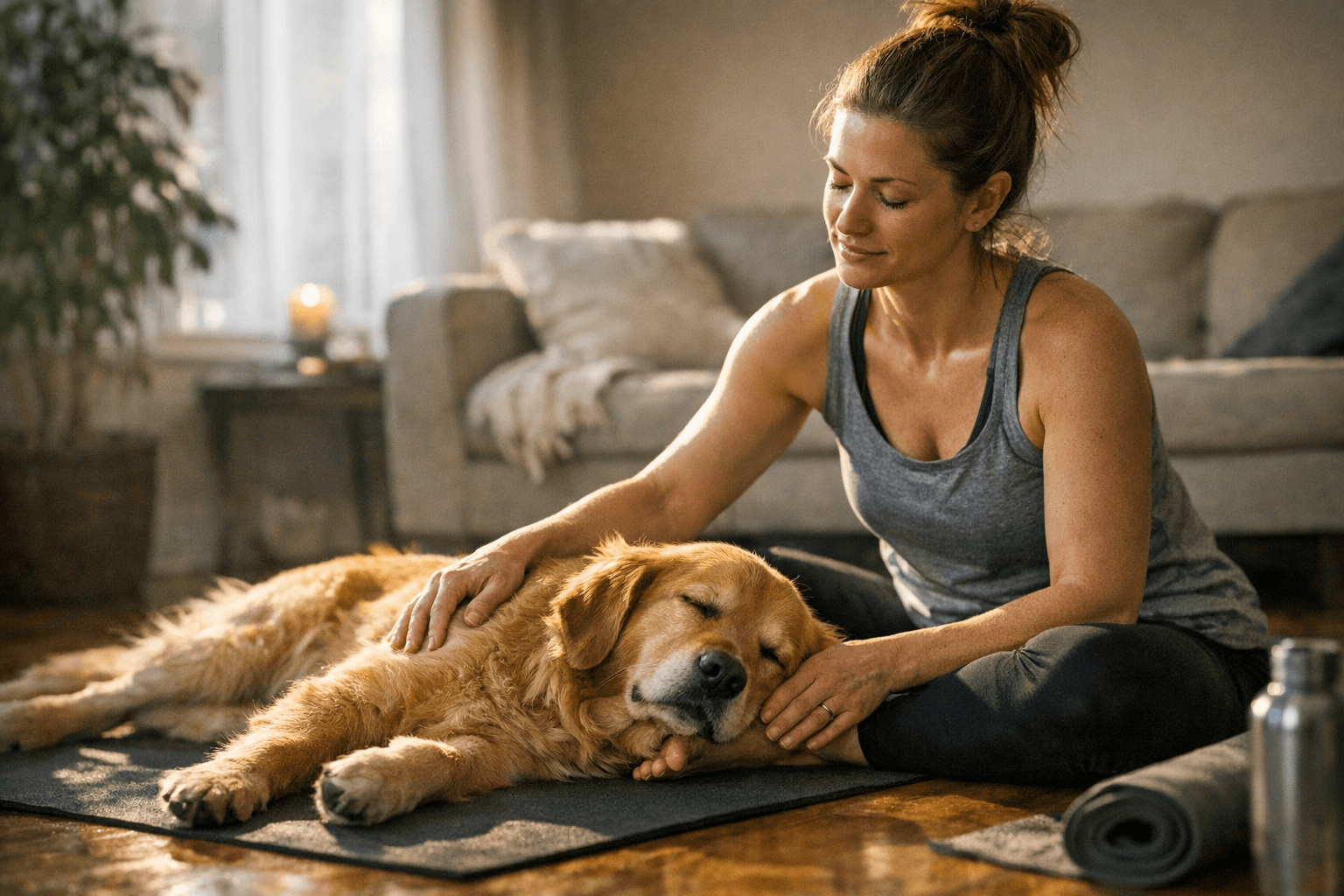
Sit in a comfortable cross‑legged or kneeling position with your dog beside you or leaning into your legs; breathe slowly and deliberately, your dog often mirrors your energy. Practice 5–10 slow, deep breaths, placing a hand gently on your dog’s side if they accept it; your steady rhythm and warmth help them relax. Use this early portion to establish calm, and keep voices soft and movements minimal.
6. Use gentle massage and acupressure for relaxation
Massage and light acupressure are core doga activities that most dogs tolerate well and find soothing; focus on neck, shoulders, chest, and along the spine with soft, circular motions. Observe your dog for signs of enjoyment (loose body, soft eyes, leaning in) and stop if they pull away or stiffen; always follow the dog’s lead and be gentle around sensitive areas. Consider short 1–2 minute rounds per spot and end massage on a positive note with praise or a small treat.
7. Offer short assisted stretches only if your dog is willing
If your dog shows clear willingness, relaxed body, wagging tail, leaning in, you can try very brief assisted stretches such as gentle forelimb extension or slow, supported hip rotations; never force any limb or joint. Keep assisted stretches minimal (a few seconds) and monitor closely for discomfort signals; discontinue immediately at the first sign of stress. Assisted stretches are optional: many successful doga sessions involve only breathwork and massage.
8. Learn and watch canine stress signals
Being able to read your dog’s signals is essential to safety; watch for tail position changes, whale eye (showing the whites of the eyes), a stiff body, tucked tail, or moving away. If you notice any of these signs, pause, give space, and return to a calming activity like slow breathwork or a brief break. Respecting these cues keeps sessions positive and protects trust between you and your dog.
9. Keep sessions short, positive, and frequent
Short sessions (5–15 minutes) are best for beginners and for dogs who are new to doga, frequent, pleasant short practices build familiarity far better than occasional long ones. End every session while your dog is still relaxed and content so you reinforce the good association; use treats, soft praise, or a favorite sniff toy as a positive close. Consistency matters: regular short practices help with bonding, low‑impact exercise, and relaxation over time.
10. Benefits, community options, and next steps
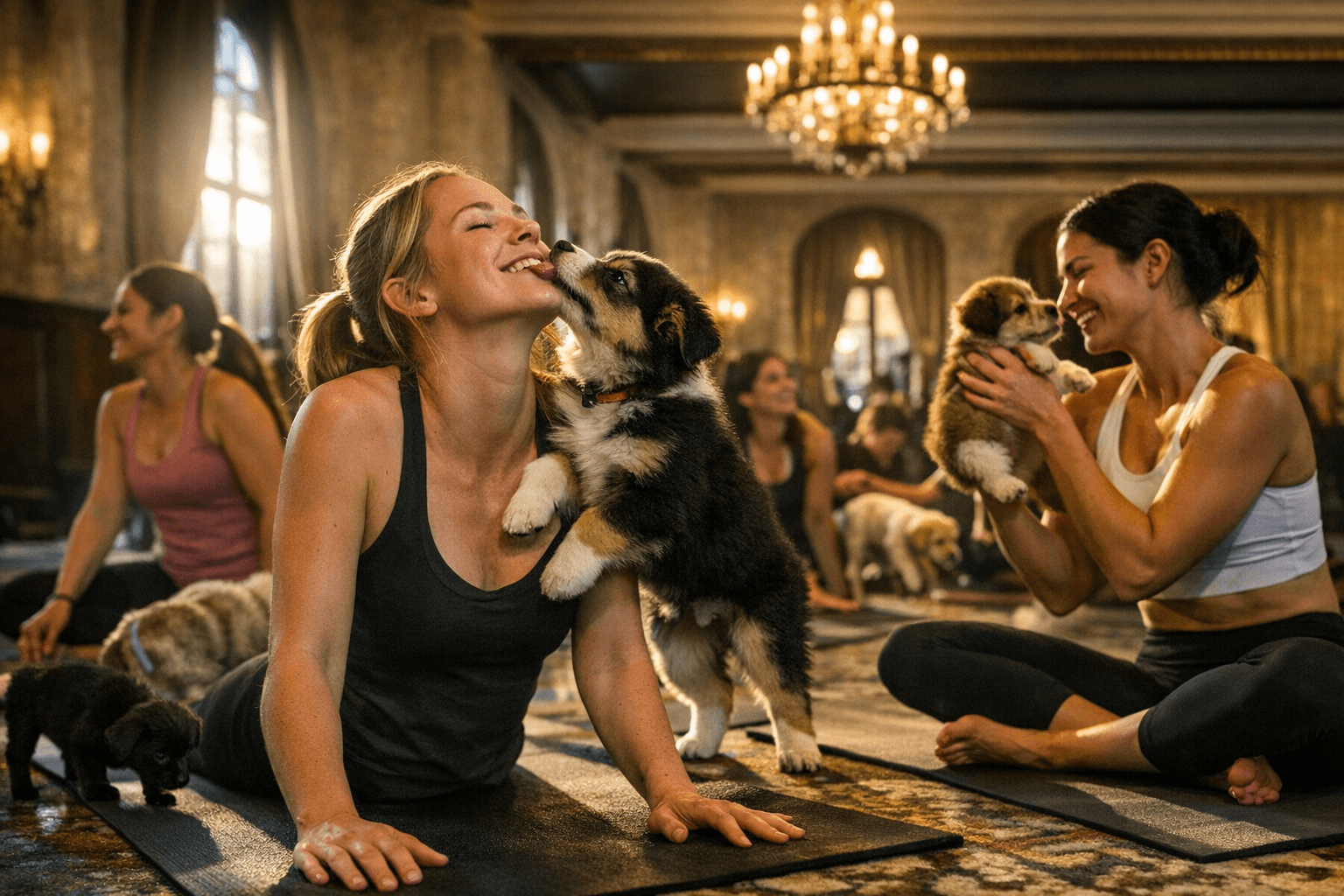
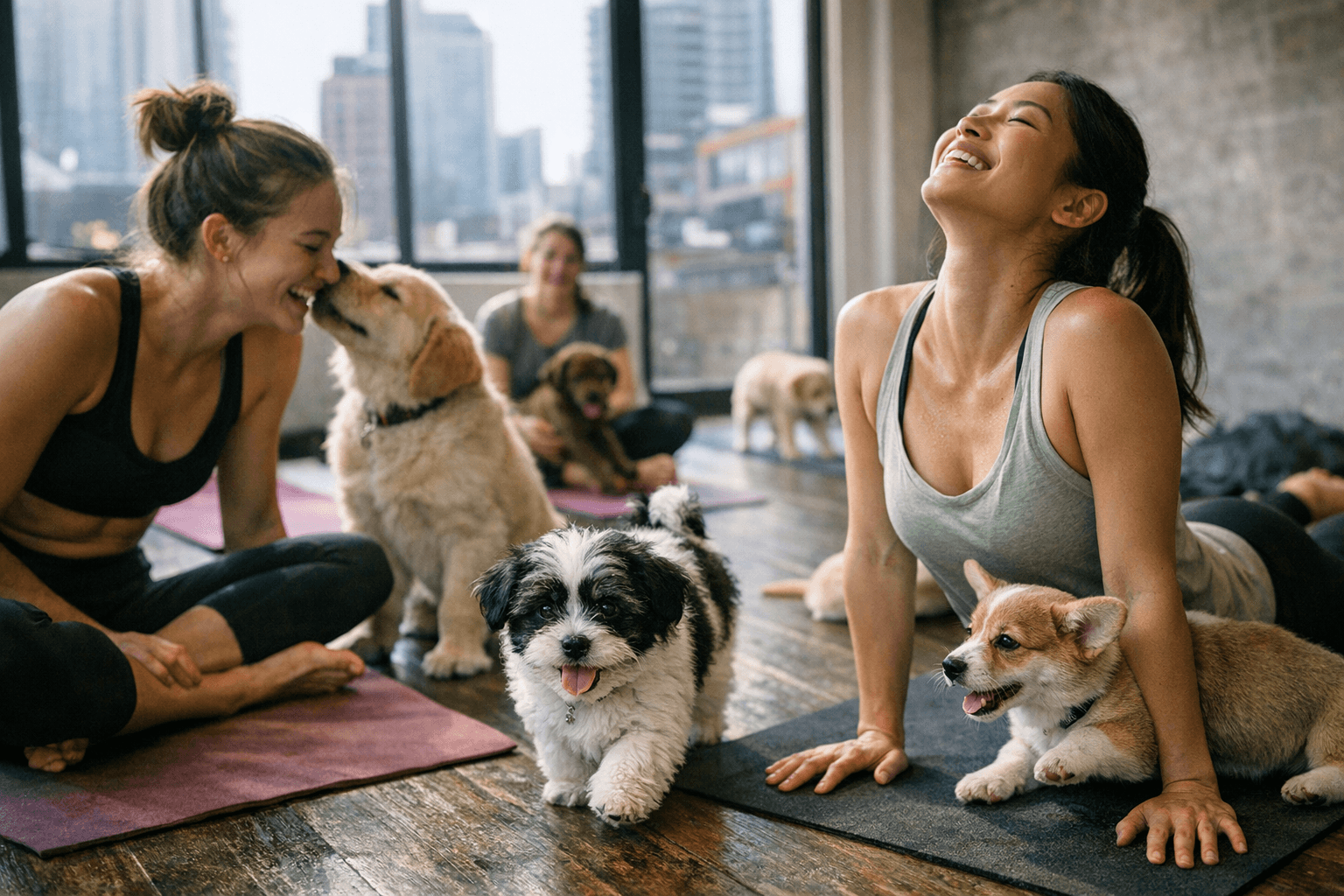
Doga strengthens the human–dog bond, offers low‑impact movement for you both, can introduce puppies gently to group settings, and may reduce stress for anxious humans and dogs when practiced calmly. If you want community engagement, look for local doga classes that emphasize safety and volunteer participation, or bring a friend and their dog for a supervised practice to socialize puppies in a low‑pressure way. As you progress, continue checking health status with your vet, and consider workshops with certified instructors for advanced massage or safe assisted stretches.
Closing practical wisdom: Start small, read your dog constantly, and choose calm connection over perfect poses, when your breath guides the session and your dog’s comfort dictates the pace, doga becomes a simple, powerful tool for bonding and relaxation you can use any day of the week.
Know something we missed? Have a correction or additional information?
Submit a Tip