DOJ Admits It Erroneously Relied on ICE Memo to Justify Courthouse Arrests
The DOJ admitted it mistakenly used an ICE memo that never authorized arrests at immigration courts, potentially overturning a judge's ruling that had blocked relief for hundreds of immigrants.
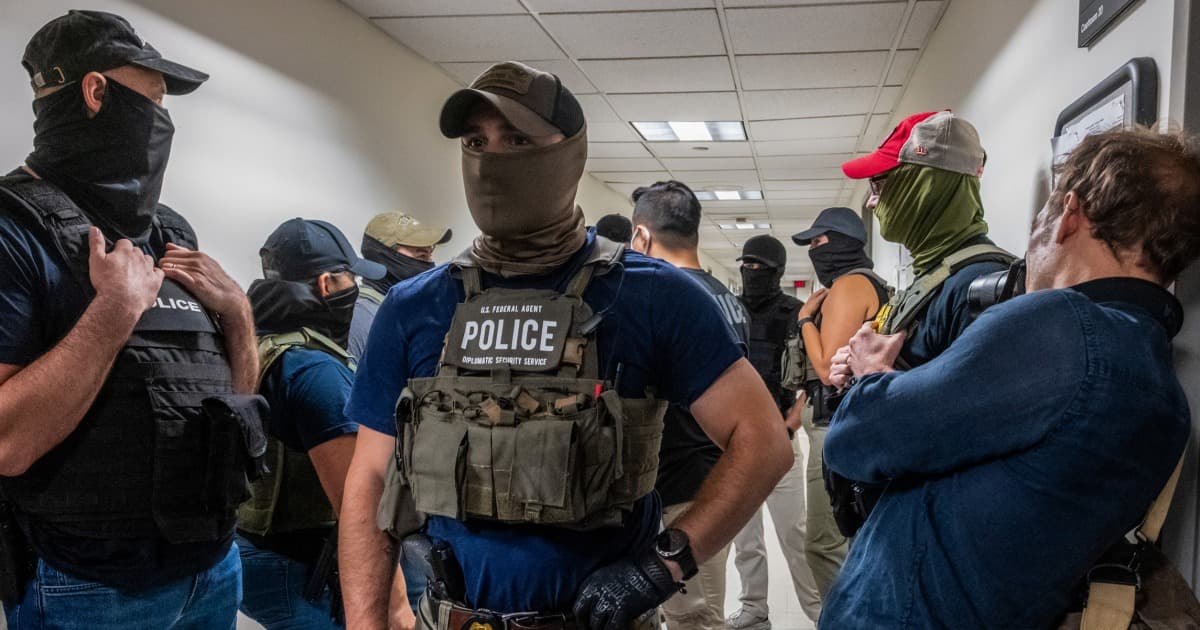
The Trump administration admitted Tuesday that it had erroneously used a memo on courthouse arrests to justify ICE agents detaining immigrants at their immigration hearings for more than a year. In a letter to U.S. District Judge Kevin Castel, who was overseeing the case in New York City, U.S. Attorney Jay Clayton said the Department of Justice had relied on May 2025 guidance that applied only to criminal courthouses, not immigration courts, when defending the practice.
That memo, dated May 27, 2025, is titled "Civil Immigration Enforcement Actions in or Near Courthouses," and according to Clayton, it "does not and has never applied to civil immigration enforcement actions in or near Executive Office for Immigration Review immigration courts." Federal prosecutors said they had used the memo, known as the "2025 ICE Guidance," to defend the Trump administration's deployment of ICE agents at courthouses, which led to numerous arrests of immigrants attending hearings.
The government said it became aware of the mistake Tuesday when it received an email sent to ICE personnel as a "reminder that the May 27, 2025, Guidance does not apply to Executive Office for Immigration Review (Immigration) courts, regardless of their location." Clayton wrote that "this regrettable error appears to have occurred because of agency attorney error," referring to ICE's counsel. Prosecutors noted they "were specifically informed by ICE that the 2025 ICE guidance applied to immigration courthouse arrests."
Castel had relied heavily on the 2025 memo in his ruling, writing explicitly in his 47-page order that the guidance "allowed arrests at or near an immigration court." The revelation that it does not came more than six months after that ruling. As a result of the mistake, prosecutors acknowledged, the court's September 12 opinion and order and the plaintiffs' briefs "will need to be reconsidered and re-briefed for the Court to adjudicate Plaintiffs' APA [Administrative Procedure Act] claims against ICE on the merits."
The courthouse arrest controversy intersects with a separate but related disclosure about a different memo by acting ICE Director Todd Lyons. Signed by Lyons and dated May 12, 2025, that memo states: "Although the U.S. Department of Homeland Security (DHS) has not historically relied on administrative warrants alone to arrest aliens subject to final orders of removal in their place of residence, the DHS Office of the General Counsel has recently determined that the U.S. Constitution, the Immigration and Nationality Act, and the immigration regulations do not prohibit relying on administrative warrants for this purpose." The memo does not detail how that determination was made nor what its legal repercussions might be.
The memo was issued last May and has only been shared with "select DHS officials," according to a whistleblower disclosure, but its contents have been used to train ICE officers deployed to cities during the Trump administration's immigration crackdown. ICE basic training provides to the contrary that "a warrant of removal/deportation does NOT alone authorize a 4th amendment search of any kind."
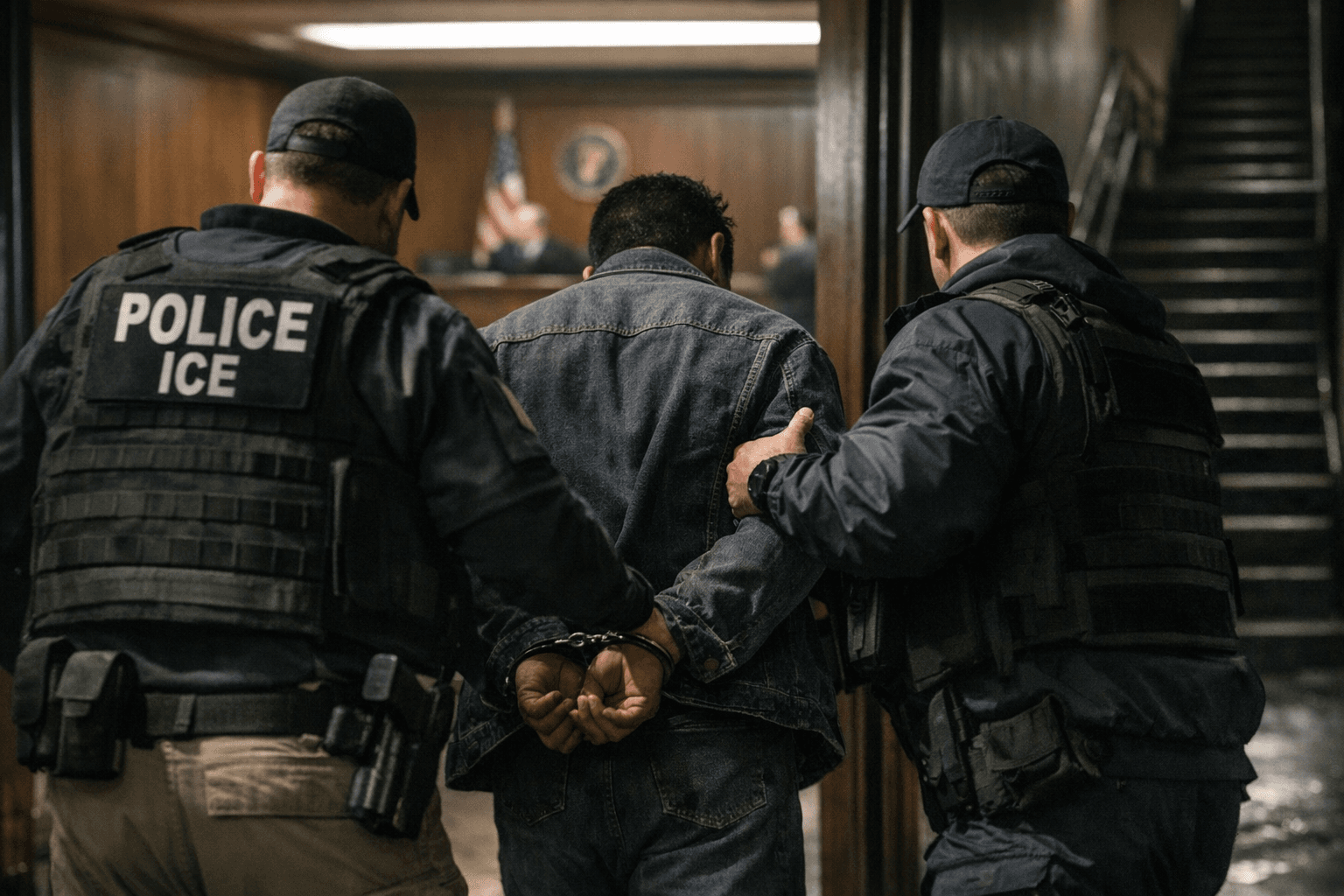
The on-the-ground consequences of that training came into sharp relief in Minneapolis. The May 12 memo was shared with Sen. Richard Blumenthal by two whistleblowers. It says ICE agents are allowed to forcibly enter a person's home using an administrative warrant if a judge has issued a "final order of removal." Administrative warrants are different from judicial warrants, which judges or magistrates sign allowing entry into homes. The Associated Press witnessed ICE officers ramming through the front door of the home of a Liberian man, Garrison Gibson, who had a deportation order from 2023, in Minneapolis on January 11, with officers wearing heavy tactical gear and rifles drawn.
Lindsay Nash, a law professor at Yeshiva University's Cardozo School of Law in New York, said the Lyons memo "flies in the face" of what the Fourth Amendment protects against and what ICE itself has historically said are its authorities. She warned there is an "enormous potential for overreach, for mistakes and we've seen that those can happen with very, very serious consequences."
Amy Belsher, a New York Civil Liberties Union lawyer representing the immigration groups that brought the courthouse case, wrote in a Wednesday response that "the implications of this development are far-reaching." Belsher said: "For over a year, ICE has claimed that a 2025 memorandum authorized and justified their devastating policy of conducting mass arrests at immigration courts. In today's shocking revelation, the government is now admitting that this document — which the court relied on to deny our clients relief — does not and never has authorized these courthouse arrests."
Clayton wrote in his letter: "We deeply regret that this error has come to light at this late stage, after the parties have expended significant resources and time to litigate this case and this Court has carefully considered Plaintiffs' challenge to the 2025 ICE Guidance." Although the government is not dropping its defense against the lawsuit altogether, the revelation could hurt its case going forward.
Know something we missed? Have a correction or additional information?
Submit a Tip