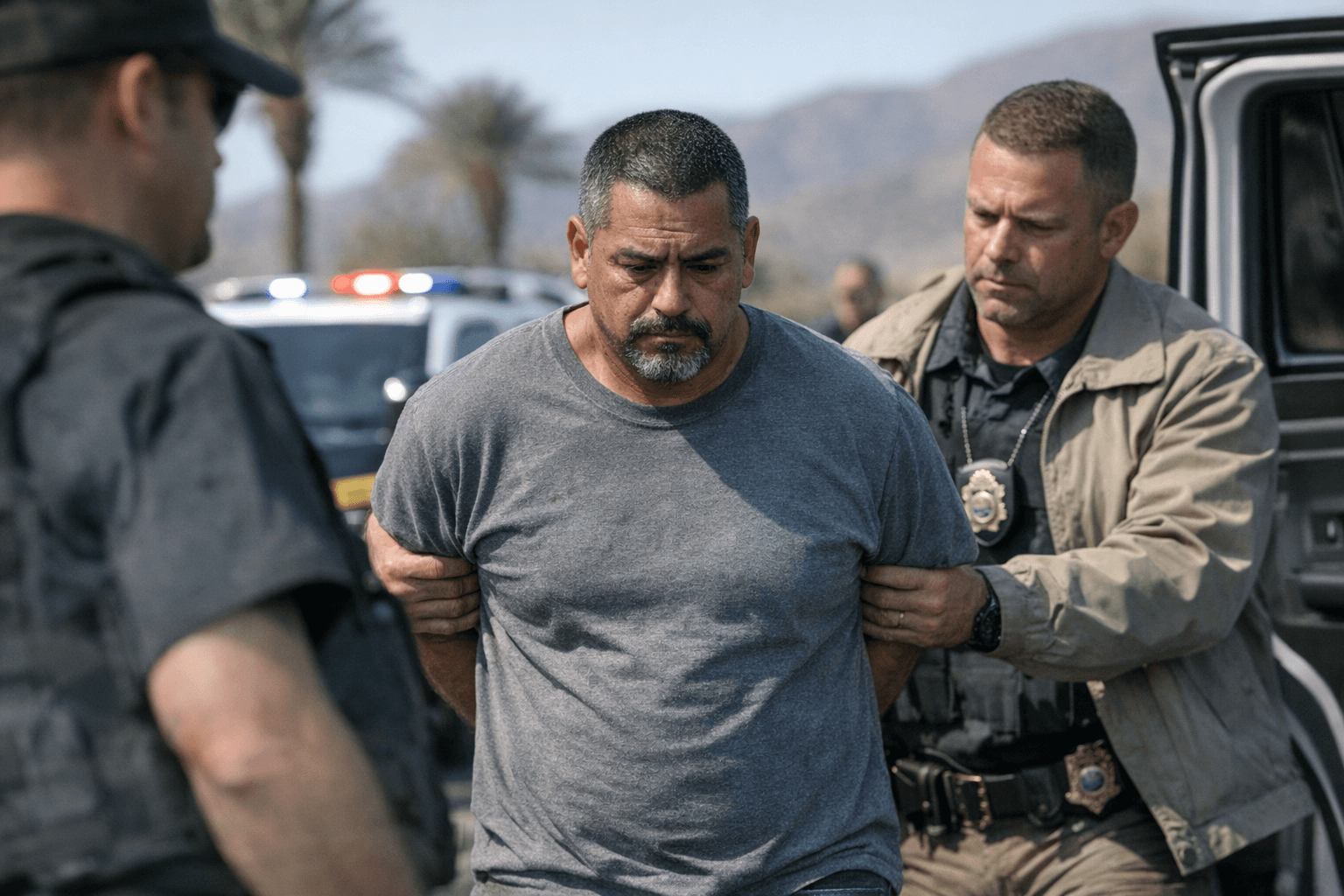
DOJ Guide Details NamUs, ViCAP and Steps for Reporting Missing Persons
The Department of Justice consolidates steps for reporting missing persons - call local law enforcement, note there is no waiting period, and use federal resources like NamUs and ViCAP.
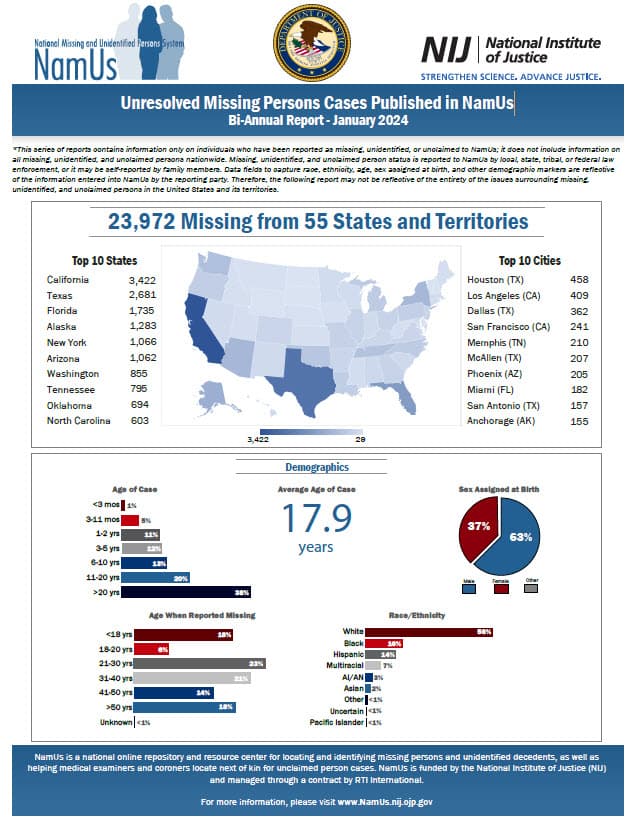
The U.S. Department of Justice lays out a plain set of actions for families, volunteers, and cold-case sleuths working on missing-person inquiries. The guidance puts one message up front: call local law enforcement immediately and there is no required waiting period to file a missing-person report.
For children, the guidance directs people to contact the National Center for Missing & Exploited Children as an immediate national resource. For adult cases and unidentified remains, the resource identifies the National Missing and Unidentified Persons System, known as NamUs, and ViCAP as federal tools that can assist investigative and identifications efforts. The resource also explains how to contact NamUs for assistance and offers links to state and tribal resources for follow-up at the local level.
The resource is aimed at family members and volunteers and is practical in scope. It consolidates contact information, practical steps for what to tell law enforcement, and links that connect community searchers to databases and forensic services. For hobbyist reporters and volunteer investigators who handle Doe files, that consolidation reduces friction: it clarifies first actions, points to national repositories for records and case matching, and provides pathways for escalating cases when local leads stall.
NamUs serves as a centralized system for reporting and comparing missing-person cases and unidentified remains. ViCAP provides another federal avenue for pattern and linkage analysis in violent crimes. Both systems are presented as tools families and volunteers can use alongside local police reporting. The Justice guidance stresses coordination between family-provided information and law enforcement records so that photos, medical and dental records, tattoos and distinguishing features, and last known movements can be cross-referenced in national systems.
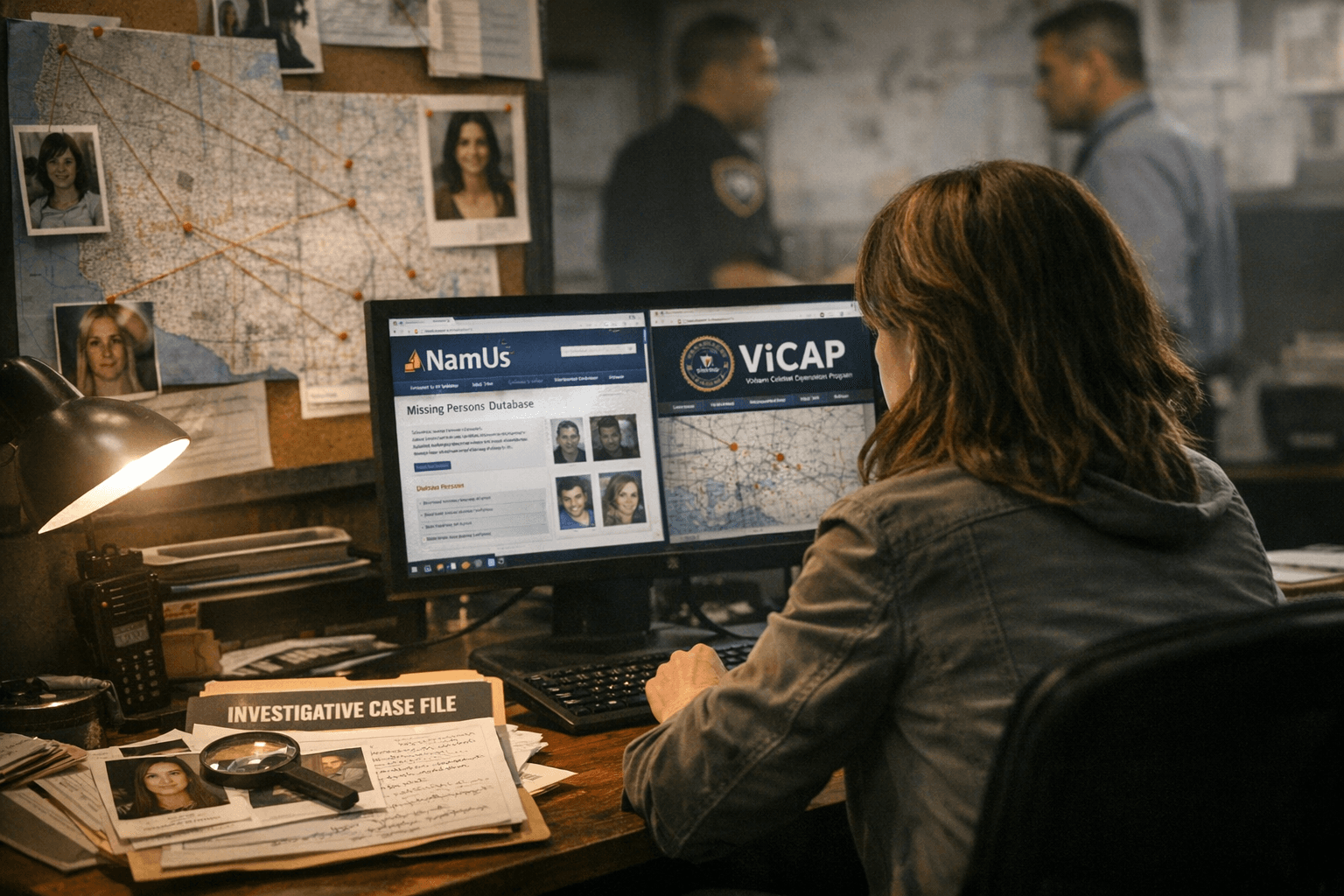
Community volunteers will find particular value in the resource's state and tribal links, which help match the right point of contact for a case that crosses jurisdictions. The guidance also highlights that reporting should not be delayed while waiting for a procedural window, and that immediate notification increases the chance that perishable evidence, witness memories, and electronic records are preserved.
For readers active on message boards, in search teams, or in cold-case forums, the Department of Justice material functions as a practical checklist: report promptly to law enforcement, engage appropriate national centers for children and unidentified persons, and use NamUs and ViCAP as part of a coordinated effort. The upshot is clearer, faster entry points into federal resources and fewer procedural hurdles for families and community investigators trying to move a case forward.
Know something we missed? Have a correction or additional information?
Submit a Tip%3Amax_bytes(150000)%3Astrip_icc()%3Afocal(740x426%3A742x428)%2Fceline-cremer-search-121525-1-ab23f512429c4f75b9dfa51b541303b5.jpg&w=1920&q=75)