DOJ seeks forfeiture of tanker Skipper and 1.8 million barrels of Venezuelan crude
DOJ filed a civil forfeiture complaint to seize the motor tanker Skipper and roughly 1.8 million barrels of PdVSA-origin crude, alleging sanction-evasion and ties to Iran's IRGC.
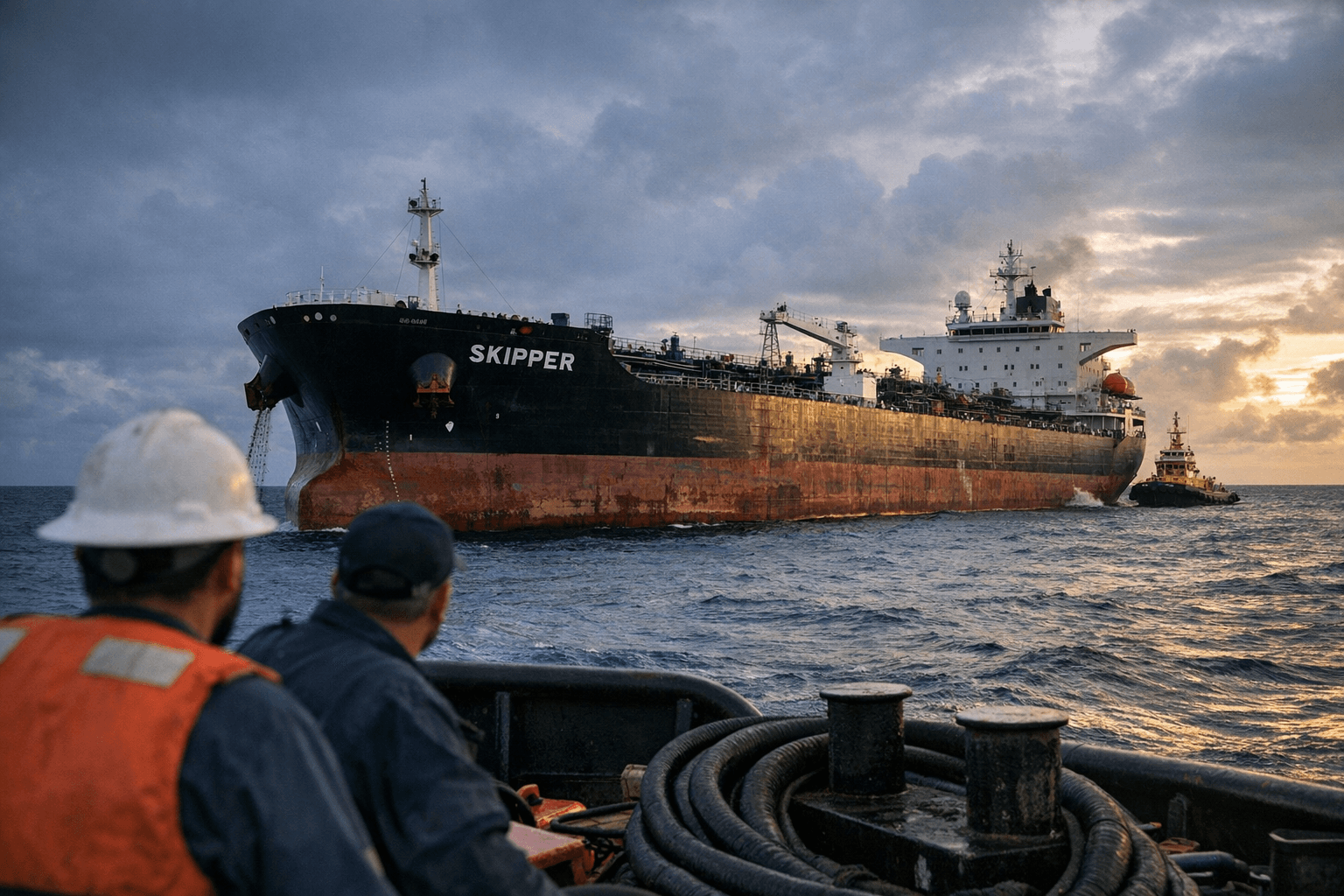
The U.S. Department of Justice filed a civil forfeiture complaint on Feb. 27, 2026 seeking to seize the motor tanker M/T Skipper and its cargo of roughly 1.8 million barrels of Venezuelan-origin crude, alleging the vessel and cargo provided material support to Iran’s Islamic Revolutionary Guard Corps and its Quds Force. The complaint was filed in U.S. District Court for the District of Columbia and initiates a proceeding in which the government must prove its allegations.
U.S. law enforcement seized the Skipper on Dec. 10, 2025 on the high seas and transported the vessel and cargo to waters off the Texas coast. The ship has been held anchored near the Galveston, Texas, oil terminal since Dec. 21, 2025, according to the filing and related investigative notes. Satellite imagery showed the Skipper north of Guadeloupe on Dec. 12, 2025, an image credited to Vantor/Handout via REUTERS.
DOJ alleges the crude aboard the Skipper was supplied by Petróleos de Venezuela, S.A. and that the tanker was operating without nationality while falsely claiming a Guyanese flag. The complaint traces a pattern of deceptive practices dating back at least to 2021, including ship-to-ship transfers, falsified documents and manipulation of identification systems to obscure voyages and origins. Investigators say the vessel loaded about 1.8 million barrels in November 2025 and that, over the previous two years, it loaded more than seven million barrels of Iranian crude, most recently around July 2025; those broader operational claims are presented as government allegations in the complaint.
Prosecutors from the Justice Department’s Criminal Division, National Security Division and the U.S. Attorney’s Office for the District of Columbia are handling the forfeiture action. Maritime enforcement measures filed with the complaint include a warrant for the arrest of the vessel and instructions to the U.S. Marshals Service to serve the Skipper. FBI and Homeland Security Investigations agents played central roles in the investigation.
Attorney General Pamela Bondi said, “Under President Trump's leadership, the era of secretly bankrolling regimes that pose clear threats to the United States is over.” She added, “This Department of Justice will deploy every legal authority at our disposal to completely dismantle and permanently shutter any operation that defies our laws and fuels chaos across the globe.” FBI Director Kash Patel said, “This forfeiture complaint for the M/T Skipper and its oil cargo demonstrates the FBI’s unwavering commitment to enforcing U.S. sanctions and thwarting hostile regimes who exploit the global oil trade.”
The filing arrives alongside related enforcement actions by Homeland Security Investigations that allege separate schemes to mask Iranian petroleum shipments and forfeit proceeds. ICE materials assert $47 million in proceeds from the sale of nearly one million barrels of Iranian petroleum are subject to forfeiture, alleging tactics including manipulation of automatic identification systems, falsified documents presented to a Croatian storage facility and U.S. dollar payments routed through U.S. banks.
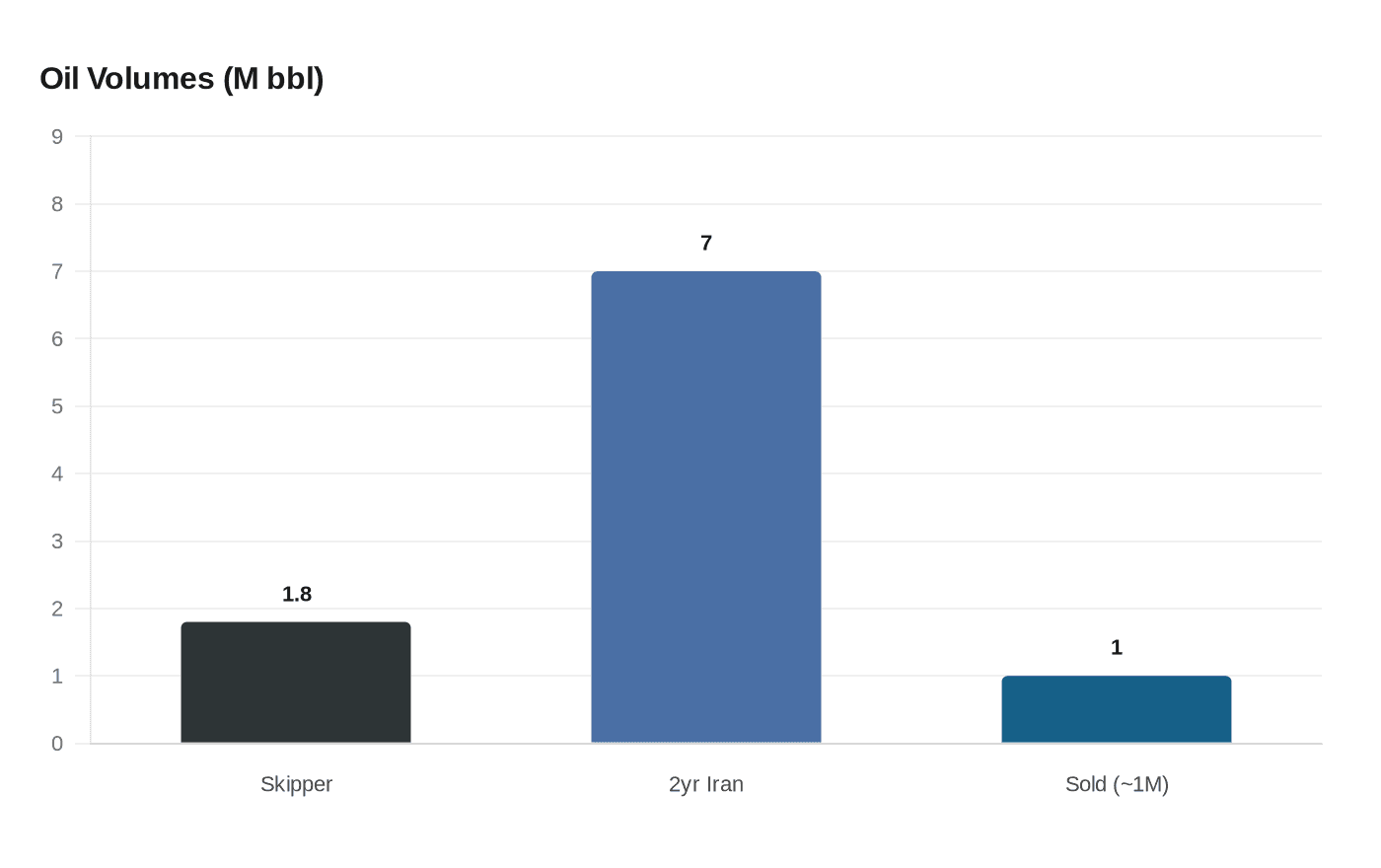
Market implications are limited in scale but significant in sanction policy. The Skipper cargo, about 1.8 million barrels, equals roughly two days of global oil demand assuming world consumption near 100 million barrels per day, so direct supply effects on prices are likely small. However, the enforcement action raises the risk premium for operators in the so-called shadow fleet and could tighten logistics for sanctioned suppliers, increasing trading costs and deterring intermediaries. One online headline pegged the cargo at about $150 million; DOJ has not released a valuation in the complaint.
The civil case now moves to court, where the government must substantiate its allegations and where the outcome will shape Washington’s leverage over complex maritime sanction-evasion networks.
This article was produced by Prism’s automated news system from verified source data, official records, and press releases, then run through automated quality and moderation checks before publishing. The system is built and supervised by the people who set the standards it runs under. Read our full AI policy.
Did this article answer your question?