Dollar Starts 2026 Soft After Steepest Annual Fall in Years
The U.S. dollar opened 2026 on a subdued note after a sharp depreciation in 2025 that left major dollar gauges down roughly 8% to 9.5% for the year. The move alters asset-allocation incentives, raises questions about Fed policy and could amplify market volatility as traders await U.S. labour data and a potentially contentious Fed succession announcement.
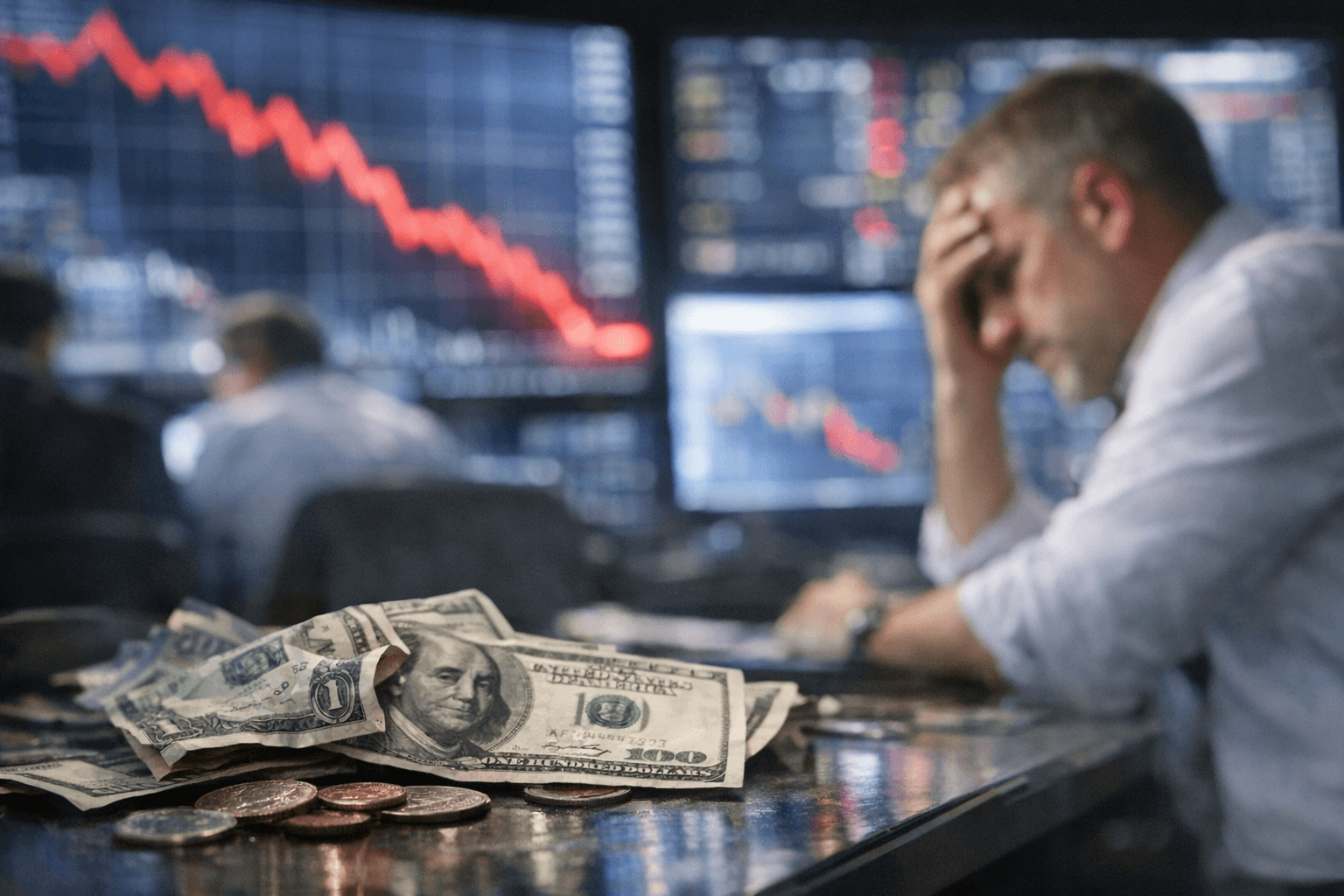
The U.S. dollar began 2026 on a softer footing following a pronounced slide in 2025 that left major indexes down materially from year-ago levels. The ICE U.S. dollar index stood at 98.243 on Jan. 2, reflecting a 9.4% decline for 2025. Alternative measures place the annual fall in a range from about 8% to 9.5%, differences that stem from index construction and reporting cutoffs but that point to the same broad theme of significant depreciation.
Several factors combined to sap dollar support. A narrowing of interest-rate differentials between the United States and other major economies has been central, as markets increasingly price Federal Reserve easing in 2026 while central banks elsewhere are more likely to hold rates steady or even tighten. Political uncertainty has also weighed on the dollar’s safe-haven appeal. Market participants cite erratic U.S. trade policy and concerns about the independence of the Federal Reserve as contributors to reduced demand for dollar assets. Investors are also watching a Fed succession process that could become a market focal point when a replacement for Chair Jerome Powell is expected to be announced later in January.
Speculative positioning amplified the move. Non-commercial traders held roughly $7.9 billion in net dollar short positions by late 2025, a swing that left the market vulnerable to momentum-driven selling. Morningstar data through September 2025 show the dollar’s depreciation was pronounced against several currencies: about 13.5% versus the euro, 13.9% versus the Swiss franc, 6.4% versus the yen and 5.6% versus a basket of major emerging-market currencies. Those shifts have implications for portfolio construction and cross-border valuations.
Anthony Doyle, chief investment strategist at Pinnacle Investment Management, said the global economy enters 2026 with "reasonable momentum" and that the probability of recession remains low. He added that, outside the United States, "the central bank rate cut impulse is fading," a dynamic that reduces one-way market moves and increases the importance of selection across regions, factors and asset classes.
For investors, a softer dollar reshapes incentives. U.S.-based investors see non-U.S. equities and fixed income become relatively more attractive once currency effects are accounted for, while multinationals face improved overseas revenue translation but also potential shifts in imported inflation. For emerging markets, a weaker dollar can ease external financing pressures, but the response will depend on local fundamentals and central-bank responses.
Near-term market direction will hinge on key economic releases and policy signals. Traders are focused on U.S. payrolls and jobless claims early this month as tests of labour-market resilience that could alter Fed rate expectations. Central bank decisions outside the U.S. and the Fed succession announcement will also be closely watched and could introduce renewed volatility. While exact figures vary by measure, the consensus is clear: 2025 delivered one of the largest annual dollar declines in recent years, and the currency’s trajectory in 2026 will be determined by incoming data, policy moves and evolving market positioning.
This article was produced by Prism’s automated news system from verified source data, official records, and press releases, then run through automated quality and moderation checks before publishing. The system is built and supervised by the people who set the standards it runs under. Read our full AI policy.
Did this article answer your question?