Dolores Community Heritage Orchard Aims to Revive Region's Historic Apple Varieties
About 70 heritage apple trees were planted in Joe Rowell Park to revive historic local varieties and create a community orchard with educational and agritourism potential.
About 70 apple trees grafted from historic local trees and strains from surrounding communities have been planted on roughly 1.3 acres in Joe Rowell Park as part of the Dolores Community Heritage Orchard project. The effort, developed in partnership with the Montezuma Orchard Restoration Project (MORP) and the town, aims to revive regional apple varieties and reconnect Dolores with its orchard heritage while establishing a community-centered stewardship model.
MORP provided funding for trees, deer fencing, drip irrigation lines and water taps, and contributed volunteer labor to establish the site. The orchard includes rare and historic varieties such as the Orange apple, Purple Mountain Majesty, a locally named 'Dolores Star' seedling and a red-fleshed variety called 'Dolores River Sorbet'. Organizers project that, once mature, the orchard will reach a full yield of approximately 700 bushels and produce several hundred bushels annually after establishment.
The site has been designed for public use and learning. Trees are labeled and an interpretive sign will explain cultivar histories and grafting practices. MORP and town partners plan organized workshops, tours and harvest days so the orchard can serve as a venue for agritourism, classroom learning and community harvests. The planting area was initially closed to the public to allow young trees to become established; access will expand as the site matures.
The project raises several policy and institutional questions for local governance. Municipal involvement in providing water taps and installing irrigation infrastructure creates ongoing responsibilities for maintenance and budgeting. The town and MORP will need to define long-term stewardship arrangements, liability and maintenance funding so the orchard remains sustainable without unexpected costs to residents. As a community asset on public land, the orchard may influence future land-use priorities and local economic development plans, including agritourism promotion and school programming.
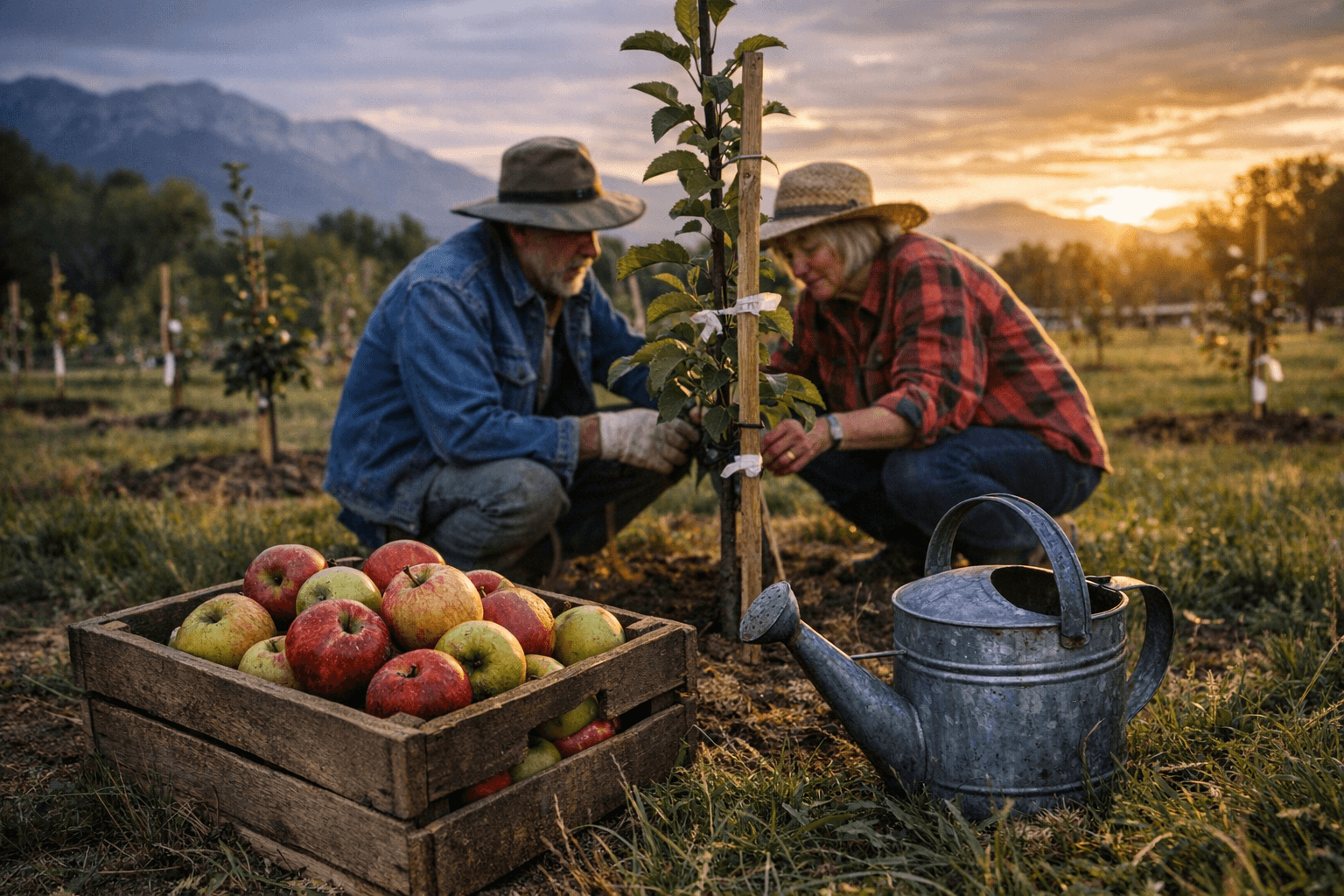
Civic engagement is built into the orchard model. Volunteer labor in planting and planned workshops create opportunities for hands-on skills transfer in grafting, pruning and orchard management, and for residents to participate directly in conserving local agricultural heritage. If yields approach projections, the orchard could supplement local food supplies and contribute modestly to local markets or community distribution programs.
For Dolores readers, the orchard represents both a cultural restoration and a test of local stewardship. Watch for announcements about tours, workshops and harvest days as the site opens. The town and MORP’s next steps on governance and maintenance will determine whether the orchard becomes a lasting community resource and a renewed piece of Dolores County’s agricultural landscape.
Sources:
Know something we missed? Have a correction or additional information?
Submit a Tip