Dolores County Officials Wrestle With River Property, Agriculture, Safety and Water Quality
County planners and elected officials reopened a Feb. 24 debate over private riverfront rights, agricultural access, public safety and water-quality protections in the Dolores River corridor.
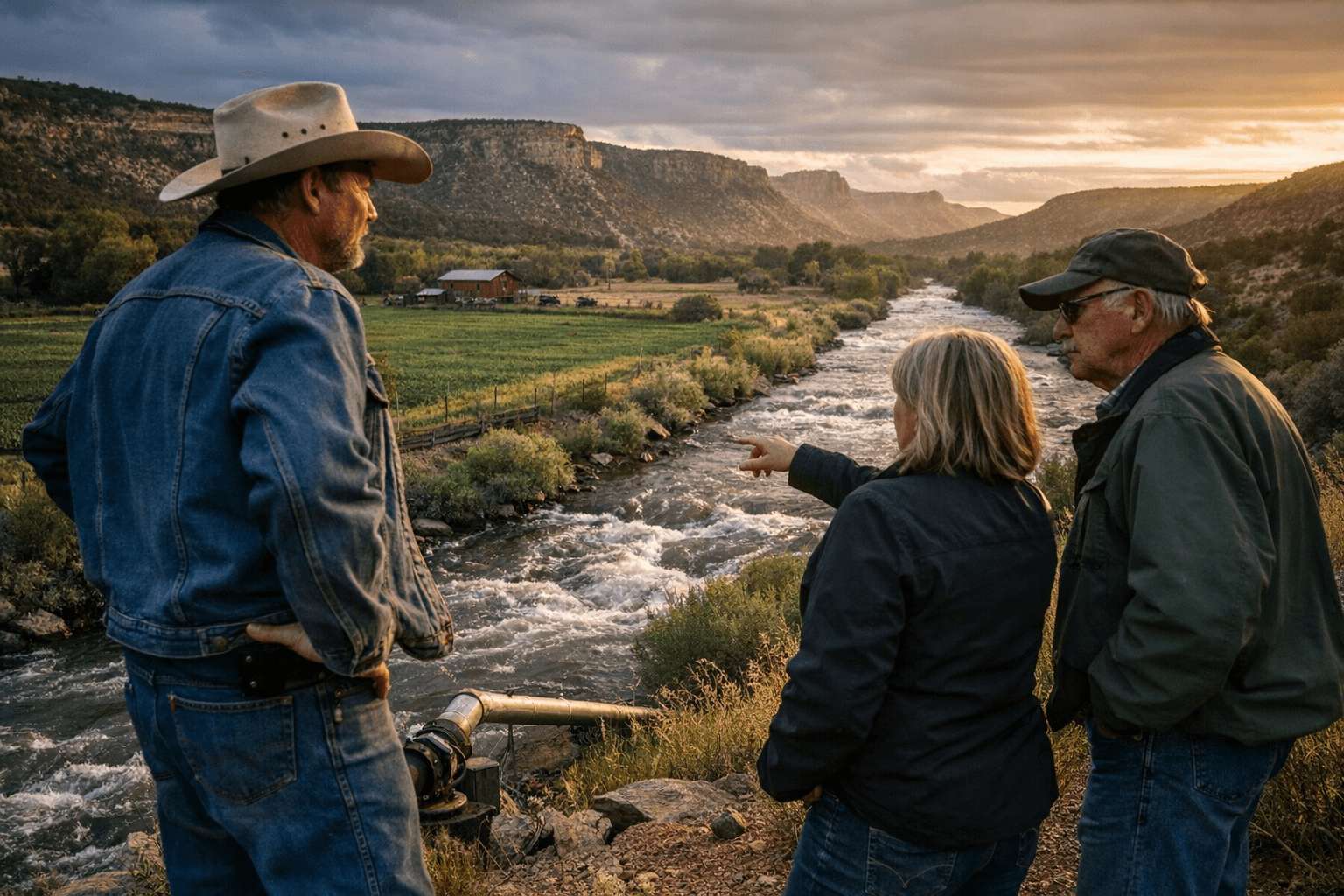
County planners and elected officials in Dolores County are once again wrestling with competing priorities in the Dolores River corridor after a February 24 meeting that focused on a disputed mix of private property rights, agricultural uses, public safety and water-quality protections. The discussion brought long-standing tensions about who may use riverfront parcels and how to protect downstream water quality back into the center of county planning.
At the heart of the debate are private property claims along the Dolores River corridor and farmland access for irrigators and ranchers who rely on river-adjacent land for hay, grazing and diversion points. County planners framed the issue as balancing established agricultural uses against concerns about encroachment on private parcels and the practical needs of irrigators who operate on narrow river benches.
Public safety concerns figured prominently in the discussion as planners and elected officials considered river access and the potential for hazardous conditions where private parcels meet informal crossing and turnout points. Elected officials emphasized the need to weigh liability and emergency access in areas where agricultural activity, recreational use and private property converge along the corridor.
Water-quality protections were a parallel focus at the February 24 meeting. County staff outlined the importance of limiting sediment and nutrient runoff into the Dolores River corridor to preserve downstream supplies, while commissioners noted that any new regulations must account for existing agricultural operations and legal water rights. The meeting underscored the technical challenge of reconciling water-quality objectives with irrigation practices established over decades.
Planning commissioners and county elected officials discussed potential tools that could address the corridor’s competing uses, including clearer delineation of riverfront parcel boundaries, permitting approaches that respect private property rights, and coordinated measures to reduce runoff from fields and access points. Planners said aligning those tools with state water law and existing agricultural exemptions will be essential to avoid unintended impacts on irrigation and grazing.
The February 24 session made clear that the Dolores River corridor remains a recurring policy knot for Dolores County, with private property rights, agricultural uses, public safety and water-quality protections repeatedly intersecting. County planners and elected officials left the meeting with a mandate to refine options that respect established land uses while addressing safety and downstream water-quality concerns, ensuring the river corridor will remain on the county agenda as deliberations continue.
Sources:
Know something we missed? Have a correction or additional information?
Submit a Tip