Dozens of headless skeletons found in 7,000-year-old Slovakian ditch
Dozens of headless skeletons at a Slovak Neolithic settlement point to burial practices, not a battlefield, in one of Europe’s earliest farming communities.
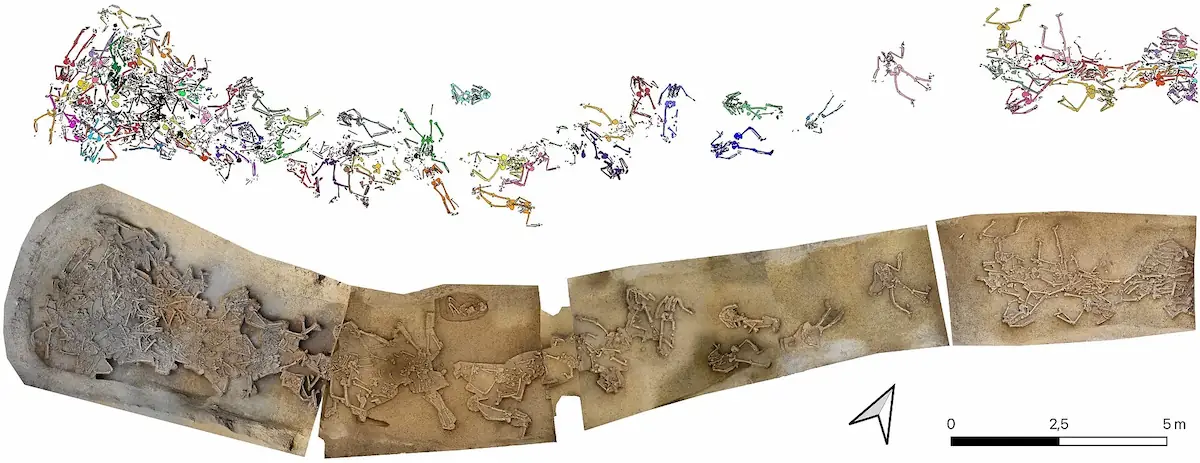
At the edge of an Early Neolithic settlement in southwest Slovakia, archaeologists uncovered a ditch packed with human remains and an unsettling pattern: at least 78 people, 77 of them without heads. Only one skeleton, that of a child, still had a skull, making the burial cluster at Vráble-Veľké Lehemby one of the most unusual finds yet from Europe’s first farming era.
The site lies near the modern town of Vráble, about 100 kilometers east of Bratislava, and belonged to the Linear Pottery culture, or LBK, which spread farming across much of central Europe. Occupied roughly between 5250 and 4950 BCE, the settlement was unusually large for its time. Archaeologists have identified more than 300 house outlines across three neighborhoods, with as many as 80 buildings occupied at once, a scale that suggests a dense and organized community rather than a small hamlet.
Researchers from Kiel University and the Slovak Academy of Sciences in Nitra have been investigating the site since 2012. During fieldwork that began in 2022, they found the bodies at the entrance to the settlement in what appears to have been a boundary ditch. The remains lay in different postures and without any clear order, a detail that complicates any simple reading of the site as a burial ground, a massacre pit, or a scene of crisis.
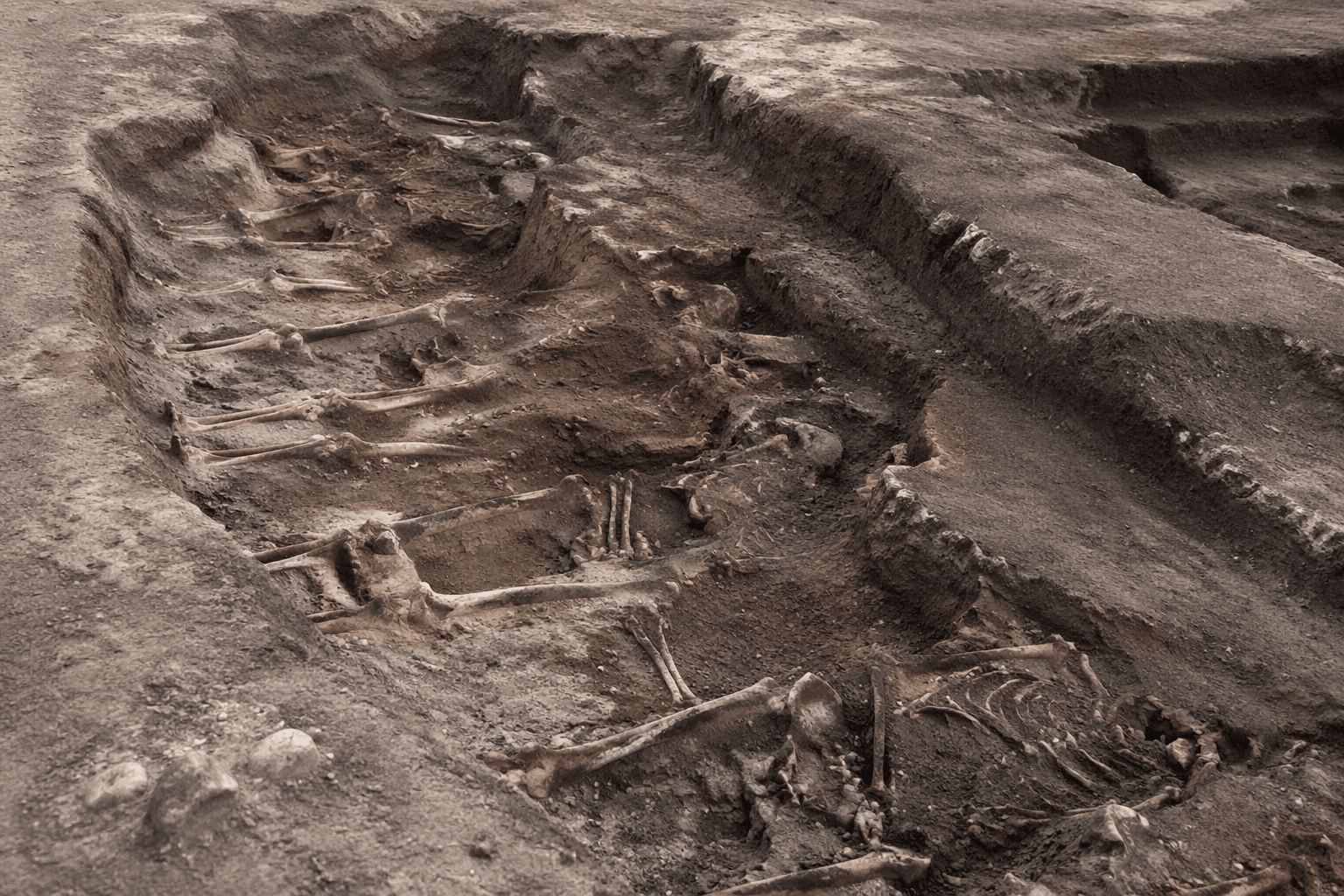
What can be said with confidence is narrower than the public imagination might want. The bone evidence and excavation context point away from a straightforward slaughter. Instead, the team argues that the skulls were removed after death, and likely with skill, rather than through violent decapitation. Katharina Fuchs, a co-author of the study, said the remains clearly show intentional manipulation of the bodies. The pattern also shows only limited signs of conflict and crisis, which makes a mass killing less convincing than a social or ritual explanation.
The study, led by Martin Furholt and published online on June 2, 2026, in Proceedings of the Prehistoric Society, places the Vráble find in a broader debate about how early farming communities treated the dead. Human bones in ditches are known from the Neolithic, but a concentration of headless bodies on this scale is new. That rarity matters because it pushes archaeologists to ask not only who these people were, but what kinds of identity, belonging, and power were being expressed at the settlement entrance 7,000 years ago.
This article was produced by Prism’s automated news system from verified source data, official records, and press releases, then run through automated quality and moderation checks before publishing. The system is built and supervised by the people who set the standards it runs under. Read our full AI policy.
Know something we missed? Have a correction or additional information?
Submit a Tip