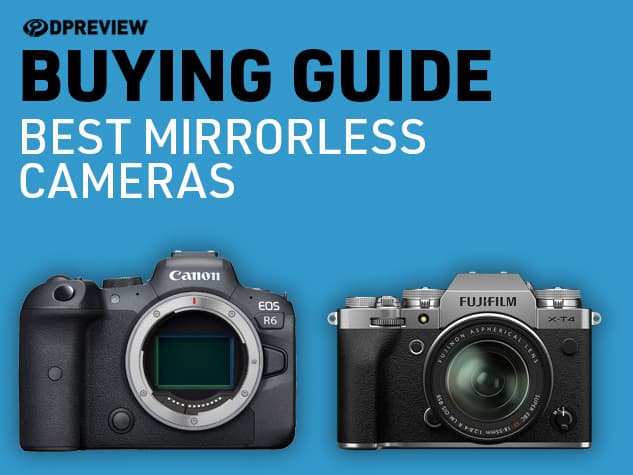
DPReview Updates Buying Guide, Names Nine Best Mirrorless Cameras for 2026
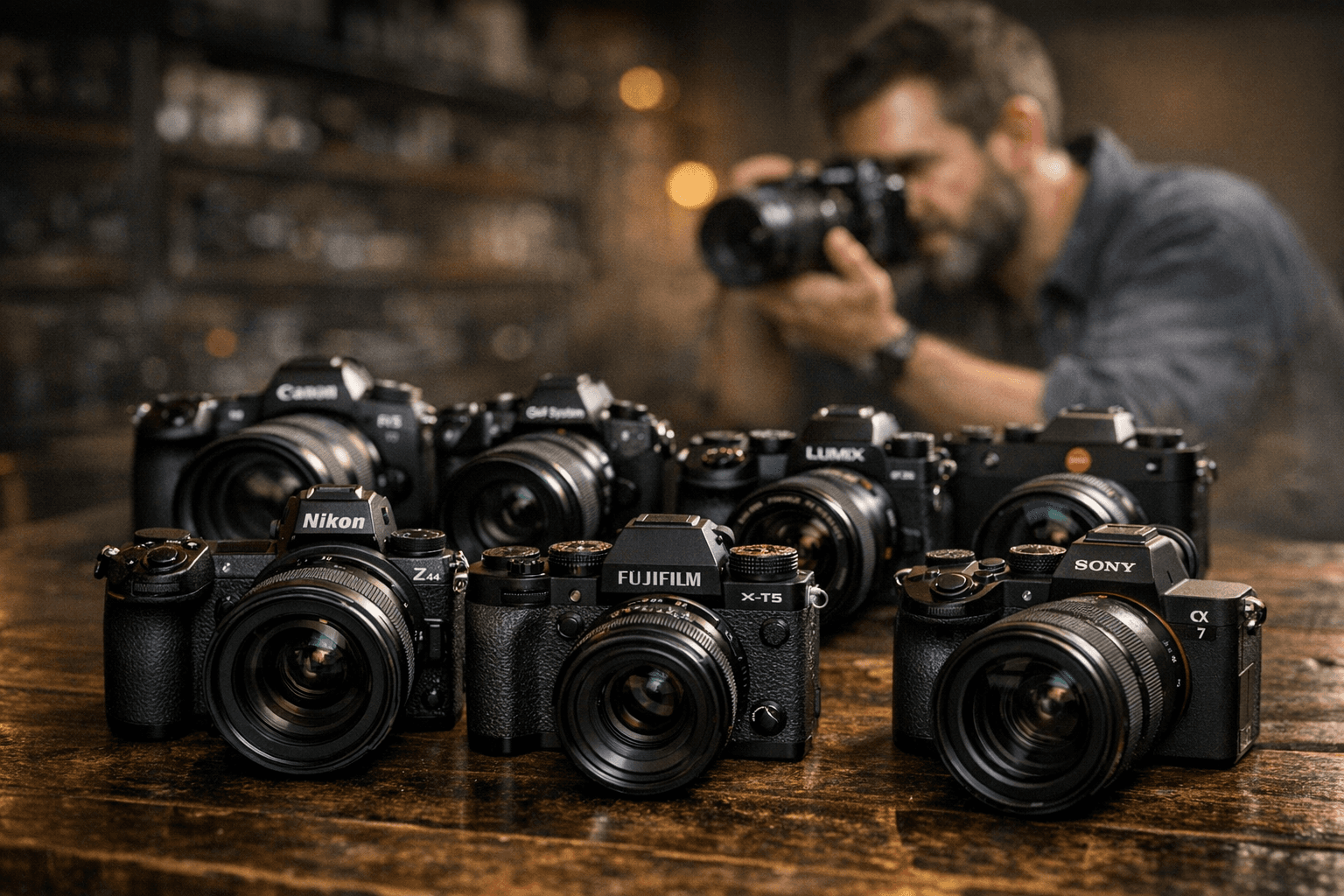
DPReview's refreshed buying guide names nine mirrorless picks — notable highlights: Nikon's Z6III with a 25MP "Partially Stacked" sensor and Fujifilm's X-T5 outlasting the X-T50 by 580 vs 304 shots.
1. Nikon Z6III
The guide labels this the "Best mid-priced full-frame mirrorless: Nikon Z6III" and DPReview lists concrete specs: a 25MP full-frame "Partially Stacked" CMOS sensor, 6K/60p N‑Raw video and a 5.76M‑dot OLED 0.8x EVF. DPReview's quick pros — "Very good image quality", "Good autofocus tracking with auto subject recognition mode" and an "Extensive choice of video resolutions and codecs" — sit beside warnings: "Peak dynamic range lower than peers", "N‑Raw video format has limited support" and "Nikon controls 3rd‑party lens options". Photo credit reads "Photo: Richard Butler" and DPReview shows buy links at Amazon.com, Adorama, B&H Photo and MPB, which underscores Nikon’s continued retail visibility.
2. Nikon Z5II
DPReview calls this the "Best value full-frame mirrorless: Nikon Z5II" and notes its 24MP BSI full‑frame sensor, in‑body image stabilization and dual UHS‑II card slots. The site praises "Excellent image quality", "Very good autofocus, for a range of subjects" and "Excellent handling, ergonomics and feature set", while flagging "Reasonable, but not great, battery life", that it "Needs to crop to deliver 4K/60", and that "Lens choice [is] limited by Nikon." Photo credit is "Photo: Mitchell Clark" and the guide links to Adorama and B&H Photo for purchase options, framing the Z5II as a practical, camera‑first value play with clear trade‑offs for videographers and long shoots.
3. Canon EOS R5 Mark II
DPReview’s product rows include the Canon EOS R5 Mark II (listed in the snippet as "Body Only" with "See price on Amazon.com"), placing Canon’s next‑tier flagship inside the nine picks. The supplied excerpt doesn’t publish full specs in the snippet, but its presence in the guide’s product listing signals DPReview sees the R5 Mark II as part of the year’s top mid‑to‑high‑end conversation — worth noting for anyone tracking Canon’s performance‑class bodies and lens availability.
4. Fujifilm X‑T5
Fujifilm’s X‑T5 appears in DPReview’s thumbnails and is singled out in NYTimes coverage as the guide’s pick that shares a sensor with the smaller X‑T50. Phil Ryan notes, "Fujifilm’s X‑T50 has the same sensor as our pick, the X‑T5, and can make similarly beautiful images," and the battery math is stark: the X‑T5 is rated for 580 shots per charge versus the X‑T50’s 304 shots. DPReview product lines show popular kit variants (silver with XF18‑55 or XF16‑80), highlighting that Fujifilm is selling the X‑T5 both as a body and in lens bundles — an important practical point for buyers balancing size, handling and real‑world endurance.
5. Sony a7 III
Phil Ryan’s review keeps the a7 III in play: "The Sony a7 III remains a wonderful mirrorless camera, with a plenty‑adequate 24‑megapixel sensor and fast burst shooting." He also notes, "It also has much better battery life than the a7 IV," while adding that "the newer camera’s improvements make it worth the extra money for people who are ready to spend on a full‑frame body." Those lines frame the a7 III as a tried‑and‑true performer whose combination of battery life and proven imaging still matters for shooters prioritizing long days and tried autofocus workflows.
6. Sony a7 IV
While the a7 IV isn’t listed as a DPReview snippet entry in the supplied excerpt, Phil Ryan’s comparisons make it a central reference: the a7 IV is the "newer camera" whose improvements justify the extra spend over the a7 III. That positioning is important for readers weighing sensor and feature upgrades against the a7 III’s endurance; it also feeds into Sony’s ecosystem effect, since subsequent models (see a7C II) reuse that sensor and the a7 IV’s broader capability set.
7. Sony a7C II
Phil Ryan’s writeup gives a compact‑body take on Sony’s a7 IV tech: "The Sony a7C II uses the same sensor as the Sony a7 IV but has a smaller body reminiscent of the company’s APS‑C cameras. It also has lower‑resolution EVF and LCD screens, a single SD card slot, and no joystick to move the AF point or navigate menus. It’s geared toward video capture, with a dedicated recording button and a shape that lends itself to use with a video rig. We liked its video quality (despite some rolling‑shutter issues on faster pans) and were impressed with its AF tracking capabilities, but the a7 IV is a more well‑rounded camera." That passage neatly summarizes the trade‑offs: compact video‑first ergonomics versus fewer pro features.
8. Sony a7CR
The Sony a7CR shows up among DPReview’s product thumbnails in the guide’s snippet (variants and "See price on Amazon.com" lines), indicating DPReview included Sony’s compact/full‑frame hybrid in this round of picks. The supplied excerpt doesn’t expand specs, but its inclusion alongside the other Sony references signals DPReview’s continuing interest in Sony’s lineup diversity for 2026.
9. Fujifilm X‑T50
NYTimes explicitly compares the X‑T50 against the X‑T5: "Fujifilm’s X‑T50 has the same sensor as our pick, the X‑T5, and can make similarly beautiful images, but its body is smaller in every dimension (especially depth)." Ryan’s hands‑on notes the ergonomics limits — no front grip — and an accessory attempt: "We tried SmallRig’s accessory grip, and it helped with some lenses (such as Fujifilm’s 33mm f/1.4) but didn’t leave enough room for our fingers between the lens and grip with girthier lenses (like the 55–200mm zoom)." Critically, battery counts diverge: X‑T50 = 304 shots per charge vs X‑T5 = 580, which is a revealing stat for anyone balancing portability and long sessions.
Taken together, DPReview’s March 5 update and the complementary reviewer notes from Phil Ryan sketch the year’s real choices: sensor design, stabilization and battery life are the decisive tradeoffs. That same practical tension shows up in social conversations (Reddit user Hotard‑Latrease explicitly asked about high‑ISO and low‑light autofocus for concerts and cityscapes), so these nine picks map directly to the questions photographers are asking right now — from N‑Raw video limits and Nikon’s lens control to Fujifilm’s endurance advantage and Sony’s sensor reuse across bodies.
Know something we missed? Have a correction or additional information?
Submit a Tip