Drone strike hits gas tanker at Egypt’s Damietta port
A drone hit a U.S.-owned gas storage tanker at Damietta, briefly raising fears of wider disruption at a key Suez Canal-linked port.
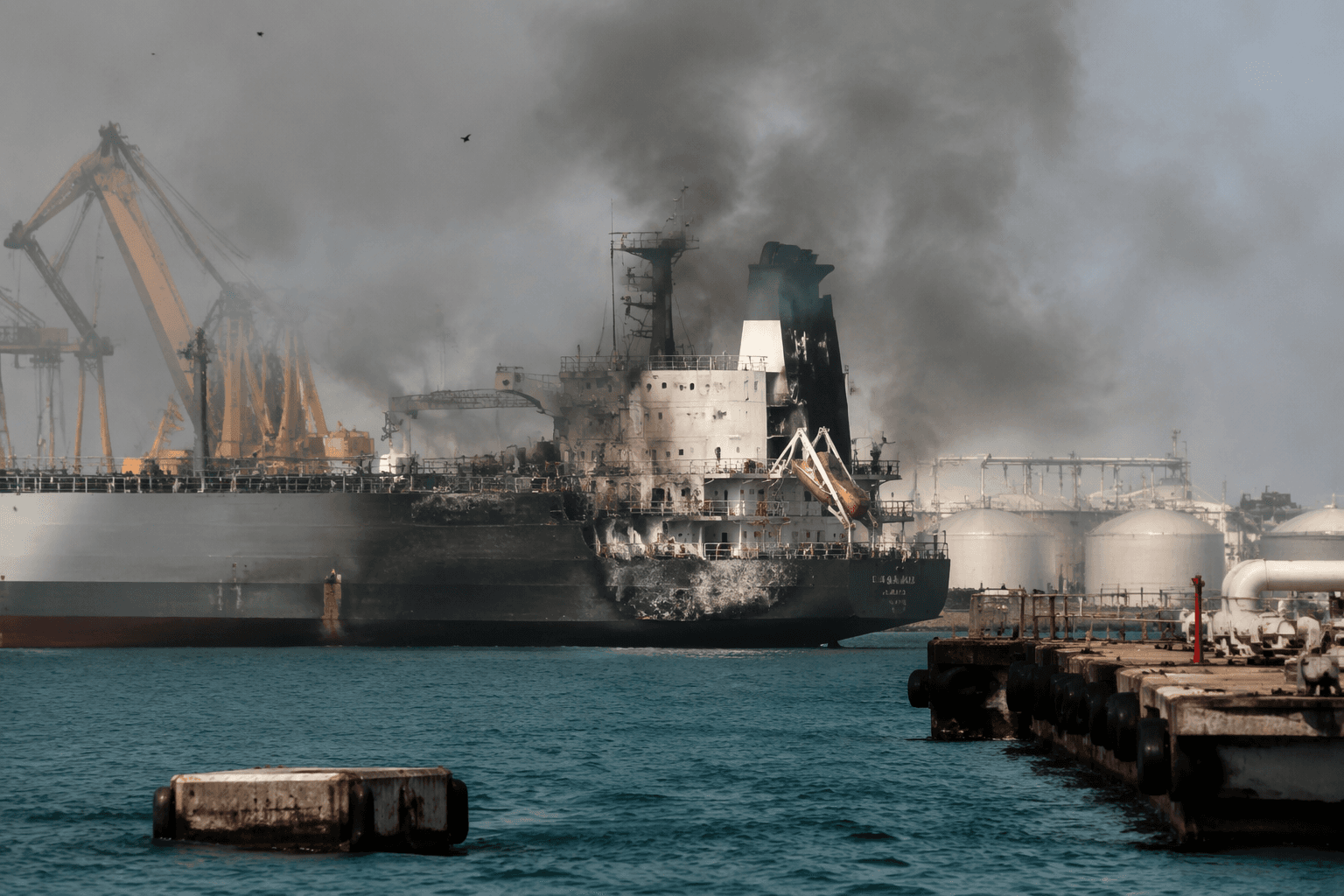
A drone hit a U.S.-owned gas storage tanker at Egypt’s Mediterranean port of Damietta on Wednesday, setting off a fire that spread to a second vessel and put another commercial energy corridor under strain. Maritime security firm Ambrey identified the target as a gas storage tanker, while port services firm Inchcape said two gas tankers caught fire at the port.
Egypt’s petroleum ministry said no injuries or fatalities were reported. It also said port operations were expected to resume overnight, a rapid return that underscored how quickly operators were trying to stabilize a facility that handles gas processing and storage on Egypt’s northern coast. Later summaries identified the damaged tanker as the Energos Winter and the second vessel as the Gaslog Salem.
The attack landed at a sensitive point in the region’s trade map. Damietta sits on Egypt’s Mediterranean coast and feeds into the broader shipping corridor linked to the Suez Canal, a route that carries energy cargoes and commercial freight between Europe, Asia and the Middle East. Even when an incident does not produce mass casualties, a hit on a port asset can ripple through tanker schedules, terminal operations and cargo pricing because shipowners and insurers immediately reassess the risk of moving through the area.
That risk has grown as drone and missile attacks have increasingly blurred the line between military confrontation and economic disruption across the Middle East. A strike on storage infrastructure is especially disruptive because fuel facilities can magnify damage if fire spreads or secondary explosions occur, putting port workers and nearby crews in the blast radius and forcing emergency checks on berths, tug services and loading equipment.
The damage also fed a wider financial concern: security failures at a single terminal can raise insurance costs for vessels calling at nearby ports and add pressure to energy and freight markets already sensitive to conflict spillover. In practical terms, that means a low-cost aerial attack can force expensive protective measures across a much larger maritime network, from tanker operators and terminal managers to underwriters and government agencies responsible for safeguarding strategic infrastructure.

For Egypt, the incident cut at the intersection of energy handling and trade security. Damietta is not a battlefield target, but its role in moving gas and other cargoes makes it part of the economic infrastructure that regional conflict can now reach with little warning.
This article was produced by Prism’s automated news system from verified source data, official records, and press releases, then run through automated quality and moderation checks before publishing. The system is built and supervised by the people who set the standards it runs under. Read our full AI policy.
Did this article answer your question?