Dubai’s growth model faces strain as Gulf conflict deepens
Dubai’s growth engine depends on open skies, open ports, and investor trust, and Gulf conflict is now testing all three at once.
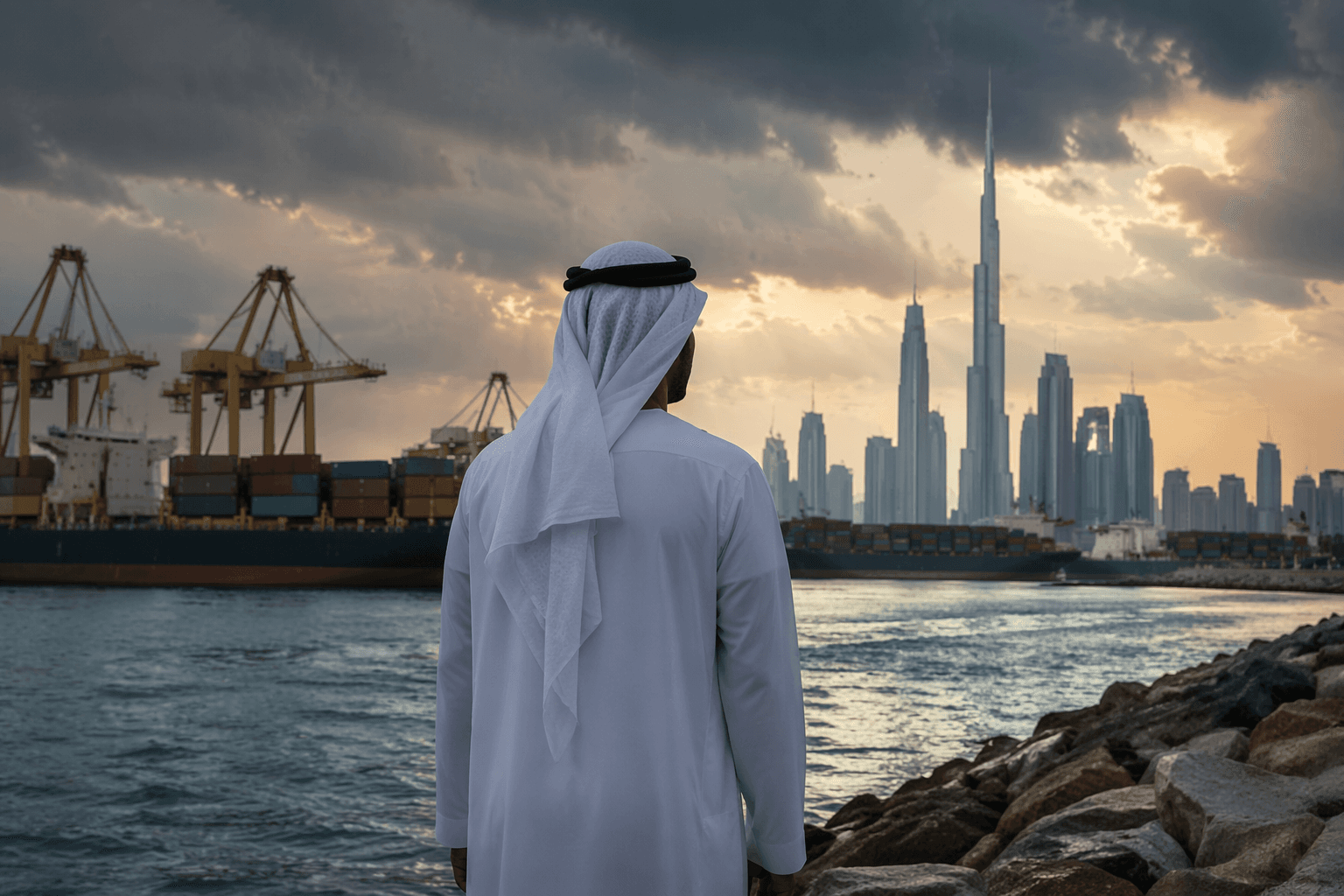
Dubai’s rise has long rested on a simple promise: move goods, move people, and capital follows. That promise looks shakier as conflict around the Persian Gulf reaches airline schedules, fuel bills, hotel demand, and investor nerves, putting the emirate’s safe-haven brand under strain.
A growth model built on mobility
Dubai’s economic playbook has been built around uninterrupted trade, aviation, and tourism. The city welcomed 18.72 million international overnight visitors in 2024, up 9% from 17.15 million in 2023, a reminder that travel is not a side business but a pillar of the emirate’s growth model. Under the Dubai Economic Agenda D33, the Dubai Department of Economy and Tourism wants to double the size of the economy by 2033, which means the city needs the very flows now being tested by regional war.
Official tourism messaging continues to frame Dubai as a place where commerce and connectivity reinforce each other. That works best when the region is calm, flights are on time, hotels are full, and traders can move through Gulf routes with little friction. The current conflict changes the calculation because Dubai’s prosperity depends on confidence as much as on concrete assets like airport terminals, ports, office towers, and hotel rooms.
How conflict reaches the city’s core sectors
The first pressure point is aviation. Reuters reported on March 1, 2026, that residents in Dubai were jolted by Iranian drone and missile attacks that reached Gulf states, a shock that rattled the city’s usual assumption of insulation from regional turbulence. Later reporting said Gulf airlines had restored much of their capacity, but they remained exposed to sudden escalations that can force rerouting, delays, or short-notice cuts.
By early June 2026, the impact had widened beyond the Gulf itself. Reuters reported on June 7 that the global airline industry had nearly halved its 2026 profit forecast because of conflict-driven fuel costs tied to the Middle East, while industry reporting said Gulf and international carriers were trimming summer schedules and adjusting routes around disrupted airspace. For Dubai, which relies on Emirates-scale connectivity and a constant churn of transit passengers, that is more than an airline problem. It threatens hotel demand, retail traffic, and the perception that the city is the easiest place in the region to do business.
Shipping is the other major vulnerability. Dubai’s trade model depends on open maritime routes through the Gulf, including waters near the Strait of Hormuz, where any escalation can quickly raise insurance costs, slow cargo movements, and unsettle logistics planning. Even if port operations continue normally on a given day, the market prices in the risk that they might not, and that risk can affect the willingness of firms to route shipments, hold inventory, or commit to new contracts.
A city adjusting its routines, not just its policies
The damage is not only operational. Reuters reporting in March 2026 described how Dubai’s financial district and expat community were adapting to wartime conditions, with altered routines and less comfort in the city’s long-standing image as a safe haven. In the DIFC, where bankers, executives, and advisers have long treated stability as part of the product, the mood shift matters because sentiment travels fast through boardrooms, hotels, and residential towers.
That change in tone cuts against one of Dubai’s biggest selling points. The emirate has marketed itself as a place where regional instability can be escaped rather than imported, which is why investor confidence is so central to the story. If conflicts nearby become a persistent feature rather than a temporary shock, Dubai has to persuade residents, expats, and capital allocators that its infrastructure, governance, and connectivity still outweigh the risk premium attached to the wider Middle East.
The policy response is designed to cushion the blow
Authorities have not stood still. On March 17, 2026, the Central Bank of the UAE announced a Five-Pillar Financial Institution Resilience Package, part of a broader effort to keep credit flowing and the financial system stable as conditions deteriorated. Business reporting in March said Dubai and UAE authorities also introduced fee cuts, utility discounts, customs relief, and tourism support to help companies absorb conflict-related disruption.
Some reporting put the support package for businesses at $272 million, with relief aimed at limiting the damage to firms that depend on trade, transport, and visitor spending. That mix of measures matters because Dubai’s vulnerability is not a single-sector problem. Airlines, hotels, freight operators, retailers, and financial firms all sit inside the same ecosystem, so policy responses have to support liquidity, operating costs, and demand at the same time.
The relief effort also signals how much the authorities want to preserve Dubai’s core narrative. The city cannot control regional conflict, but it can try to keep businesses open, workers paid, and visitors moving. That is the basic defense of a hub economy: maintain the machinery long enough for the external shock to pass.
Can Dubai still sell itself as the Gulf’s safe commercial hub?
That is the central question now. Dubai’s edge has never been just geography; it has been the promise that geography can be managed through policy, logistics, and a reputation for predictability. But a wider conflict makes that promise harder to sustain, especially when aviation disruptions, fuel costs, and security fears all reinforce one another.
For now, Dubai still has strengths that many regional centers lack: scale, infrastructure, deep connectivity, and a government willing to intervene quickly. Yet the test is whether those strengths can keep compensating if conflict drags on and the market begins to treat instability as structural rather than temporary. In that sense, the war is not only a security challenge for Dubai. It is a direct stress test of the economic model that made the emirate wealthy in the first place.
This article was produced by Prism’s automated news system from verified source data, official records, and press releases, then run through automated quality and moderation checks before publishing. The system is built and supervised by the people who set the standards it runs under. Read our full AI policy.
Know something we missed? Have a correction or additional information?
Submit a Tip