DuckDuckGo installs surge as Google pushes AI-first search
Users are turning to DuckDuckGo as Google makes AI the default in Search, with U.S. installs up 18.1% and iPhone installs jumping even faster.

Google’s push to make search more AI-driven is sending some users elsewhere, and DuckDuckGo is seeing the backlash in its download numbers. As Google rolled out Gemini 3.5 Flash as the default model in AI Mode globally and called the redesign its biggest Search upgrade in more than 25 years, DuckDuckGo said more people moved toward a simpler, more familiar alternative.
The reaction has been about behavior, not branding. Users have objected to a search experience that replaces the old list of blue links with an AI agent that can answer questions, complete tasks and keep working in the background. Some worry the open web will be weakened. Others are concerned that AI answers can be inaccurate or too controlling. Plenty simply do not want AI inserted into every search.

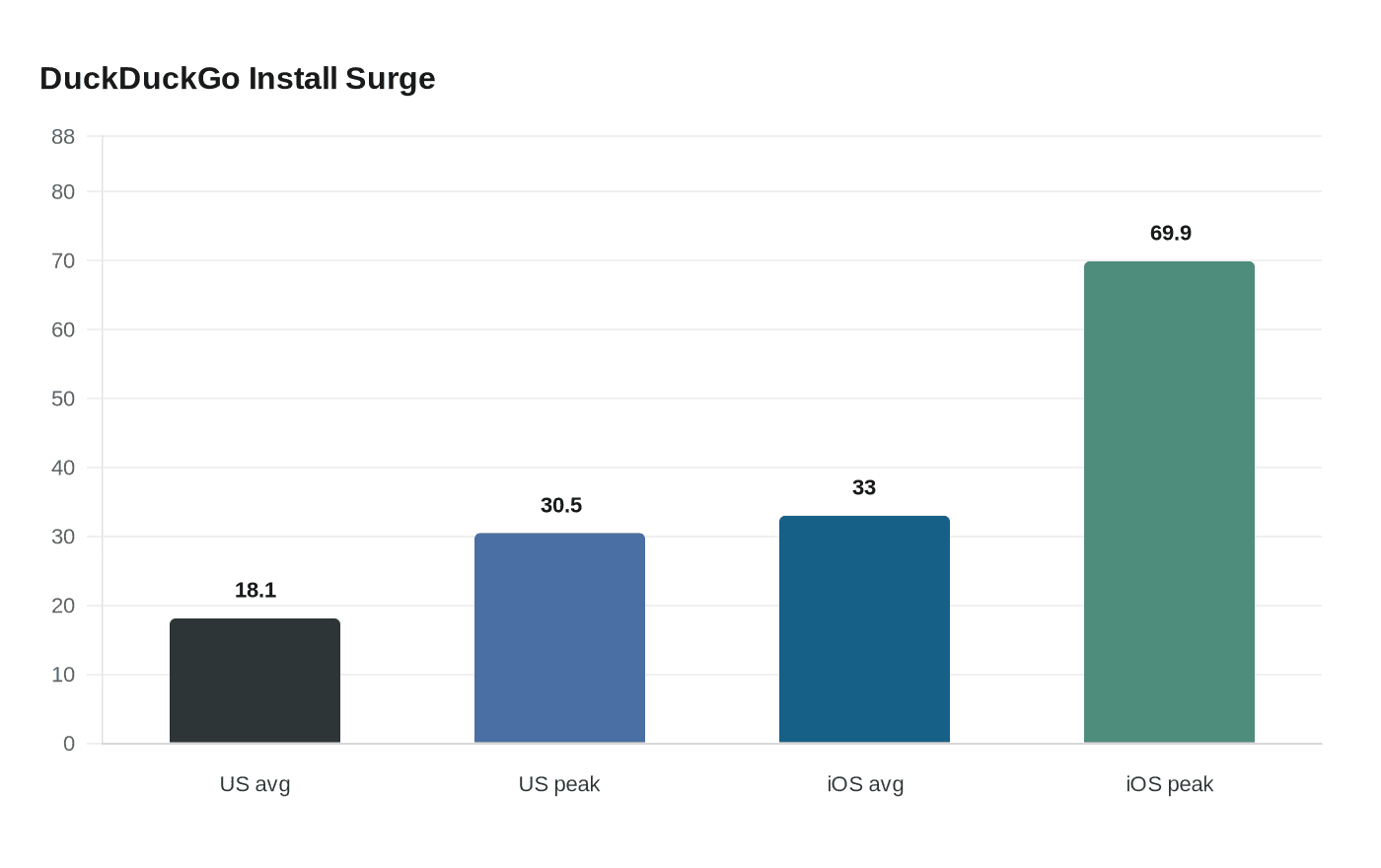
DuckDuckGo said its U.S. app installs rose 18.1% week over week on average from May 20 to May 25 compared with the prior week, with growth peaking at 30.5% on May 25. On iOS, the surge was sharper: installs averaged 33% week over week and reached a peak of 69.9%. Traffic to DuckDuckGo’s AI-free search page, noai.duckduckgo.com, also increased during the same period.
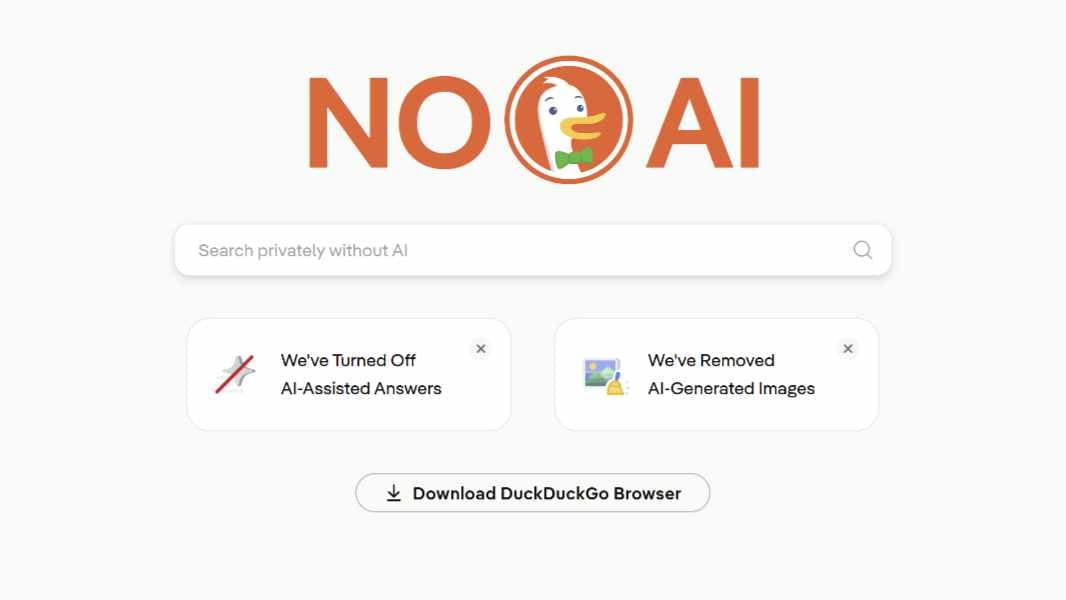
The company is leaning into that frustration by offering an escape hatch. DuckDuckGo says starting searches on noai.duckduckgo.com works the same as its regular search page, but with AI features turned off. Its AI product, Duck.ai, is optional, and the company says it does not record or store chats. DuckDuckGo also says it strips personal information such as IP addresses before sending prompts to model providers and deletes conversations within 30 days.
That privacy pitch may be part of the appeal, but the stronger message in this moment is choice. DuckDuckGo says it has been independent since its founding in 2008 and is majority-owned by founder Gabriel Weinberg and team members. The company says it handles about 3 billion monthly searches and 9 million monthly downloads across mobile and desktop, a scale that gives the latest jump more weight than a fleeting protest. If Google keeps making AI the default path through search, the early winners may be the services that promise users can still decide when AI belongs in the middle of their daily internet routine.
This article was produced by Prism’s automated news system from verified source data, official records, and press releases, then run through automated quality and moderation checks before publishing. The system is built and supervised by the people who set the standards it runs under. Read our full AI policy.
Know something we missed? Have a correction or additional information?
Submit a Tip