Duluth Public Schools pauses Google Gemini rollout on high school Chromebooks
Duluth Public Schools temporarily halted its plan to enable Google’s Gemini on high school Chromebooks, pausing a Feb. 23, 2026 rollout after student protests and community concerns.
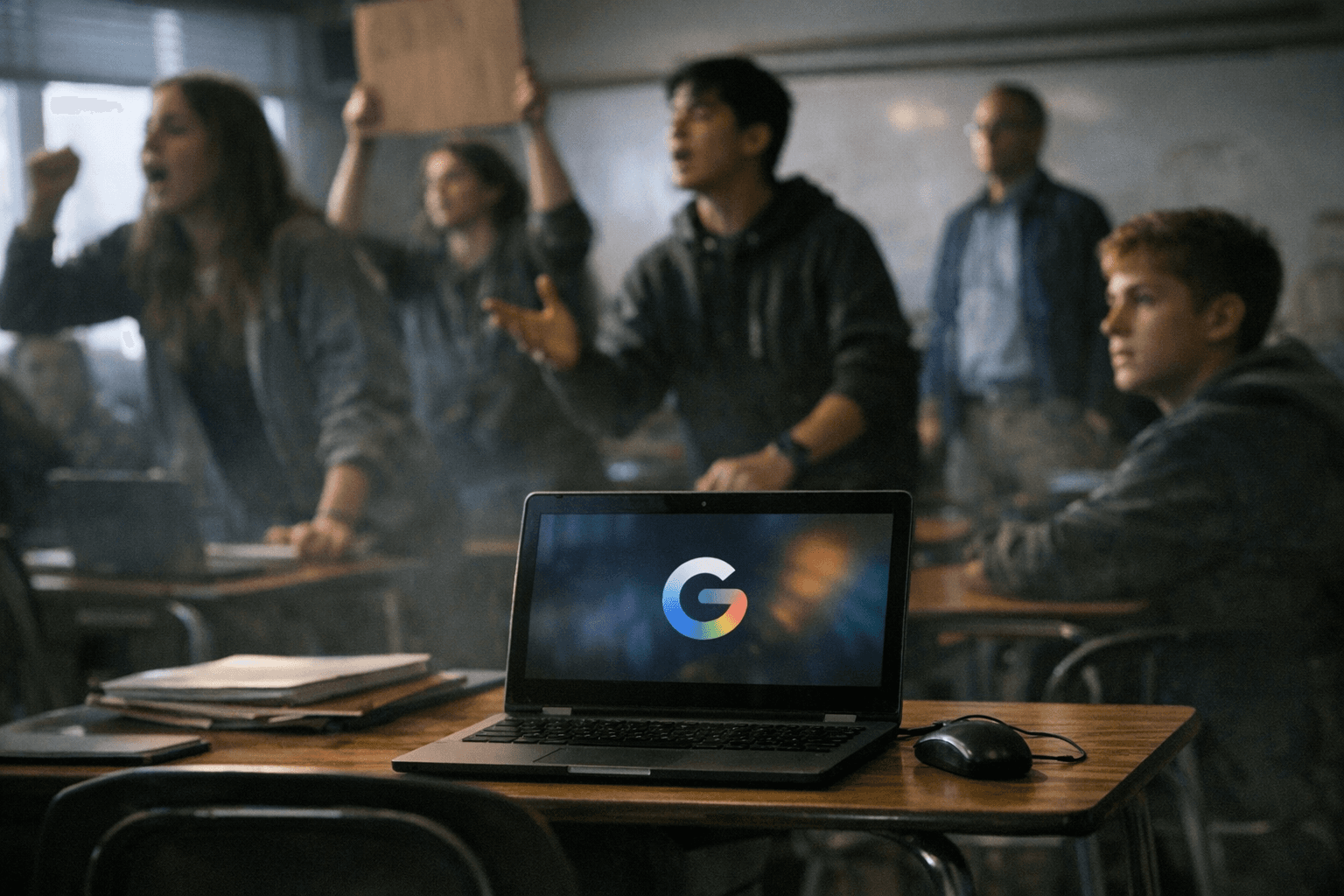
Duluth Public Schools has temporarily paused its planned integration of Google’s Gemini AI on high school student Chromebooks, a launch that had been scheduled to begin Monday, Feb. 23, 2026. The district said the pause will allow staff to communicate with families and seek additional community input after a series of meetings and protests where teachers, parents, board members and students raised questions about timing, privacy and instructional impact.
The Gemini rollout grew out of work that began last August when Cindy Miller, the district’s school media specialist and computer science lead, spoke with administrators about developing classroom AI plans. By the start of the school year the district had formed an AI task force made up of instructional and technology staff to assist with development and planning and to draft policies described internally as an “AI tools regulation.”
Concerns surfaced publicly at an early-February committee of the whole meeting, when a student representative identified only as “Dean” urged a pause and more communication. Dean asked, “If AI isn't going anywhere, why are we rushing this process?” and said students want “thoughtful, comprehensive and structured education on responsible usage of AI.” Dean warned the short timeline would “guarantee that really important details will be overlooked” and cautioned that easier access to generative AI could “increase apathy and reduce literacy.” At that meeting Superintendent Magus acknowledged concerns and said the district intends to inform students and take student voice into account, but no formal timetable change was made during that session.
After additional community meetings and a student protest in which students held signs outside district meetings, district leaders moved to place the Feb. 23 launch on hold. The district currently allows only one form of AI for staff use: Google Gemini access for employees who complete an “extensive training course.” Communications Officer Adelle Wellens said, “Just knowing that it’s very fast moving, we definitely feel like we’re a little bit behind on the curve with that. It just takes a lot of training, a lot of knowledge, and a lot of planning, and then incorporating that professional development throughout the year in our professional development days.”
Wellens described the staff training as covering “what they can and cannot use AI for, what they can and cannot put in there, and then some of the limitations and just in general how to use it,” and added, “Know that we’re looking at it very carefully and we want to make sure that it’s being used properly and that data is remaining private.” Broader objections raised at meetings, summarized by Minnesota News Network and local reporting, included concerns over the unreliability of AI-detection software, teachers’ ability to identify AI-generated work and the environmental toll of large-scale AI technology.
District officials say student comments recorded during the superintendent’s report will be part of follow-up discussions in HR Business Services and policy committee meetings as staff continue to develop communications, training and the draft AI tools regulation. The district has not released verbatim pause announcement language or a revised timeline for implementation.
Know something we missed? Have a correction or additional information?
Submit a Tip