Dutch authorities clear Ye to perform in Netherlands despite backlash
Dutch officials said Ye could not be blocked because the legal threshold for refusal was not met, even after lawmakers pressed for a ban.

Dutch authorities decided they did not have the legal grounds to stop Ye from performing in Arnhem, setting up a sharp test of how far governments can go when public outrage over antisemitic remarks collides with border law and artistic freedom. Deputy Prime Minister Bart van den Brink said the state needed solid grounds before denying entry, and that Ye’s statements were not, at that moment, enough to refuse him access.
The decision came after the Tweede Kamer, the Dutch parliament’s lower house, adopted a motion on May 12 urging the government to deny Ye entry to the Netherlands. Justice Minister David van Weel had already told lawmakers that the threshold for refusal was high and that there needed to be a clear threat to public order or safety before the government could act.

Pressure on Dutch officials had been building for months. In February, the Jewish advocacy group CIDI, the Centre for Information and Documentation on Israel, urged authorities to cancel Ye’s Arnhem concert and to “say no to hate.” Even so, the government concluded that the legal standard had not been met, underscoring the narrow space European states often have when political demands for punishment run ahead of immigration and security rules.
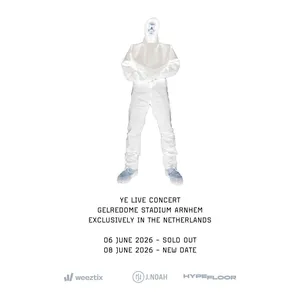
Ye is scheduled to perform at GelreDome in Arnhem on June 6 and June 8, with the venue saying the June 6 show will be his first European live concert since 2014 and his first appearance in the Netherlands since 2013. The June 8 performance also falls on Ye’s 49th birthday, giving the bookings additional commercial and publicity value for promoters even as the controversy deepens.
The Netherlands is not acting alone in confronting the fallout from Ye’s remarks. Planned concerts in Poland and Switzerland were canceled in April amid the backlash, a France date was postponed while officials reportedly weighed a ban, and the UK withdrew his travel visa last month. Arnhem authorities said no protest permits had been requested so far, while the country’s Entry/Exit System has been operational at all border crossing points since April 10, adding another layer of scrutiny to cross-border movement. The Dutch case now stands as a clear example of the line European governments keep drawing: outrage can raise the pressure, but only a high legal threshold can justify barring a performer from the stage.
This article was produced by Prism’s automated news system from verified source data, official records, and press releases, then run through automated quality and moderation checks before publishing. The system is built and supervised by the people who set the standards it runs under. Read our full AI policy.
Did this article answer your question?