Early-Morning 2.5 Magnitude Quake Jolts Area West of Petrolia
A magnitude 2.5 quake rattled the coast west of Petrolia before dawn, a small event but a reminder to check preparedness and local seismic updates.
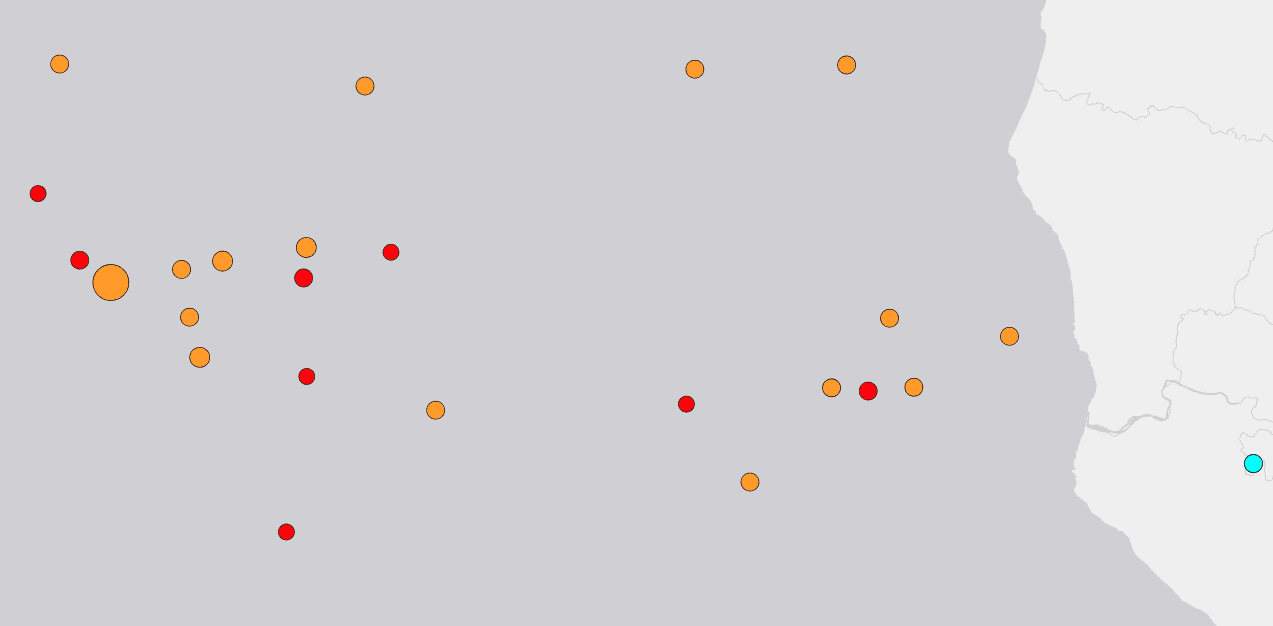
A small earthquake shook the sparsely populated coast west of Petrolia in the pre-dawn hours of Jan. 16, 2026, briefly alarming residents and underscoring the constant seismic risk along Humboldt County’s Lost Coast. The U.S. Geological Survey recorded the event at 2:06 a.m., magnitude 2.5, centered at 40.3033332825°N, -124.449165344°W and measured at a depth of about 6.60 miles.
Because of its modest magnitude and depth, the quake posed little threat of structural damage. Small quakes of this size typically produce light shaking that is felt near the epicenter but rarely cause injuries or major infrastructure disruption. Nonetheless, even minor events can prompt stress and anxiety for households already living with earthquake uncertainty, particularly in remote communities where access to emergency services and mental health care is limited.
Local impact was mainly psychological and logistical. Off-grid cabins, mobile homes, and older housing stock along the coast are more vulnerable to repeated shaking, and residents who felt the jolt reported waking to a noticeable tremor. For coastal communities with narrow roads and aging bridges, even small events are a reminder to check evacuation routes, emergency supplies, and communication plans. Rural residents may face longer waits for first response if additional incidents occur, highlighting persistent disparities in emergency preparedness between urban centers and outlying hamlets.
The event also calls attention to policy and equity questions. Humboldt County’s coastal neighborhoods include low-income families, renters, and Tribal communities for whom the cost of seismic retrofitting, relocation, or recovery can be prohibitive. Public-health planners and county officials must balance disaster readiness with efforts to close gaps in access to emergency response, housing safety improvements, and mental health support after shakes large and small.

Practical steps matter: confirm basic emergency supplies, secure heavy furniture and water heaters, and review family and household plans for a larger event. For technical information and seismic maps, the U.S. Geological Survey maintains updated data and aftershock monitoring. County emergency services provide local advisories and will coordinate responses if the situation escalates.
This small quake did not change the region’s seismic reality, but it did prompt a familiar local conversation about resilience on the edge of the Pacific. For residents of Petrolia and nearby coastal communities, the next steps are straightforward: check safety measures now, stay informed through official channels, and support neighbors who face added barriers to preparedness and recovery.
Sources:
Know something we missed? Have a correction or additional information?
Submit a Tip

