Early thaw exposes hundreds of potholes as Baltimore crews scramble
Mid-February thaw exposed hundreds of potholes across Baltimore as SHA patching has already topped last year’s 6,779 square yards by nearly 200 square yards.
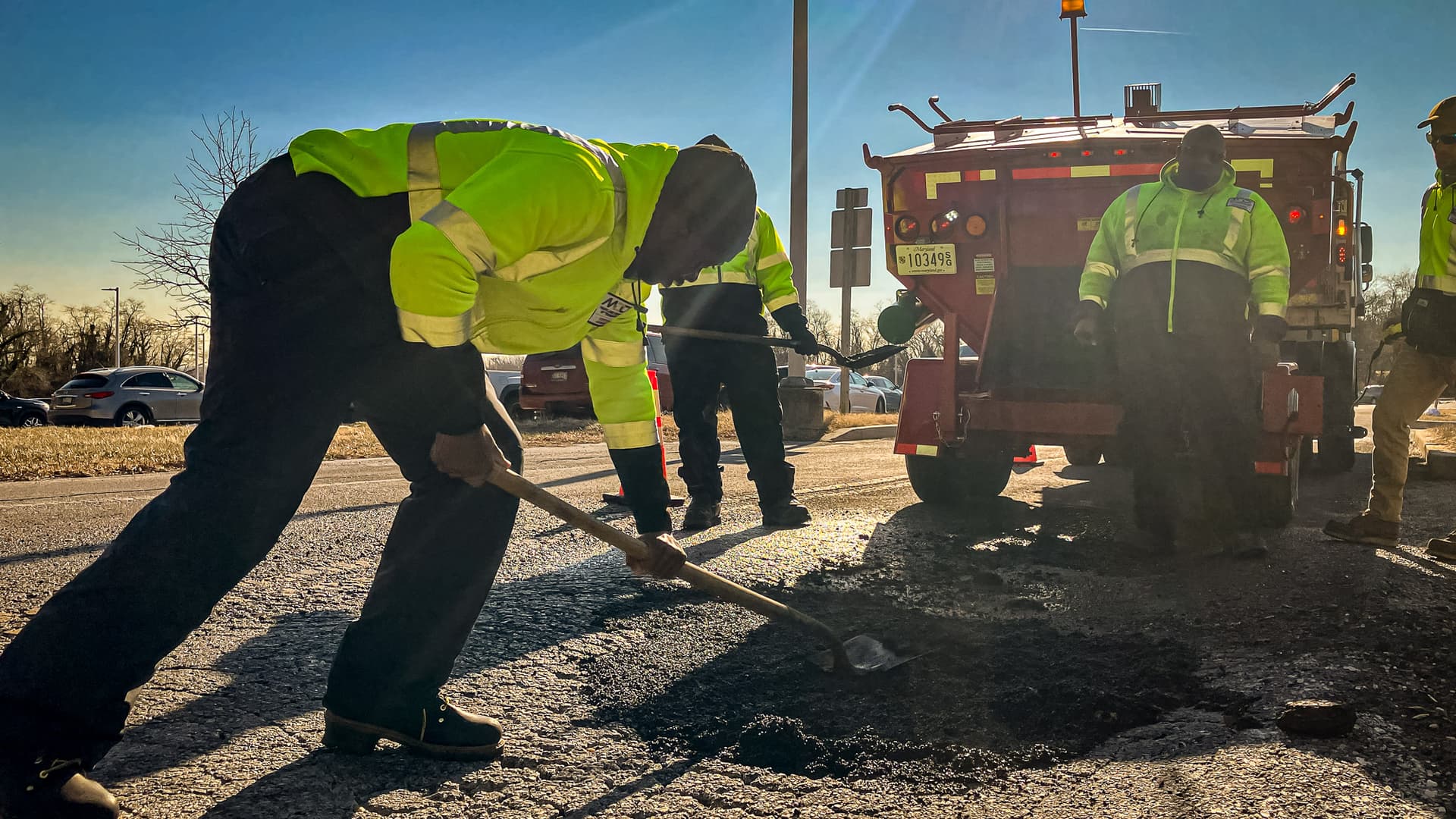
Mid-February melt unveiled a wave of pavement failures across Baltimore City and surrounding roads, with crews racing to patch hundreds of new potholes and a state patching total already exceeding last year’s 6,779 square yards by nearly 200 square yards. Crews were seen repairing several visible potholes Tuesday morning and completing work by the afternoon, while damage on major corridors included an Interstate 83 North hole worn down to the rebar and clusters of bare craters on city streets.
Charlie Gischlar, spokesman for the Maryland State Highway Administration, tied the surge to the freeze-thaw cycle and warned that crews face limits on permanent repairs while ground temperatures remain low. “We’ve had weeks of arctic temperatures, and now we’re starting to see temperatures come up. Now through the end of March is basically pothole season,” Gischlar said, adding that “we’re not even in the heart of pothole season, so you can imagine it’s going to be a busy year for crews out in the highway.”
City-level policy and operational choices factored into the spike. Baltimore Mayor Brandon Scott pointed to heavy salt use during recent ice and snow events and urged residents to use 311 to trigger formal agency response. “When you use the amount of salt we have used on our roads treating our ice and the snow in recent weeks, there will be potholes formed,” Scott said. He pressed the public to file formal reports instead of relying on social media: “Tagging the mayor on Instagram is fine, but if you want the mayor to be able to hold that agency accountable, call them into 311.”
Baltimore County’s Department of Public Works outlined its repair workflow and capacity as demand climbs. Spokesman Ron Snyder noted the county maintains 2,600 miles of roadway and routes repair requests to one of 11 highway shops, including a shop on Perry Road in Nottingham. “We have a very experienced crew, and we know when we have the thaws after the storms, that potholes are expected,” Snyder said, and he said county crews “usually have a pothole repaired within a day or so.” Snyder also described using the BaltCoGo app personally: “I've used it myself on several occasions, where I've seen a pothole in my neighborhood. I filled out the form. I've gotten updates through email and they tell me when it's actually completed.”
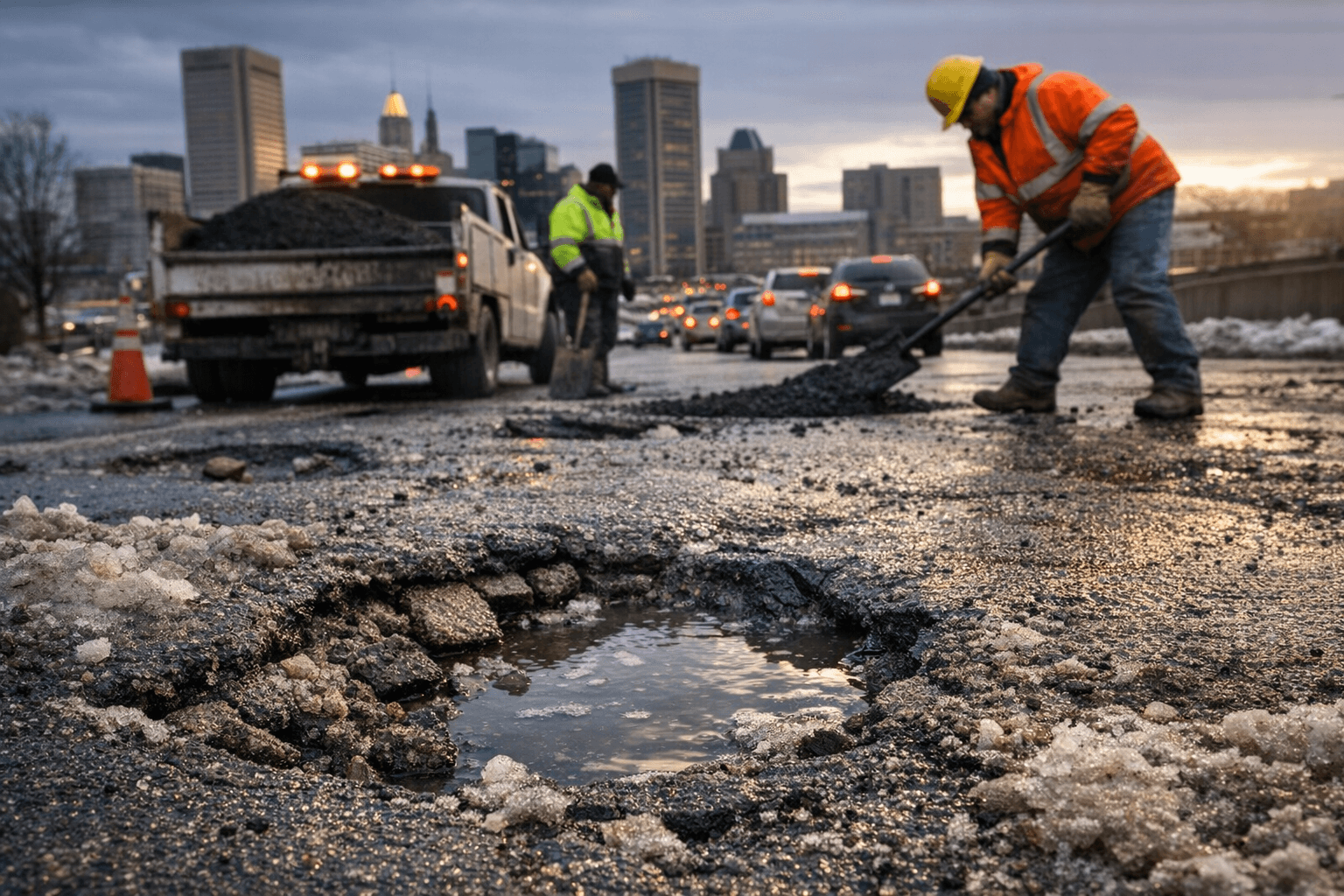
Small business owners and drivers described the street-level consequences. John Patterson of Cromwell Tools compared the ride to “a wooden roller coaster” on long stretches of Falls Road and Cold Spring Lane and called this year’s potholes “significantly worse” than previous seasons. One woman on the street warned of safety risks: “It’s like a bump. You can hurt yourself. And if a woman is pregnant, she can have her baby before her time.” Reporters noted drivers slowing to avoid sudden craters and taking routes around damaged stretches.
Operational data underscore the scale facing state and local crews. SHA’s patching tally of 6,779 square yards for July 1, 2024 to June 30, 2025 has already been topped by nearly 200 square yards as thawing began in mid-February, a trajectory officials warn will keep crews busy through March. City and county officials are asking residents to report potholes through 311 or, for Baltimore County, the BaltCoGo app to document locations and generate formal requests for repair.
Know something we missed? Have a correction or additional information?
Submit a Tip