Ebola cases surge in Congo as outbreak spreads into Uganda
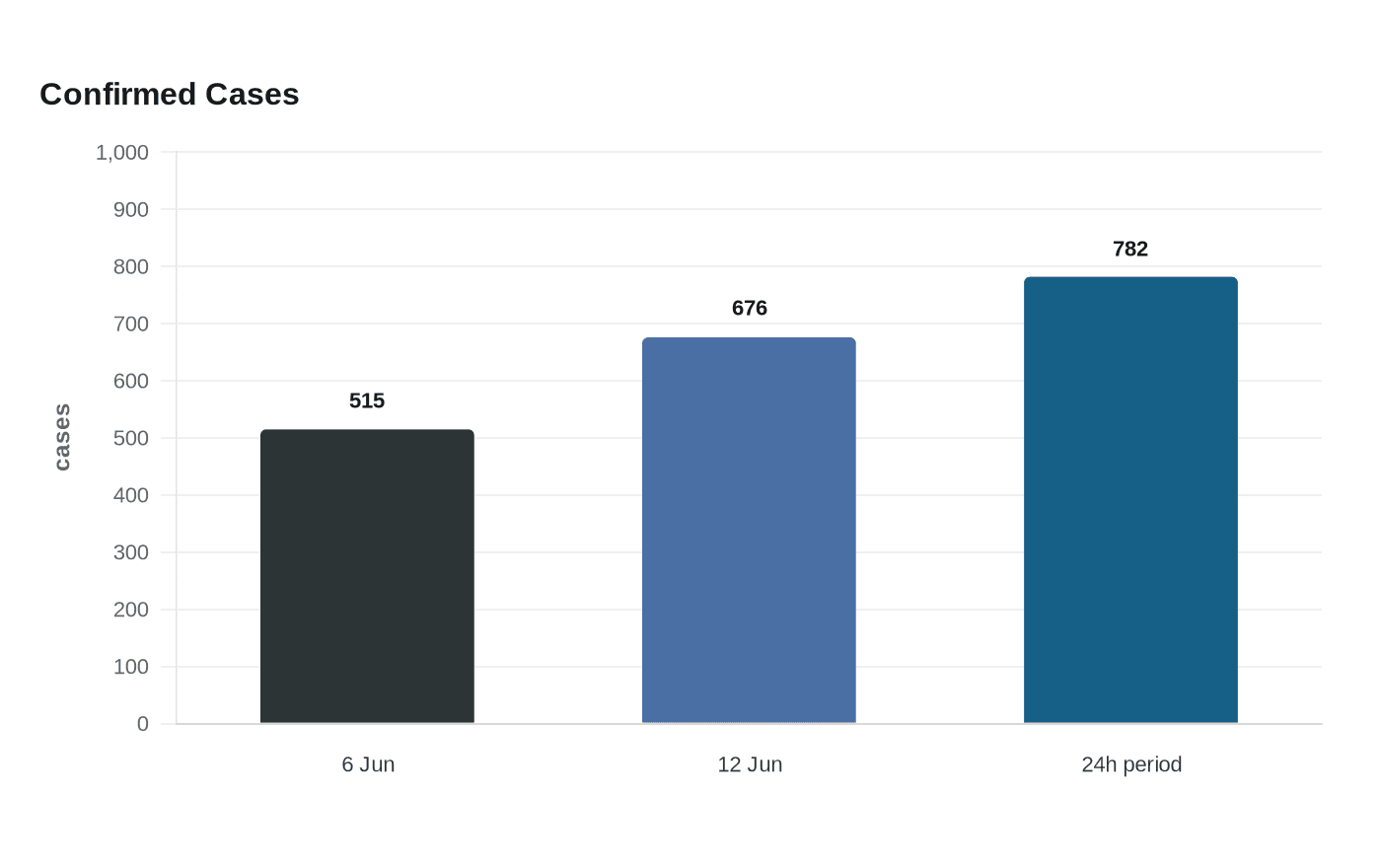
Congo logged 72 new Ebola cases in 24 hours, lifting the total to 782 and exposing widening gaps as the outbreak crossed into Uganda.

Ebola is accelerating faster than Congo and its partners can close the gaps around it. In one 24-hour period, authorities reported 72 new cases, pushing the total in the Democratic Republic of the Congo to 782 confirmed infections and 181 confirmed deaths, a sharp climb from the 515 cases and 91 deaths recorded on 6 June and the 676 cases and 136 deaths reported on 12 June.
The outbreak, declared on 15 May 2026, is being driven by Bundibugyo virus disease, a strain of Ebola that has already moved beyond eastern Congo into Uganda. The World Health Organization said transmission in Uganda was epidemiologically linked to infections originating in the DRC, underscoring how quickly a local flare-up can turn into a cross-border security threat.

Health officials said the surge reflects both a real expansion of the outbreak and a clearer picture of its scale. WHO said expanded testing and the clearing of a backlog of samples helped reveal more cases, but the agency and United Nations partners also warned that major weaknesses remain in surveillance, treatment access and public trust. The outbreak is spreading into new health zones, and UN agencies said a rise in child infections was increasingly likely.

Those gaps are especially dangerous in eastern Congo, where insecurity and weak contact tracing have complicated the response. Without reliable follow-up of exposed contacts, isolation and vaccination campaigns lose speed, and every delay gives the virus more room to move through households, clinics and crowded communities.

The international response is trying to keep up, but the scientific tools remain limited. Doctors Without Borders said there is no approved vaccine or treatment for Bundibugyo virus, even as hundreds of its staff have been deployed in Ituri, North Kivu and South Kivu in the DRC, and in Kampala, Bwera and Arua in Uganda. That makes containment dependent on surveillance, community cooperation and rapid case detection, all of which are under pressure.
The Centers for Disease Control and Prevention said no cases had been confirmed in the United States and the risk to the American public and travelers remained low. But the outbreak’s spread across borders, its accelerating caseload and its foothold in areas with fragile health systems make it a global health-security concern, not just a national emergency for Congo.
This article was produced by Prism’s automated news system from verified source data, official records, and press releases, then run through automated quality and moderation checks before publishing. The system is built and supervised by the people who set the standards it runs under. Read our full AI policy.
Did this article answer your question?