Eco-Friendly Baby Shower Trends Reshape How Hosts Plan Celebrations
Sustainability has shifted from a niche preference to a mainstream expectation, reshaping how hosts plan baby showers with compostable décor and plantable favors.

Something has quietly transformed the baby shower circuit over the past few years. What was once a celebration built around pastel paper plates, plastic balloon arches, and towers of single-use decorations is now being reconsidered from the ground up. Sustainability has moved from the edges of event planning into its mainstream center, and for hosts throwing a baby shower today, eco-conscious choices are increasingly the baseline expectation rather than a special consideration.
This shift matters not just culturally but practically. Vendors who once offered sustainable options as an upsell are now finding those options drive the conversation from the start. Hosts are arriving with questions about compostable tableware and locally sourced catering before they've even settled on a color palette. The baby shower, long a celebration steeped in ritual and tradition, is being redesigned around a new set of values.
Why sustainability took hold in baby celebrations
There's a particular logic to sustainability finding such a strong foothold in the baby shower space. The occasion is, at its core, about welcoming a new life into the world, which makes guests and hosts alike more attuned to what kind of world that child is inheriting. That emotional resonance gives eco-friendly choices a weight they might not carry at a corporate cocktail hour or a casual birthday party.
The practical concerns are real too. A typical baby shower can generate a surprising volume of waste: disposable plates and cups, plastic cutlery, cellophane-wrapped favors, foil balloons, and paper decorations that survive the event by maybe three hours before heading to a trash bag. Multiply that across the millions of showers thrown each year and the cumulative impact becomes significant. Sustainable styling directly addresses this by prioritizing materials and approaches that either last beyond the event or break down without harm.
Décor that outlives the party
The décor category is where sustainable baby shower planning tends to begin, and where the most visible transformation has taken place. The guiding principle is straightforward: choose pieces that are either durable enough to be reused or compostable enough to disappear without a trace.
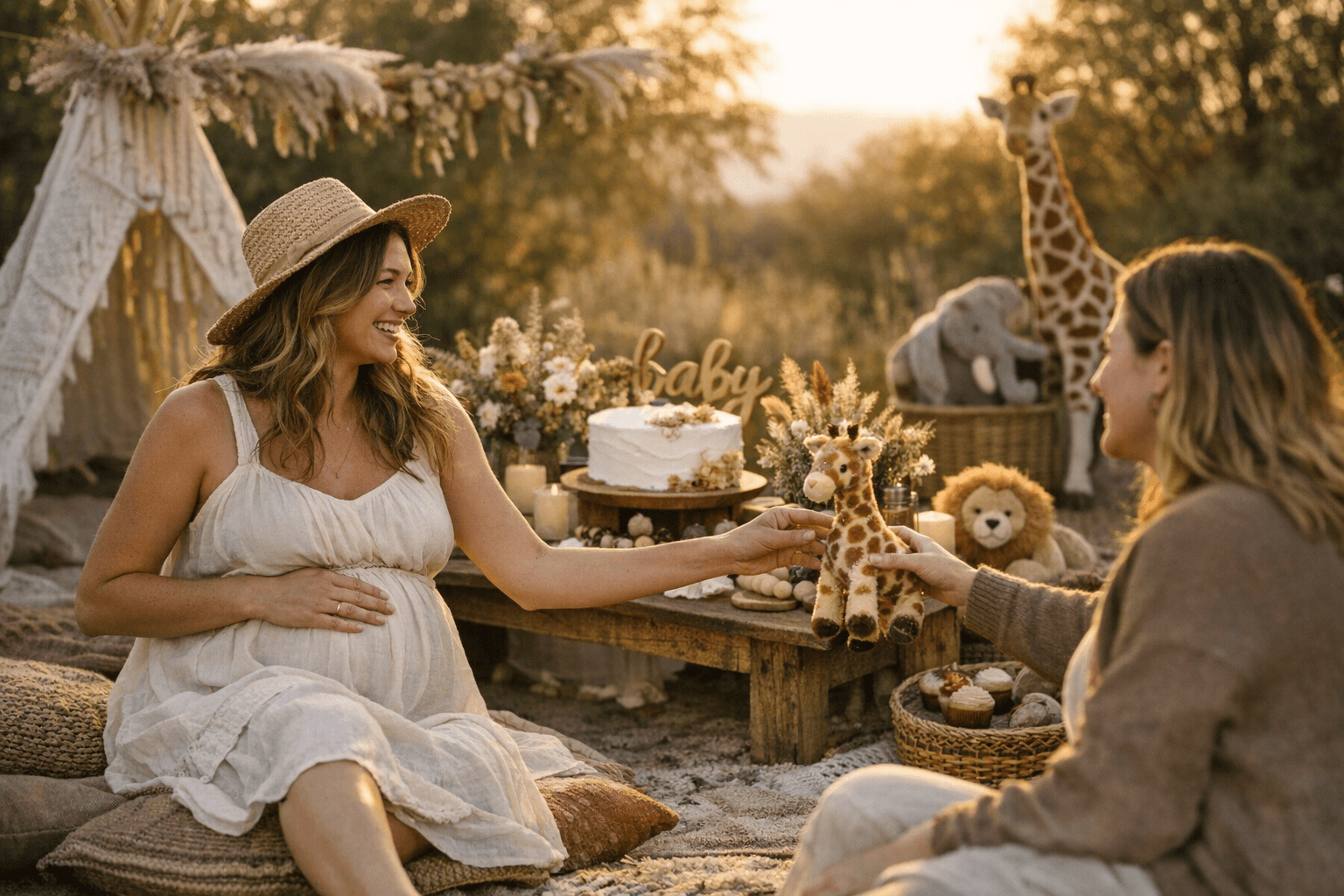
Durable décor includes fabric bunting, woven baskets, ceramic or glass vessels, and cloth table runners that can be repurposed at home after the event. Many hosts are now sourcing these items secondhand or choosing pieces specifically because a family member can take them home. Potted plants and floral arrangements in reusable containers have largely displaced cut-flower centerpieces in disposable foam bases.
On the compostable end, the market for plant-based tableware has expanded considerably. Plates made from sugarcane pulp, cups formed from bamboo fiber, and cutlery pressed from cornstarch are now widely available and increasingly cost-competitive with their plastic counterparts. The shift isn't just aesthetic; these materials perform well enough for a seated meal that guests rarely notice the difference unless they're looking.
Invitations and the digital turn
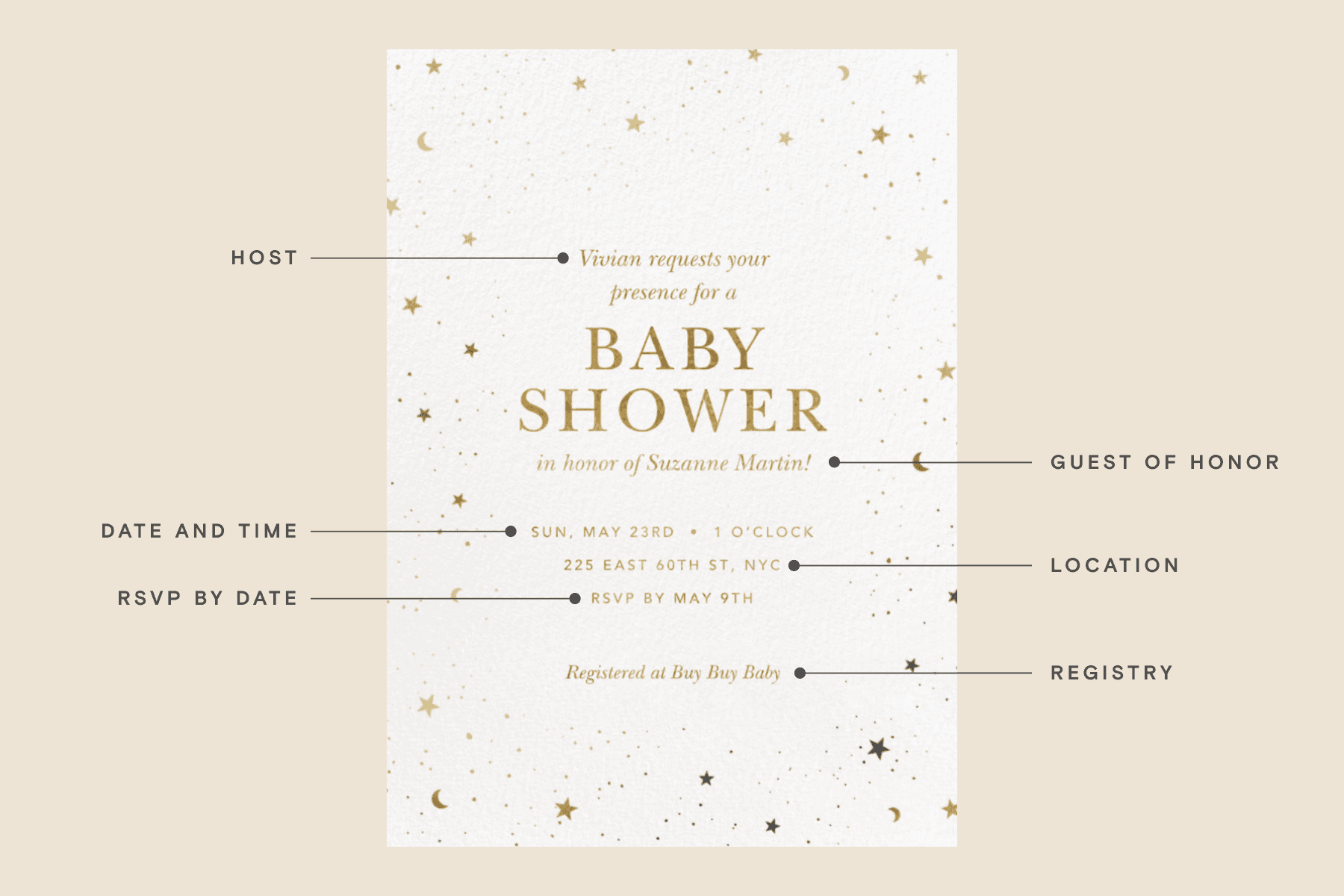
Digital invitations have become one of the easiest and most widely adopted sustainable swaps in baby shower planning. Platforms offering beautifully designed digital invites have matured significantly, offering animated designs, RSVP tracking, and registry linking that paper invitations simply cannot match on functionality.
The appeal goes beyond environmental benefit. Digital invites eliminate printing lead times, allow for easy guest list updates, and ensure delivery without the uncertainty of postal mail. For hosts juggling a busy planning timeline, that practical upside often seals the decision as much as the sustainability angle.
For hosts who still want a physical keepsake element, seed paper invitations have emerged as a meaningful middle ground. Printed on paper embedded with wildflower or herb seeds, these invites can be planted by guests after the event, transforming a piece of postal mail into something that grows. It's a detail that tends to generate genuine delight at the event when guests realize what they're holding.
Food sourcing and the local table
Locally sourced food has become a central pillar of sustainable shower planning, and it connects the eco-friendly ethos to the quality of the celebration in a direct way. Working with local bakeries, farmers markets, and regional caterers reduces transportation emissions while typically delivering fresher, more distinctive food than mass-produced catering.
For the shower spread itself, seasonal menus built around what's available locally tend to feel more considered and personal than generic party platters. A spring shower in the mid-Atlantic might feature asparagus and strawberry crostini from a nearby farm stand; a fall celebration in the Pacific Northwest might lean on local cheeses, apple preserves, and herb focaccia from a neighborhood bakery. The food becomes part of the story of the event rather than background sustenance.
Waste reduction at the food table also means rethinking portion planning and packaging. Ordering closer to actual headcount, choosing caterers who use compostable serving materials, and arranging for leftover food to be boxed for guests or donated are all practices gaining traction among eco-conscious hosts.
Favors that grow, not linger
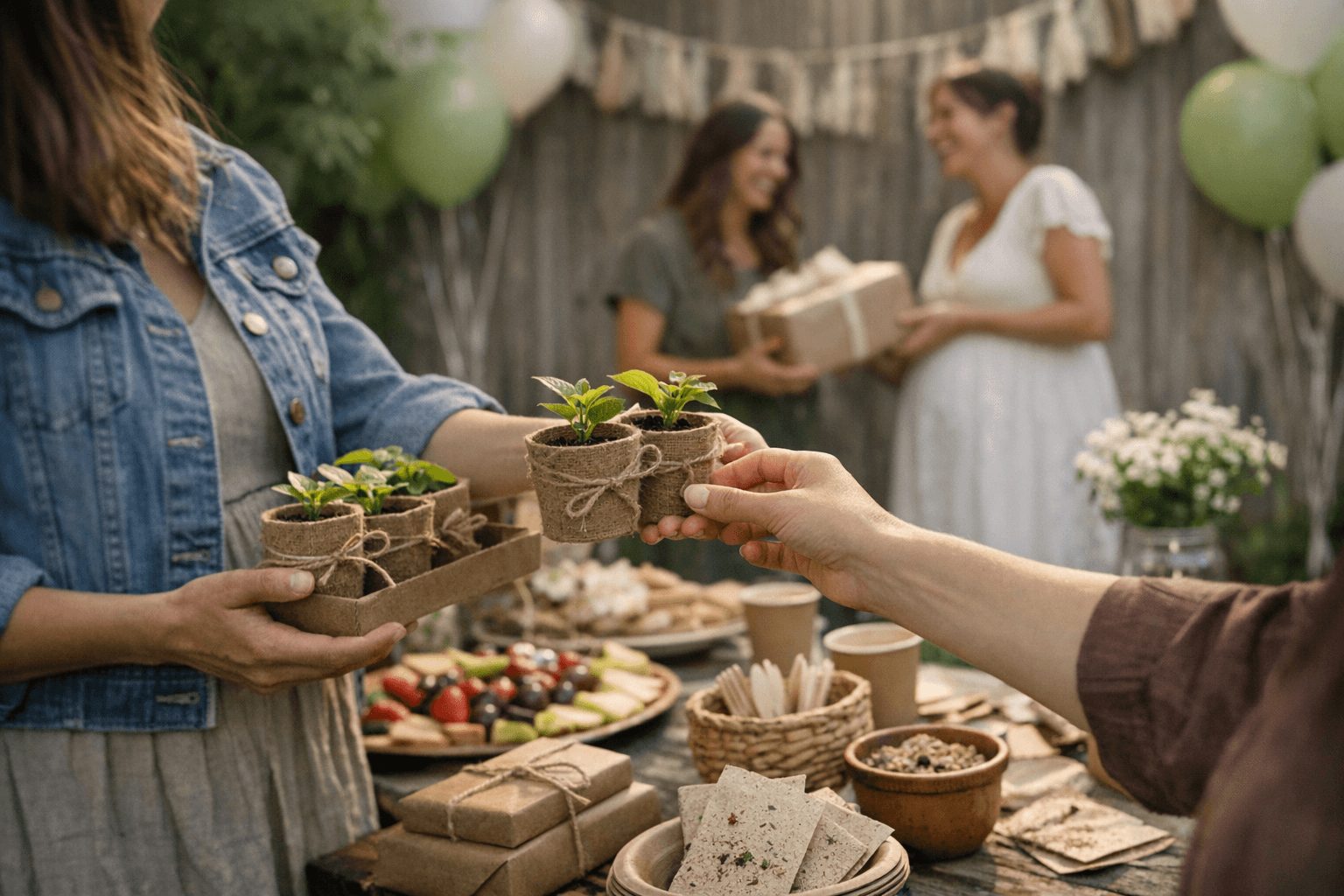
The party favor has always been a slightly awkward proposition: a small token guests often don't need, packaged in something they'll immediately discard. Plantable favors have emerged as a genuinely popular solution to this problem, offering guests something living and purposeful to take home.
Seed packets, herb starter kits, and small potted succulents have become go-to favor choices for sustainable showers. Seed paper tags and kraft paper packaging keep the unboxing experience tactile and attractive without relying on plastic. Some hosts are commissioning custom-printed seed envelopes with the baby's name and due date, turning a functional item into a personalized keepsake.
The broader category of useful favors, small jars of local honey, handmade soaps from artisan makers, or packets of tea from a regional blender, aligns with the same principle: give guests something they'll actually use, sourced in a way that reflects the values driving the rest of the celebration.
What this means for vendors and planners
For event professionals, the sustainability shift in baby shower planning represents both a mandate and an opportunity. Vendors who have invested in compostable rental lines, cultivated relationships with local food suppliers, and built digital invitation workflows into their service offerings are finding those capabilities actively requested rather than passively appreciated.
The hosts driving this change aren't necessarily making every decision based on environmental impact alone; they're looking for celebrations that feel intentional, personal, and thoughtful. Sustainability, at its best in this context, delivers all three. A shower built around durable décor, locally sourced food, plantable favors, and digital invitations doesn't feel like a compromise. It tends to feel like exactly the kind of event the guest of honor remembers.
Sources:
Know something we missed? Have a correction or additional information?
Submit a Tip