Economists Cut Russia's 2026 Growth Forecast Amid Sanctions, Weak Domestic Demand
Economists slashed Russia's 2026 growth forecast to 0.8%, as sanctions, high borrowing costs, and structural investment collapse stress-test the Kremlin's war-era model.
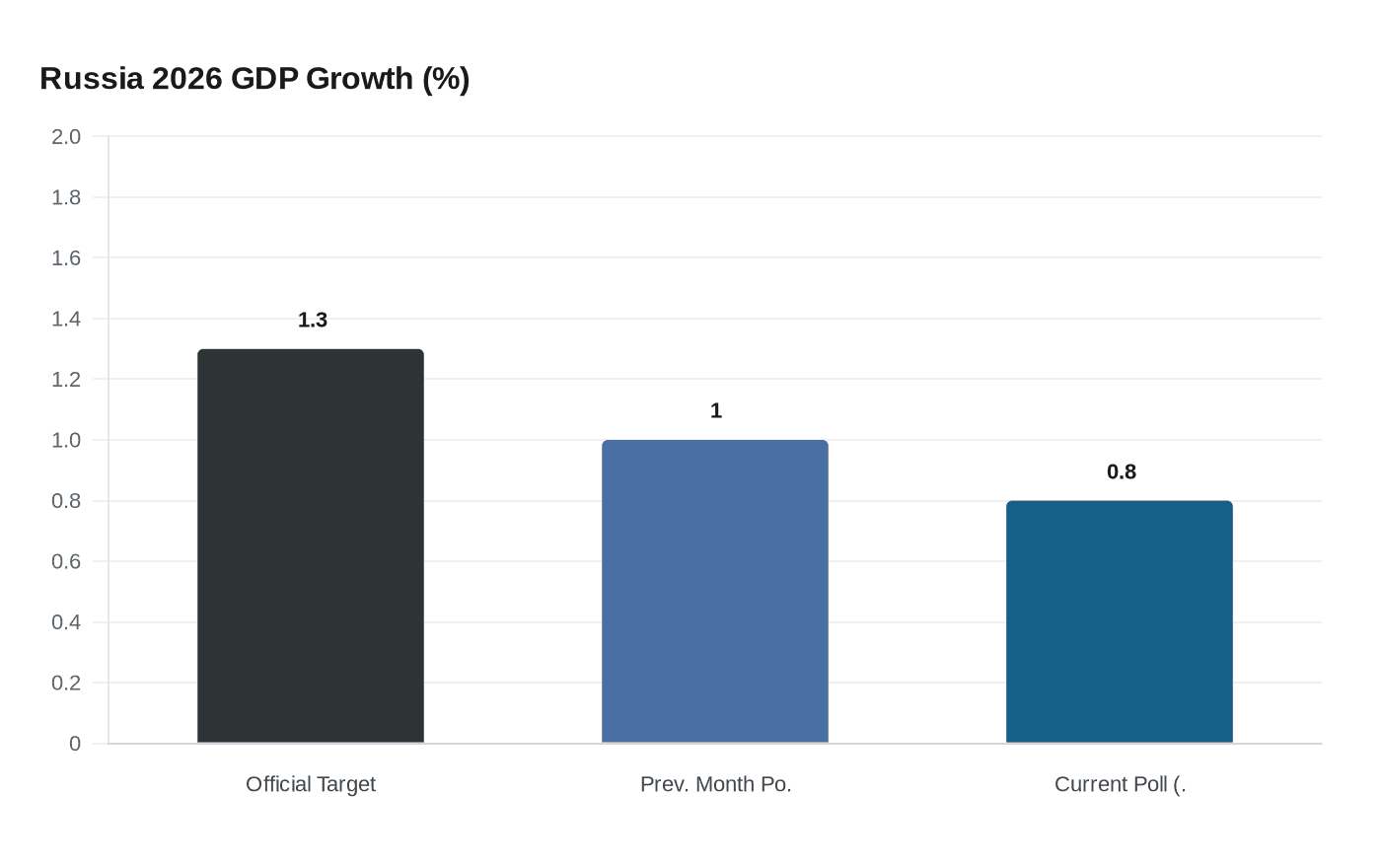
A Reuters poll of roughly 16 economists cut the median growth forecast for Russia's economy to 0.8% for 2026, down from 1.0% projected a month earlier, in a downgrade that captures less a single shock than a slow systems failure in an economy built for war and strained by it.
The poll, published March 31, arrived as Russian officials were already telegraphing a willingness to revise down the government's own official 2026 growth target, then sitting at around 1.3%. That figure already marked a dramatic retreat from the nearly 5% expansion Russia recorded in earlier years of the conflict, when defense outlays and energy revenues supercharged output. Since 2024, the combination of compounding sanctions, elevated inflation, and relentless war-related fiscal demands has steadily eroded those gains.
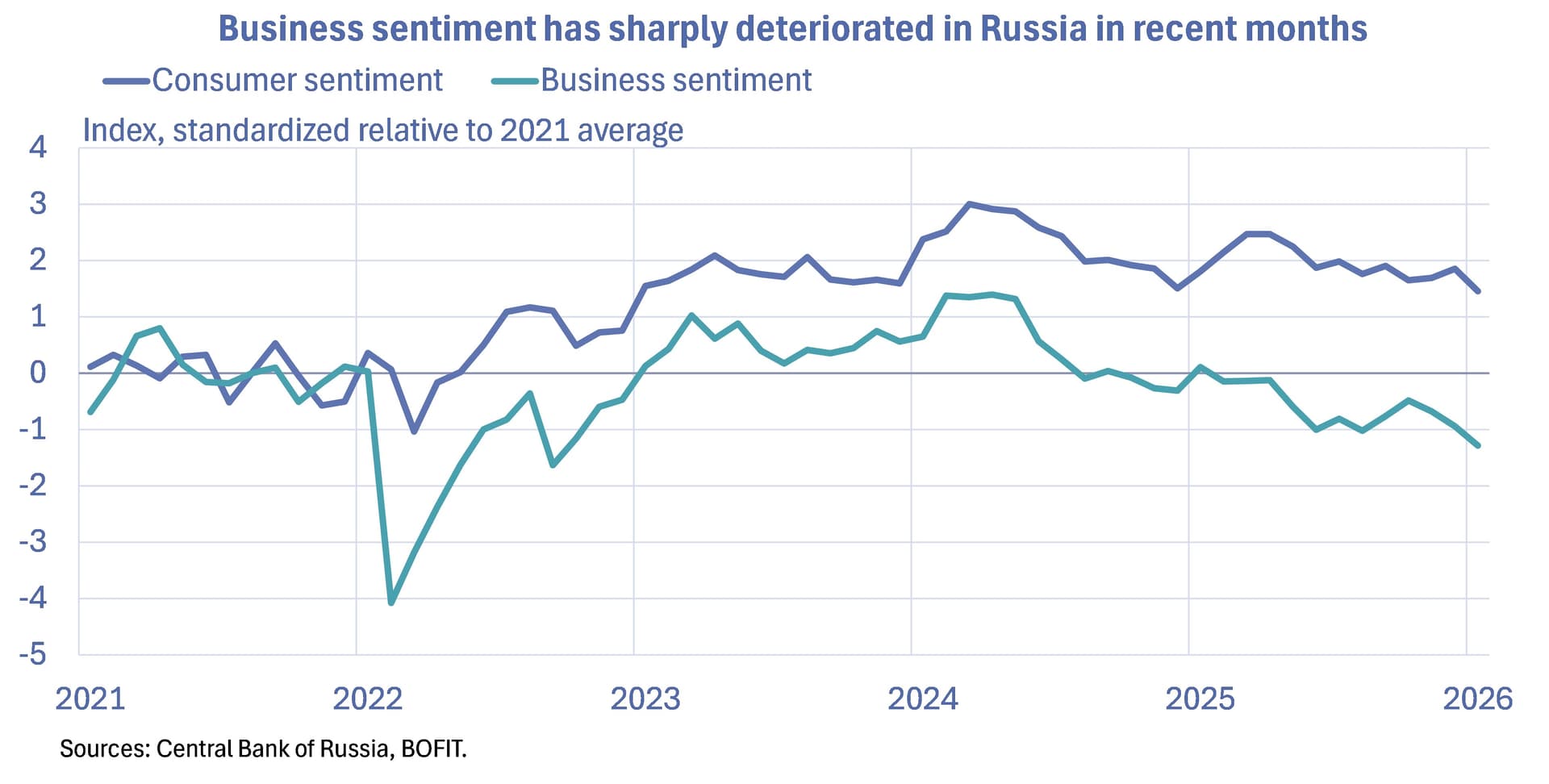
What the latest downward revision reflects is a convergence of structural headwinds that the Kremlin's fiscal model is not built to solve. Poll respondents flagged a high risk of "excessive cooling" in near-term activity, pointing to the contractionary drag of Western financial isolation, the collapse of technology imports blocked by export controls, and a private sector too throttled by borrowing costs to fill the investment void left by departing foreign capital.

The central bank's benchmark rate, at 15%, sits at the center of Moscow's limited toolkit. Analysts projected a cut to around 14.5% at an April meeting, with possible further easing toward 12% by year-end. But the poll was explicit on the limits of that lever: rate cuts alone will not restart domestic investment without a meaningful recovery in business confidence and demand, neither of which the current environment reliably supplies.
Oil is doing what it always does in Russia's budget calculus, which is paper over the gaps. A surge in global crude prices, driven by geopolitical supply disruptions, could generate windfall revenues capable of providing near-term fiscal relief even as non-energy sectors continue to struggle. Olga Belenkaya of UK Pervaya brokerage said that foreign-currency inflows from higher oil prices could support the rouble and potentially push it into the 75-80 per dollar range over time.
The catch is that oil revenues are cyclically volatile and structurally insufficient. Analysts were consistent in warning that energy windfalls cannot substitute for the missing foundations of medium-term growth: cross-border investment, technology access, and domestic capital formation. The Kremlin must reconcile a budget carrying heavy defense and social spending commitments against revenue streams that move with commodity markets it does not control.
For global markets, the stakes are material. Russia's fiscal tightening sharpens the sensitivity of global crude supply to any further deterioration in its production infrastructure investment. And a Russia whose economic constraints are tightening, not loosening, is one whose foreign-policy maneuverability may be increasingly shaped by domestic necessity rather than strategic choice, a variable that few economic models can price cleanly.
This article was produced by Prism’s automated news system from verified source data, official records, and press releases, then run through automated quality and moderation checks before publishing. The system is built and supervised by the people who set the standards it runs under. Read our full AI policy.
Did this article answer your question?

