Economists forecast South Korea exports surge on AI chip boom
A poll of economists projects nearly 30% year-on-year export growth for January as AI-chip shipments drive a semiconductor-led rebound.
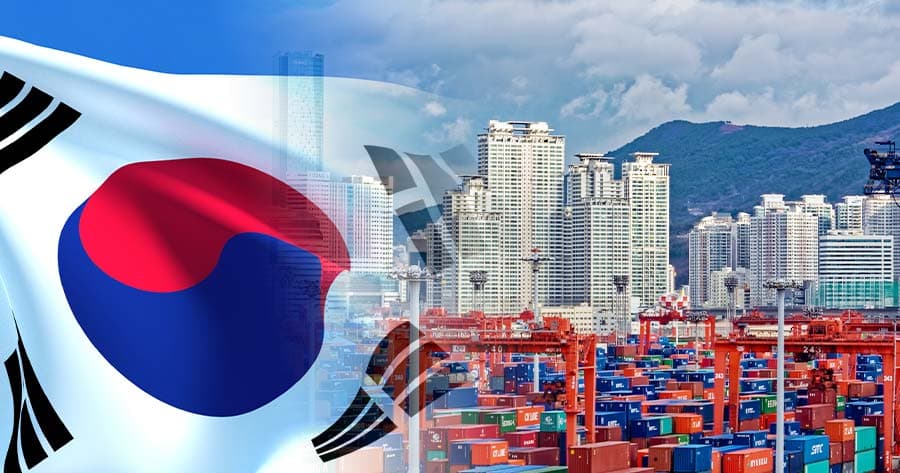
A poll of economists released on Jan. 29 projects South Korea’s January exports expanded at the fastest annualized pace in more than four years, with the median forecast calling for almost a 30% year-on-year rise driven by semiconductors and AI-related components. The projection highlights a concentrated rebound in the technology export cycle even as partial customs data show a smaller early-month gain.
Official Korea Customs Service data for the first 20 days of January show exports up 14.9% year-on-year to USD 36.36 billion, with semiconductor shipments surging 70.2% to USD 10.73 billion. Chips accounted for 29.5% of total exports in that period, up 9.6 percentage points from a year earlier. Exports to China rose 30.2% to USD 8.45 billion and shipments to the United States increased 19.3% to USD 6.66 billion in the partial-month tally.
The gap between the economists’ nearly 30% full-month projection and the 20-day customs increase reflects different coverage windows and the high volatility of semiconductor shipments, which can cluster in late-month bookings. December and November 2025 data reinforce the recent upswing: December outbound shipments jumped 13.4% year-on-year to a record USD 69.58 billion, with semiconductor exports at an all-time monthly high of USD 20.77 billion, up 43.2%. November posted a record-high November level of USD 61.04 billion, up 8.4%, and chips rose 38.6% to USD 17.26 billion.

Full-year customs office figures show exports for 2025 at roughly USD 709.69 billion, the first time crossing USD 700 billion, with an annual trade surplus near USD 78.03 billion and semiconductor exports totalling about USD 173.4 billion, up 22% year-on-year. Those longer-run totals underscore semiconductors’ dominant role in Korea’s external performance.
Market implications are immediate. The surge in AI-related chip demand is supporting export-dependent manufacturers and could provide a near-term boost to Korea’s current account and GDP growth. Technology exporters and capital-equipment suppliers stand to capture the most gains, while the won may face upward pressure if flows remain strong. Equity markets that price in a sustained semiconductor cycle could re-rate chipmakers, but concentrated gains raise equity and macro risk if chip momentum stalls.

Policy considerations now center on managing concentration risk and sustaining broader industrial resilience. Economists and bankers note that while semiconductors anchor the recovery, other goods such as steel, machinery and automobiles show limited momentum, leaving Korea exposed if global manufacturing capex does not revive. Citi projects semiconductor exports could rise sharply in 2026 after strong gains in 2025, while one domestic securities house cautions that a broader manufacturing capex cycle would be needed for durable, diversified export growth.
Risks include trade friction and tariff shifts, which have produced uneven destination patterns in recent months, and the inherent volatility of chip demand tied to inventory cycles at major technology buyers. For now, the data point to an export rebound concentrated in AI-driven semiconductor shipments, supporting Korea’s near-term external position while posing a test of how quickly other sectors can recover.
This article was produced by Prism’s automated news system from verified source data, official records, and press releases, then run through automated quality and moderation checks before publishing. The system is built and supervised by the people who set the standards it runs under. Read our full AI policy.
Did this article answer your question?

