Ecuador cae al final, Alemania golea y Japón rescata empate en Mundial 2026
Ecuador had the chances but lost in the 90th minute, Germany routed Curacao 7-1, and Japan’s late equalizer signaled a tournament already tilting toward drama.
Late goals and lopsided margins defined the first strong reading of this World Cup: Ecuador wasted enough chances to win and still lost, Germany announced itself with a seven-goal surge, and Japan showed the kind of refusal that can change a tournament’s tone.
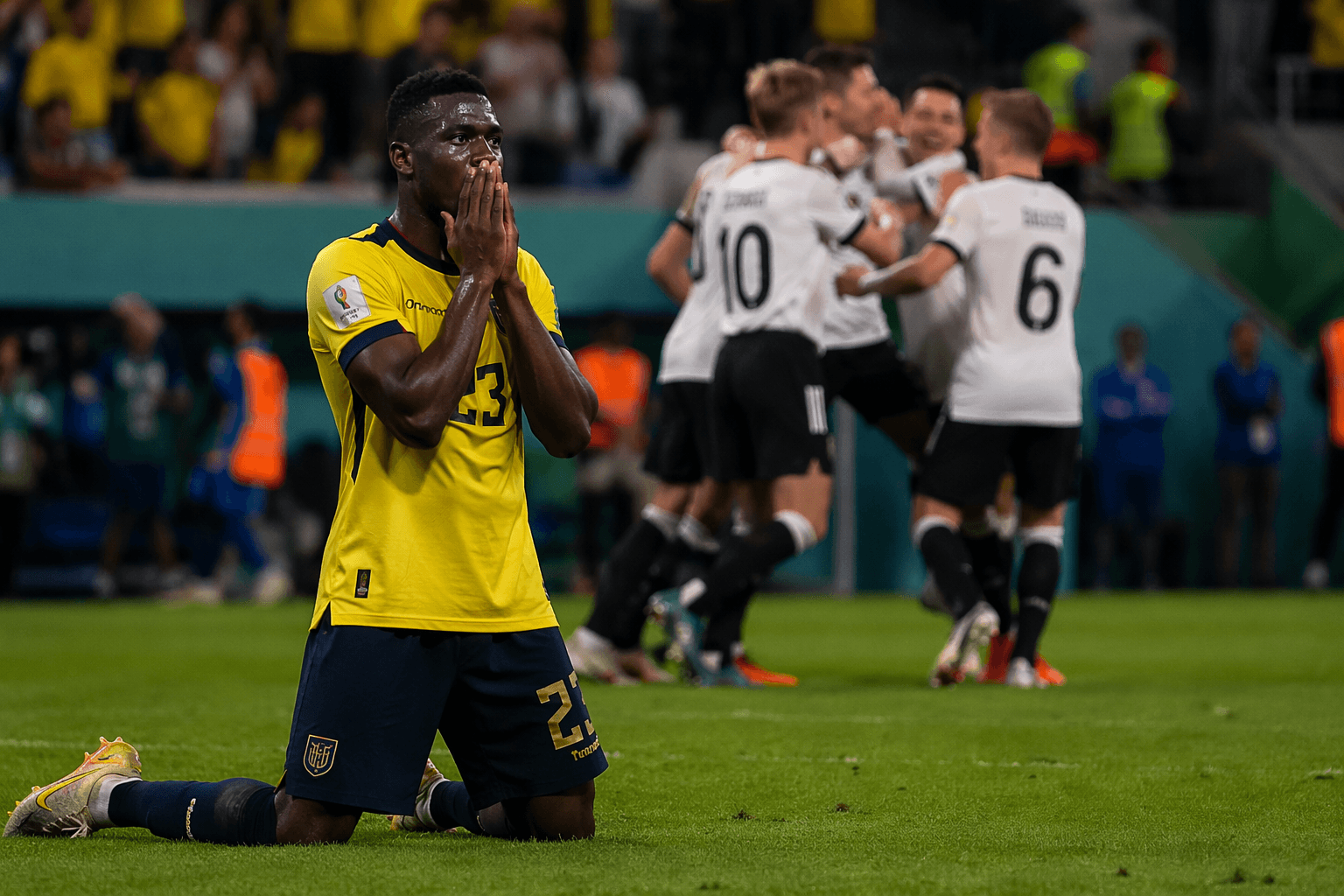
Ecuador’s opening match in Group E ended in the harshest possible way at Lincoln Financial Field in Philadelphia, where Costa de Marfil struck in the 90th minute through Amad Diallo to win 1-0. Ecuador had generated the better chances and, by FIFA’s account, missed clear opportunities and hit the crossbar, but the final blow belonged to Costa de Marfil, which absorbed the pressure and left with three points that could shape the group race. The result left Ecuador immediately under pressure to recover and keep its path to the knockout rounds alive.
Germany’s message was even louder in Houston, where it beat Curacao 7-1 and moved past Brazil as the national team with the most goals in World Cup history. Curacao, making its World Cup debut, at least found a moment to celebrate when Livano Comenencia scored the team’s first-ever goal in the tournament. Germany answered with a relentless spread of scorers, including Felix Nmecha, Nico Schlotterbeck, Kai Havertz, Jamal Musiala, Nathaniel Brown and Deniz Undav, underscoring the depth and tempo that made the match a statement rather than a simple win. The historical context gave the score extra force: FIFA noted that Germany’s tally pushed it beyond Brazil, a benchmark shaped in part by Germany’s 7-1 semifinal rout of Brazil in 2014.
Japan’s 2-2 draw with the Netherlands in Dallas offered the day’s other major clue about the tournament’s likely shape. Before a crowd of 69,285 at Dallas Stadium, Japan twice fought back and secured the final equalizer in the 88th minute, when a headed effort ended up deflected by Daichi Kamada. The result reflected more than resilience on the field. FIFA also highlighted Japanese supporters who stayed after the match to clean the stands, a small but visible reminder that this tournament was already producing moments of discipline, endurance and image-making as well as goals.
Taken together, these results pointed to a World Cup that is likely to reward efficiency, punish waste and elevate teams that can withstand pressure late. Ecuador learned how thin the margins can be, Germany showed what a powerhouse looks like when it lands early, and Japan hinted that persistence may be one of the most valuable assets in the weeks ahead.
This article was produced by Prism’s automated news system from verified source data, official records, and press releases, then run through automated quality and moderation checks before publishing. The system is built and supervised by the people who set the standards it runs under. Read our full AI policy.
Know something we missed? Have a correction or additional information?
Submit a Tip