Education Department plans to move special education, civil rights elsewhere
Federal oversight of special education and school civil-rights complaints was set to leave Education Department, raising fears for millions of students with disabilities.
The Trump administration was preparing to move two of the Education Department’s most powerful enforcement offices out of the agency, a change that could decide who handles complaints from families, how disability rights are enforced in schools, and whether the federal government can still police discrimination in education with the same force.
Under the plan, the department’s Office of Special Education and Rehabilitative Services would go to the Health and Human Services Department, while the Office for Civil Rights would shift to the Justice Department. Together, those offices touch some of the most consequential parts of federal school oversight: special education programs that serve more than seven million K-12 students with disabilities nationwide, and civil-rights enforcement covering disability, sex, race and national origin discrimination.
The move would cut into the Education Department’s core role just as Congress has continued to fund the Individuals with Disabilities Education Act at roughly $15 billion a year. The department’s fiscal 2026 budget request sought $14.89 billion for IDEA Grants to States for children ages 3 through 21, while the broader IDEA request was listed at $15.47 billion. About 95% of that money goes to the two Part B grant programs, the main federal stream supporting special education in public schools.
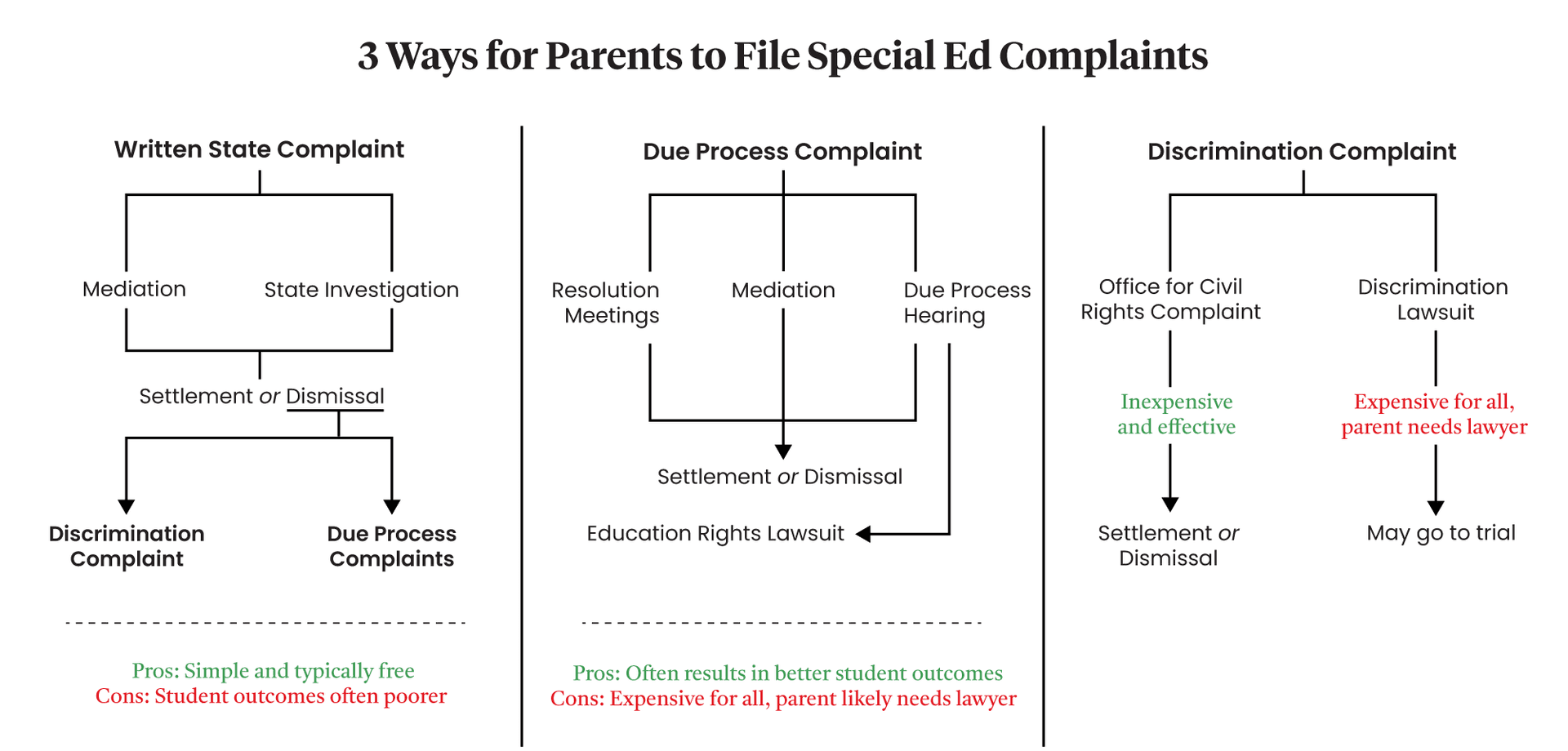
For families, the practical question is immediate: where do complaints go, and who has the authority to force school districts to comply? The Office for Civil Rights has long been the federal office that investigates discrimination complaints from students and parents. Moving that work to Justice would change not only the chain of command, but also the agency charged with setting priorities, staffing investigations and deciding how aggressively to pursue schools.
The change also raised alarms among disability-rights advocates and some lawmakers who worry that shifting IDEA to HHS could recast special education as a medical issue instead of an educational right. Rep. Maggie Goodlander said, “We remain concerned that moving IDEA to HHS would improperly shift special education toward a medical model rather than an educational right.”
The administration had already taken steps in that direction. In February 2026, it announced six interagency agreements to transfer other Education Department offices to outside agencies, and in December 2025 it held private discussions with disability-rights advocates about a possible special-education transfer. At the same time, OCR staff had faced repeated cuts and reversals in recent months, adding pressure to an office already responsible for defending students against discrimination in schools across the country.
This article was produced by Prism’s automated news system from verified source data, official records, and press releases, then run through automated quality and moderation checks before publishing. The system is built and supervised by the people who set the standards it runs under. Read our full AI policy.
Know something we missed? Have a correction or additional information?
Submit a Tip