Egypt seals $1.8 billion solar and storage deals to boost renewables
Egypt signed $1.8 billion in renewable energy agreements to expand large-scale solar and battery capacity, advancing its 2030 renewables target and domestic manufacturing push.
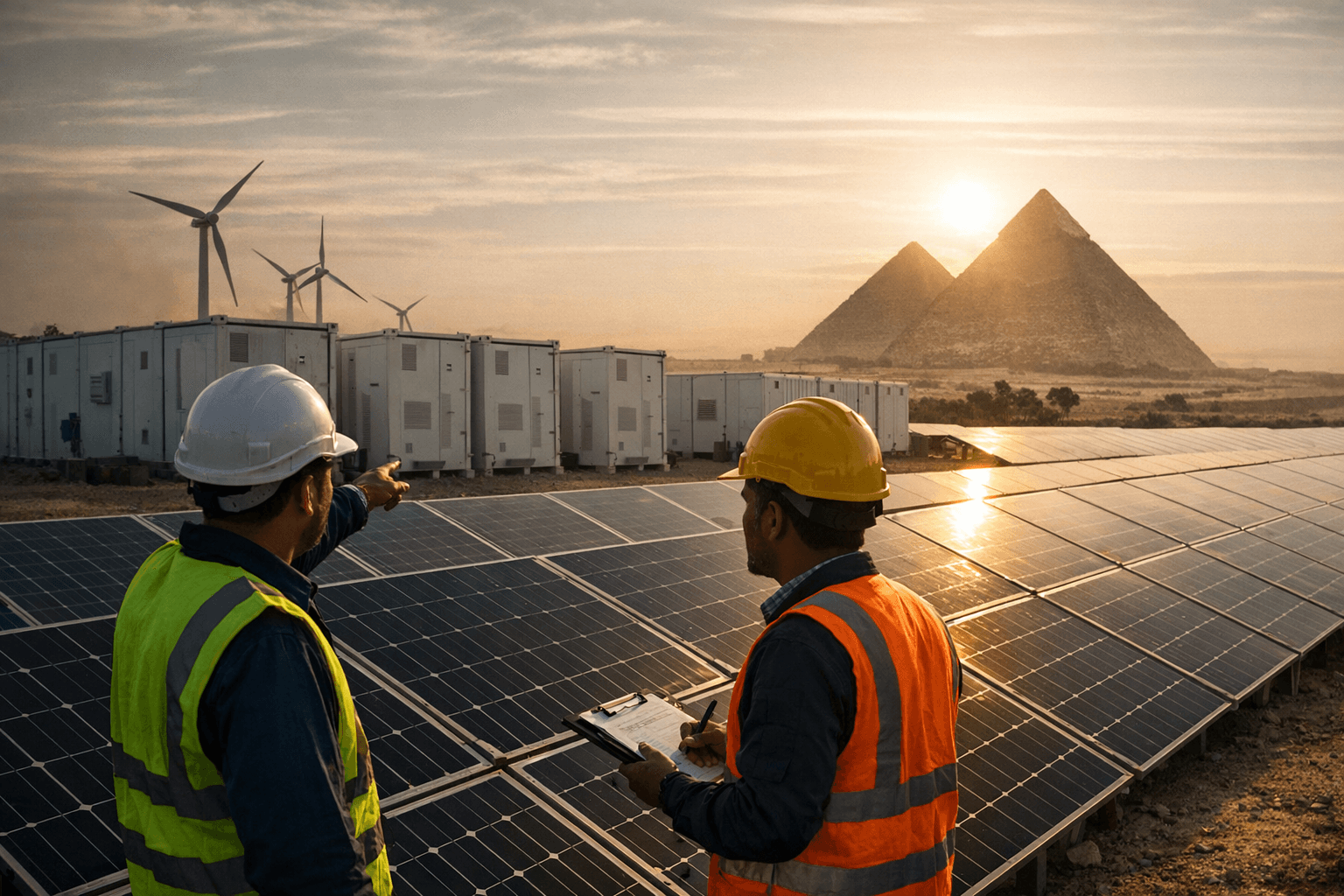
Egypt has signed renewable energy agreements worth a combined $1.8 billion that pair large-scale solar generation with substantial battery storage and a local manufacturing component, state television and a cabinet statement said. The packages, inked in the Suez Canal Economic Zone in the presence of senior officials, aim to accelerate the government’s drive to raise the share of renewables in the power mix ahead of a 2030 target.
The largest element centers on Scatec ASA, which the company said in a statement had secured power purchase agreements for 1.95 gigawatts of solar capacity and 3.9 gigawatt-hours of battery energy storage. The cabinet’s announcement described the Minya solar-plus-storage project in Upper Egypt as a 1.7 GW plant paired with 4 GWh of storage, indicating a small but material discrepancy between government and corporate figures. Government accounts did not publish full contractual texts or detailed financing breakdowns alongside the declarations.
A separate cabinet statement set out an agreement with Sungrow Power Supply to establish a battery-manufacturing facility in the Suez Canal Economic Zone, with part of the factory’s output earmarked for the Minya project. The combination of onshore manufacturing and project development is consistent with official priorities to build domestic value chains, reduce import dependency for battery modules, and position Egypt as a regional energy hub and exporter of clean power and equipment.
The transactions were presented by authorities as stepping stones toward the target of renewables supplying 42 percent of Egypt’s electricity by 2030, a goal officials have stressed will require further international finance and technical support. Some reporting has described the Scatec power purchase agreements as 25-year, U.S.-dollar-denominated pay-as-produced contracts; the cabinet statement did not specify PPA tenors or currency, and Scatec’s public statement confirmed capacities but did not detail contract terms.
From a market perspective, the announced 3.9-4.0 GWh of storage is notable: paired storage at this scale can meaningfully increase the dispatchability of solar output and reduce peak fossil-fuel reliance, smoothing grid integration as variable renewables expand. The $1.8 billion headline value signals substantial capital flows but leaves open key questions about the split between equipment supply, local investment in the Sungrow factory, and project financing costs, including any concessional or commercial lending and potential export credit support.
Risks remain. The differing capacity figures underscore the need to reconcile contractual commitments. Commercial viability will depend on PPA pricing, currency exposure if contracts are U.S.-dollar-denominated, and the pace of grid connection and permitting. Employment and industrial policy gains from the Sungrow facility will hinge on local-content requirements and transfer of manufacturing know-how.
Confirming the final PPA terms, the financing structure, construction timetables, and expected commissioning dates will be essential to judge the projects’ near-term impact on Egypt’s power mix and fiscal exposure. If implemented as outlined, the package would represent a meaningful advance toward Egypt’s renewable ambitions while highlighting the financing and implementation challenges that lie ahead.
This article was produced by Prism’s automated news system from verified source data, official records, and press releases, then run through automated quality and moderation checks before publishing. The system is built and supervised by the people who set the standards it runs under. Read our full AI policy.
Did this article answer your question?

