El Niño and climate change drive record global heat
El Niño peaked among the five strongest on record as 2023 became Earth’s warmest year, and 2024 climbed even higher.
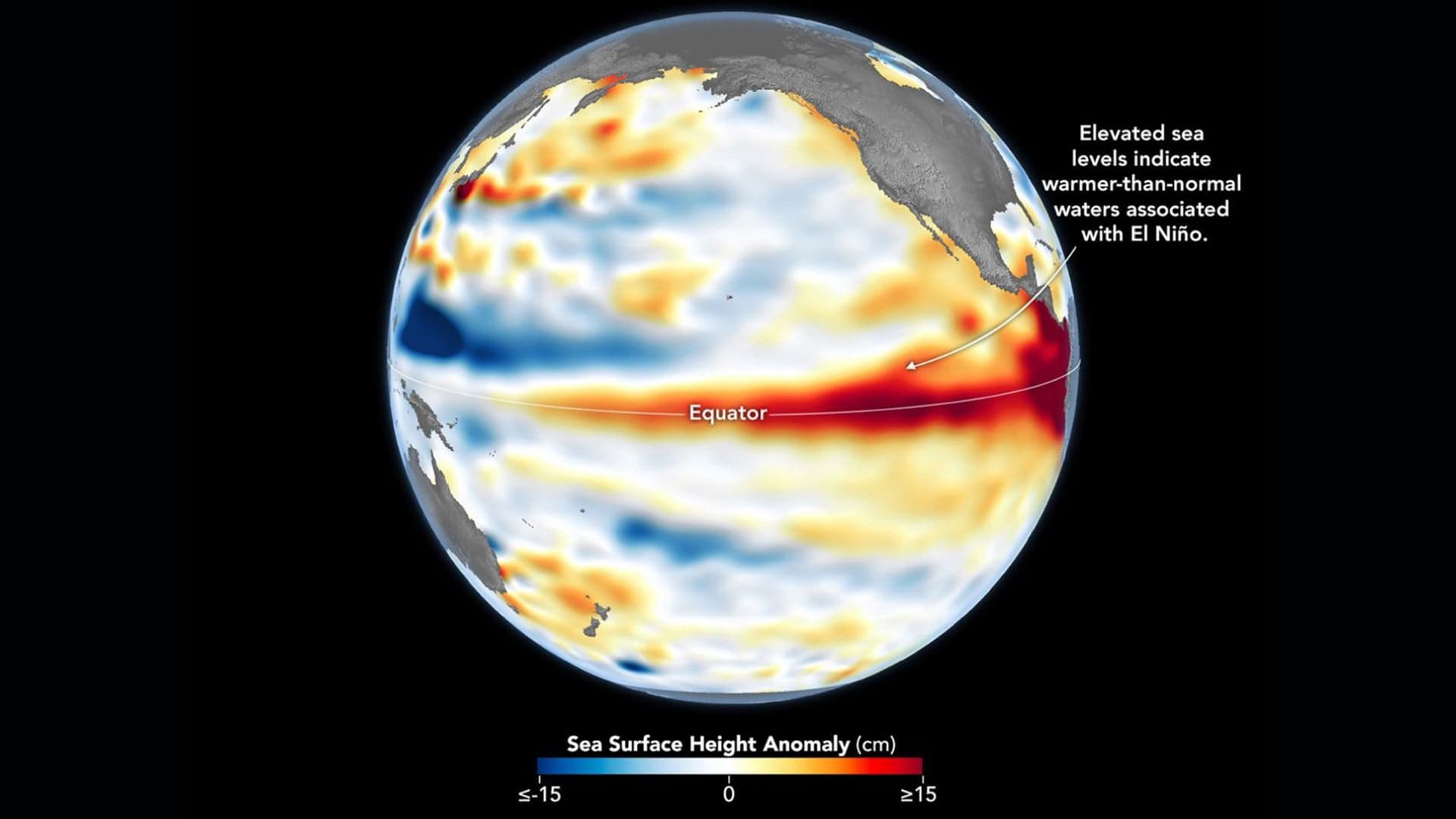
The World Meteorological Organization put the 2023-24 El Niño peak in December 2023 as one of the five strongest on record, intensifying a global heat surge already driven by greenhouse gases. El Niño returned in spring 2023 after three consecutive years of La Niña, reached a moderate level by September, and then kept pushing temperatures higher even as it began to weaken in early 2024.
El Niño typically arrives every two to seven years and lasts about nine to 12 months.
NASA ranked 2023 as the warmest year on record, with the global average surface temperature about 1.2 C above its 1951-1980 baseline. The World Meteorological Organization put the annual average at 1.45 C, plus or minus 0.12 C, above pre-industrial levels. Every month from June through December set a new global temperature record, and July and August were the two hottest months ever measured. NASA also ranked the summer of 2023 as the hottest since modern records began in 1880.
The World Meteorological Organization put 2024 at about 1.55 C above the 1850-1900 average, making 2015-2024 the ten warmest years on record and likely making 2024 the first calendar year to cross 1.5 C above pre-industrial levels.

NOAA researchers found that 2023 and early 2024 were exceptional even after accounting for climate trends and natural variability, with marine heat waves covering between 30% and 40% of the global ocean area each month from April through December 2023. NOAA scientists linked record-warm ocean temperatures to the long-lasting heatwave in the Southwestern United States and Mexico, which ran from mid-June to early August, affected more than 100 million people and caused more than 300 deaths.
In 2023, El Niño and climate change together slammed Latin America and the Caribbean, contributing to drought, heat, wildfires, extreme rainfall and a record-breaking hurricane, with major damage to health, food and energy security, and economic development.
This article was produced by Prism’s automated news system from verified source data, official records, and press releases, then run through automated quality and moderation checks before publishing. The system is built and supervised by the people who set the standards it runs under. Read our full AI policy.
Know something we missed? Have a correction or additional information?
Submit a Tip

