El Paso Metalsmith Claudia Ley Transforms Family Archives into Recycled Silver Jewelry
In El Paso, third-generation metalsmith Claudia Ley melts recycled sterling silver shavings into wearable pieces that trace her family's archives and transnational history.
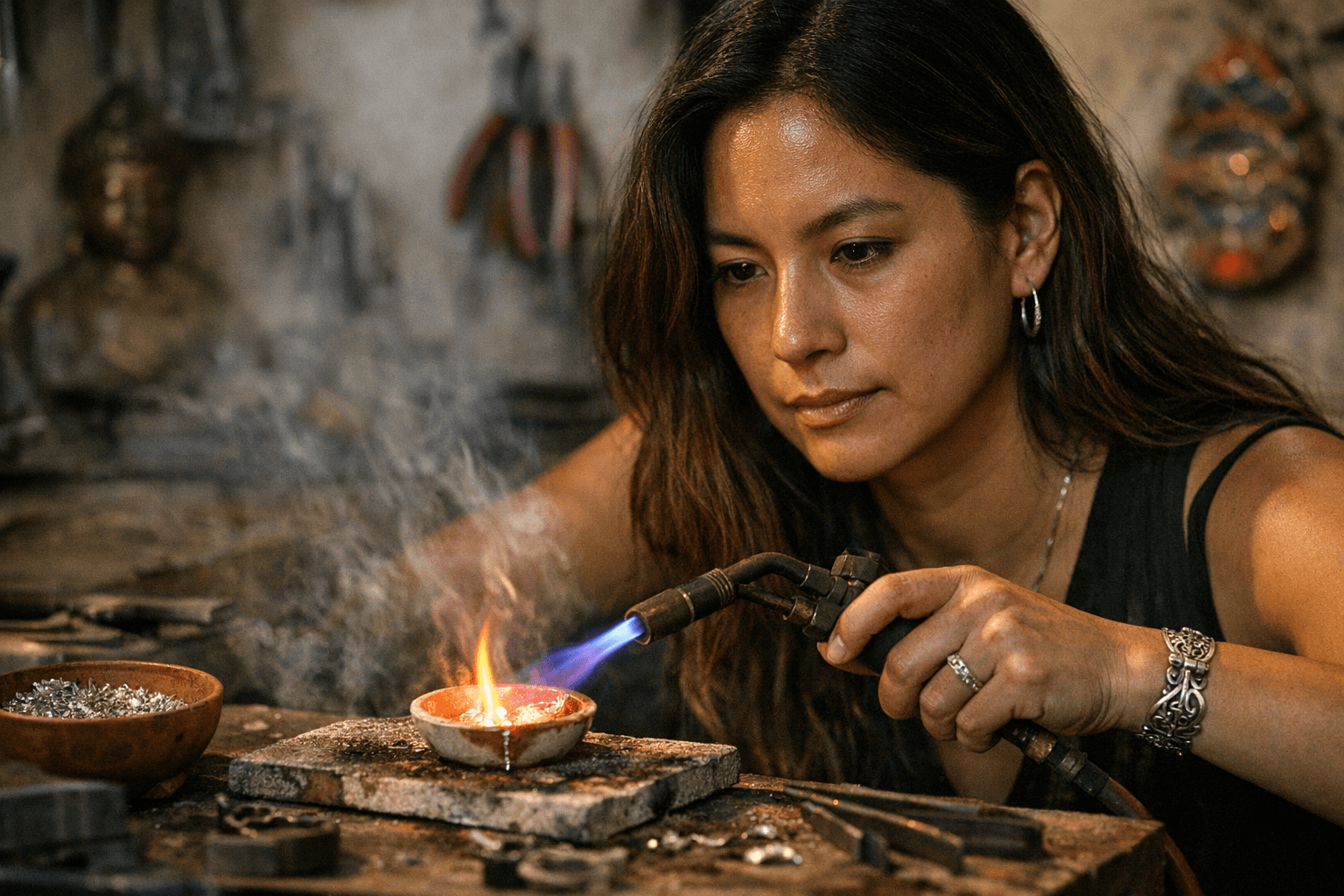
Claudia Ley works in El Paso, carrying a family practice into the present by translating family archives and transnational history into jewelry. A third-generation jeweler, Ley centers recycled sterling silver shavings in her process, melting those fragments to produce finished objects that register as both personal heirloom and contemporary metalwork. The choice of material and method anchors her work to the archive she inherited rather than to new mining or unfamiliar supply chains.
Ley’s lineage informs design and provenance. The phrase transnational history appears repeatedly in descriptions of her pieces; she connects motifs and forms to a family narrative that spans borders and generations. That inheritance shapes the visual vocabulary of her work and supplies the physical silver she reclaims and re-realizes. The continuity from her grandparents’ and parents’ benches to her own tools is central to how she defines value in these pieces.
The materials Ley uses are specific: recycled sterling silver shavings. Those shavings are melted down and reworked into wearable metal, a practice that addresses workshop waste while keeping material life cycles within a single family narrative. Working in silver rather than plated metals or new alloys allows Ley to retain hallmark standards associated with sterling silver, while her choice to reuse shavings keeps the metal’s origin closely tied to her own bench. This approach foregrounds material traceability in a way that relies on family provenance rather than external certification.
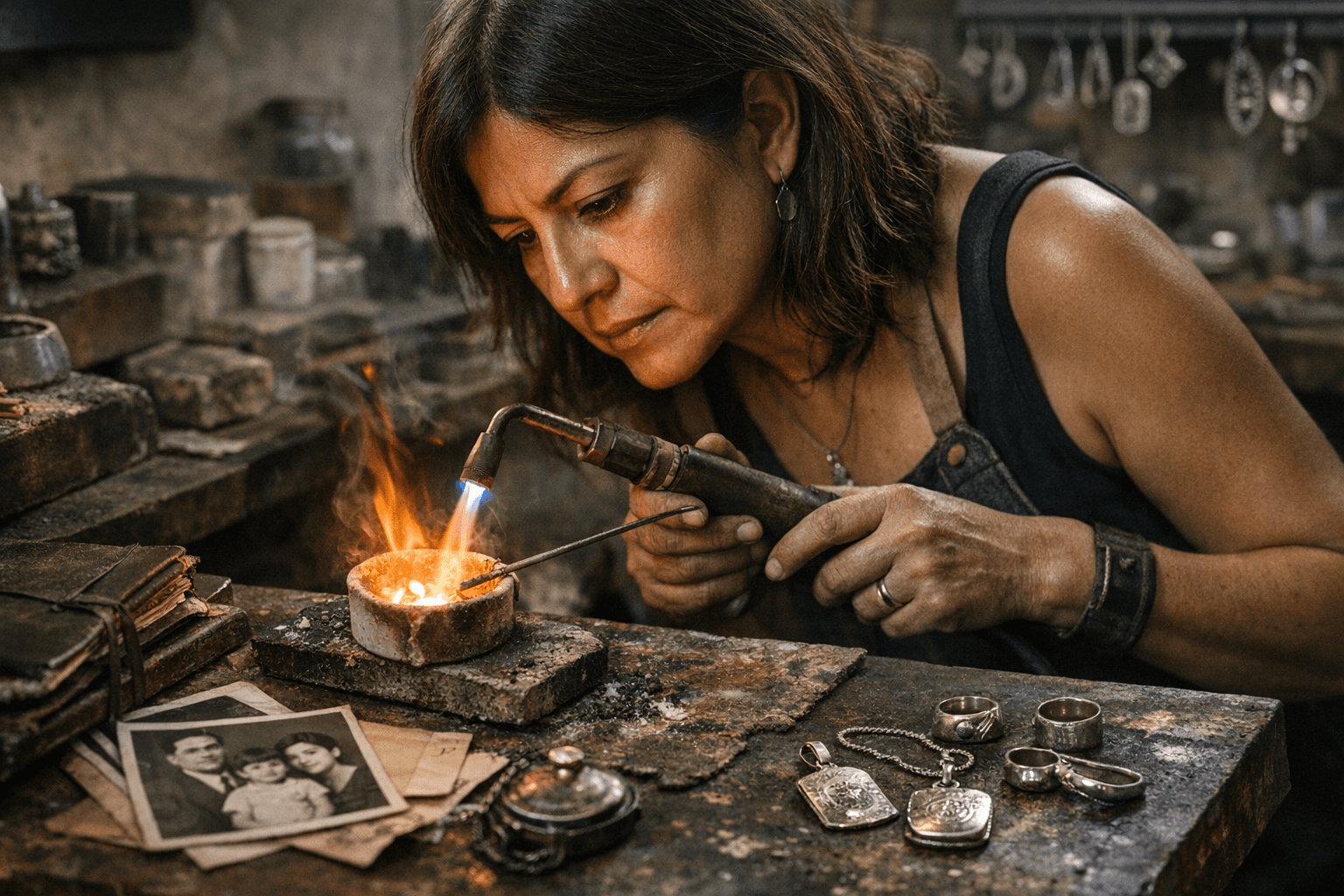
Craft and context come together in Ley’s studio practice in El Paso. Her workshop serves as the locus where physical archive - the silver fragments - and documentary archive - family records and transnational memory - meet. By consolidating those sources into a tangible object worn on the body, Ley’s pieces ask collectors to consider provenance as lived history. The work reframes sustainability as an intergenerational commitment to material stewardship rather than a marketing claim.
On March 5, 2026, this profile highlights that Ley’s jewelry is a deliberate alternative to mainstream narratives about sourcing and certification; it prioritizes reclaimed family metal and recorded family history as proof of origin. For buyers seeking clarity about materials and lineage, Ley’s practice offers a specific model: provenance that is documented by generations of a single family and expressed through recycled sterling silver shaped at her El Paso bench.
Know something we missed? Have a correction or additional information?
Submit a Tip